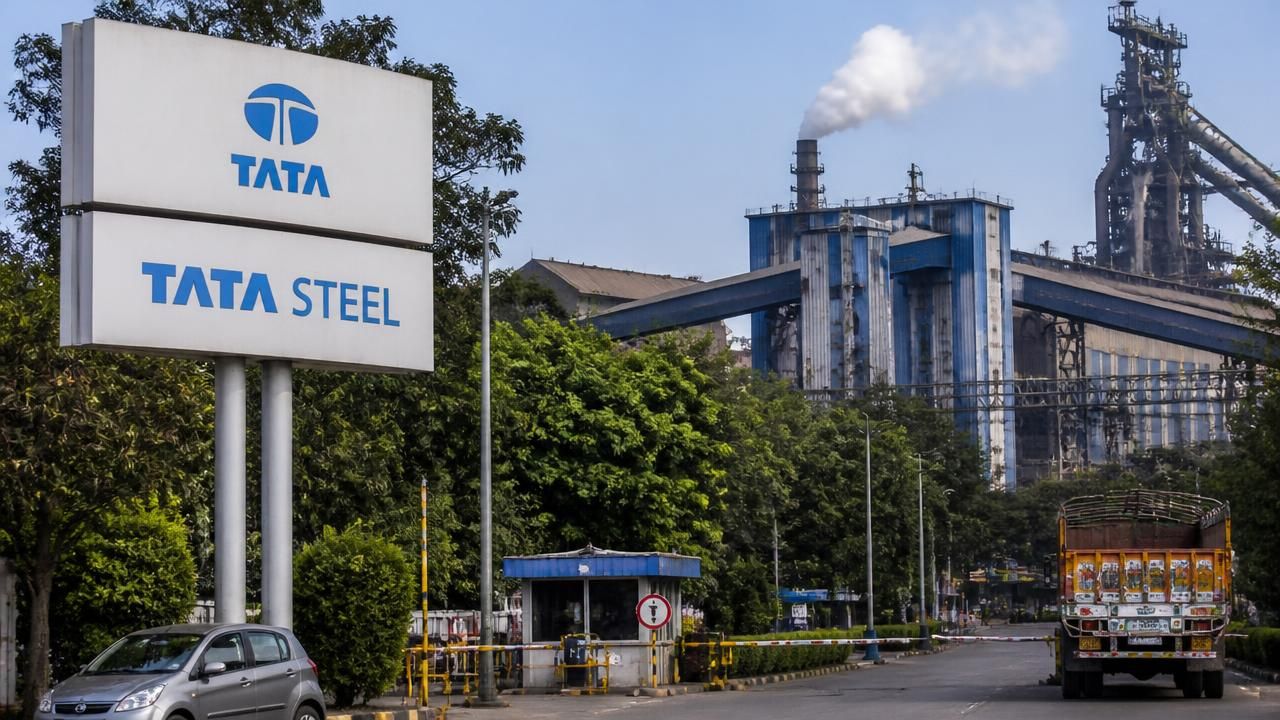
Tata Steel Ltd. is weighing changes to its planned acquisition of a $1.67 billion stake in APL Apollo Tubes Ltd., the company’s chief executive said, after the transaction triggered a sharp market backlash and questions about whether its terms are fair to shareholders.
CEO TV Narendran told CNBC-TV18 that Tata Steel is looking at ways to rework the deal structure, according to Bloomberg Markets, as the Indian steelmaker seeks to reassure investors unsettled by the proposed transaction. Reports from MSN said the company may revise the deal after shareholder feedback, while another report said Tata Steel is working on tweaking the APL Apollo Tubes deal amid questions of fairness.
APL Apollo Tubes is India’s largest steel pipe maker, and the proposed $1.67 billion stake would be a significant downstream bet for Tata Steel, one of India’s largest steel producers. The announcement, however, was met with a nearly 5% plunge in Tata Steel shares, according to market coverage, a sign that investors were not convinced the deal’s strategic logic outweighed concerns about its structure and price.
A Strategic Bet Meets Investor Skepticism
On paper, the transaction fits Tata Steel’s long-running effort to move deeper into value-added steel products. Steel pipes are used in construction, infrastructure, housing and industrial projects, and APL Apollo is a major player in that segment. For Tata Steel, a stake in India’s largest steel pipe maker could strengthen its downstream presence and capture more of the margin embedded in finished products rather than relying solely on commodity steel.
But the market reaction shows that investors are focused less on the industrial logic than on the financial terms. A $1.67 billion commitment is material for Tata Steel, and shareholders appear to be asking whether the company is paying the right price, whether the deal structure treats all shareholders fairly, and whether the capital could be better used elsewhere. The reports do not disclose the precise mechanics of the transaction, but the language used across outlets — backlash, fairness questions, shareholder feedback and restructuring — points to a deal whose presentation and terms have become as important as its strategic rationale.
What Is Being Reworked?
The exact changes under consideration were not disclosed. Narendran’s comments suggest Tata Steel is open to altering the deal’s structure rather than abandoning it outright. In effect, the company appears to be trying to preserve the strategic benefits of the APL Apollo investment while responding to investor concerns.
According to CNBC-TV18, CEO TV Narendran said Tata Steel is looking at ways to rework the transaction in order to reassure investors anxious about the deal structure.
That is a delicate balancing act. A revised structure could include different payment terms, a changed stake size, revised governance or shareholder protections, or clearer disclosure about how the deal creates value. None of those specifics has been confirmed. What is clear is that Tata Steel is now in consultation mode, trying to convince investors that the transaction is not a case of management pursuing scale at the expense of capital discipline.
How the Market and Media Are Framing It
Different outlets have emphasized different angles. Bloomberg Markets led with the CEO’s reassurance and the possibility of reworking the deal, framing the story around Tata Steel’s attempt to calm investors. MSN’s reports focused on shareholder feedback and the fairness question, suggesting the company may revise the deal after listening to concerns. Market-focused coverage led with the size of the transaction — $1.67 billion for a stake in India’s largest steel pipe maker — and the nearly 5% fall in Tata Steel shares. Financial Express also reported that Tata Steel is weighing a restructuring of the APL Apollo deal after the market backlash.
Together, those framings capture the same underlying tension: a large, strategically ambitious transaction has run into a market that is demanding clearer terms and greater accountability. The share-price reaction is particularly telling. In Indian equity markets, a sharp drop in the acquirer’s stock on deal news often signals that investors see the transaction as dilutive, expensive or insufficiently explained. When that reaction is followed by reports of reworking and shareholder feedback, it usually means management has been forced to revisit not just the numbers but the narrative.
Why It Matters Beyond Tata Steel
The outcome will be watched well beyond the two companies. For Tata Steel, the deal is a test of how much it can lean into downstream expansion without alienating investors who have grown more sensitive to capital allocation. For APL Apollo, a revised or delayed transaction could affect expectations around ownership and future strategy. For the broader Indian M&A market, the episode is a reminder that shareholder communication and deal design matter as much as strategic fit.
It also comes as Indian steel companies navigate a complicated cycle of domestic demand growth, global price volatility and pressure to invest in cleaner and more efficient capacity. Tata Steel has been pursuing a mix of consolidation and value-added growth, but investors are increasingly willing to push back when they believe a deal’s terms are unclear or unfair. The company’s response — listening, reviewing and potentially tweaking — is an acknowledgment of that shift.
What to Watch Next
- Whether Tata Steel formally announces revised terms, including any change to the stake size, price or transaction structure.
- How shareholders respond to management’s explanation of the deal’s strategic and financial rationale.
- Whether the stock recovers from the near-5% slide or continues to reflect skepticism about the transaction.
- Whether the APL Apollo deal becomes a template for more shareholder-sensitive dealmaking by large Indian corporates.
For now, Tata Steel’s message is that it is listening. The next step is to show investors exactly what a reworked deal would look like — and why it would be fairer than the version that triggered the backlash.