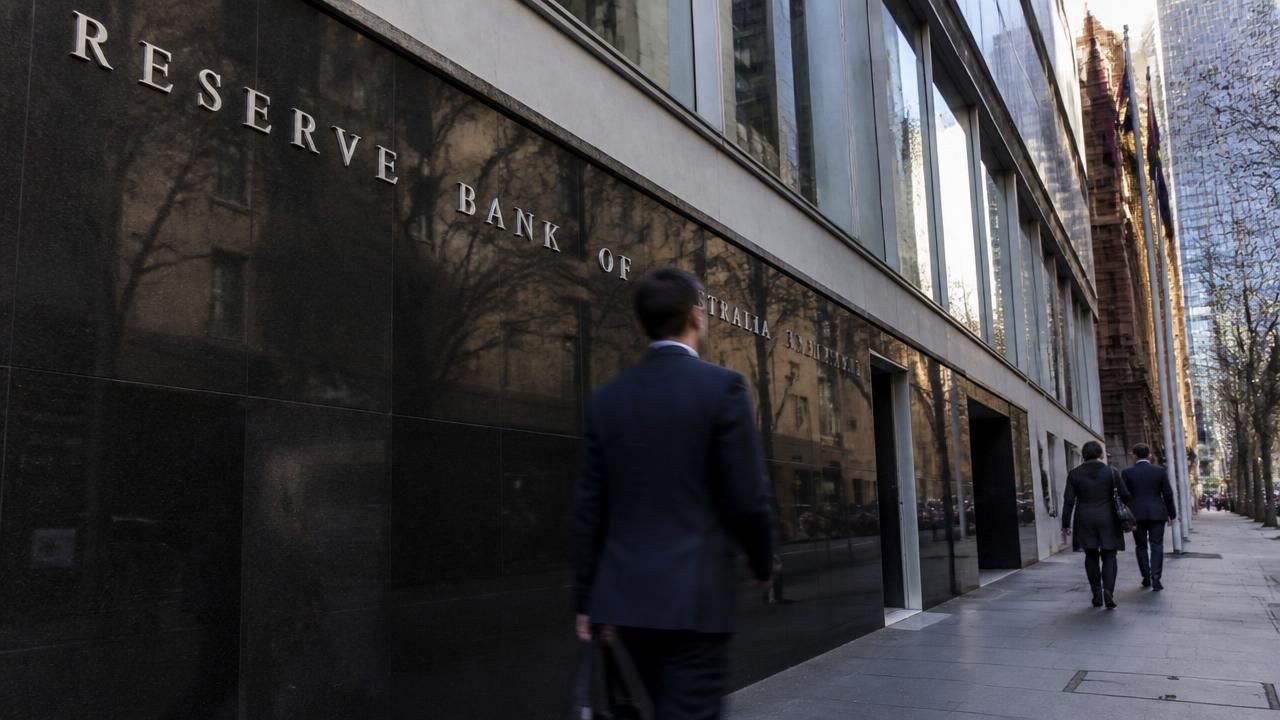
A senior Reserve Bank of Australia official has described the country's financial conditions as "clearly restrictive" following five interest-rate increases this year, offering the clearest signal yet that the central bank believes its tightening campaign is biting into household budgets and business activity — even as it acknowledges the difficulty of measuring exactly how hard.
The remarks, reported by Bloomberg Markets and carried by MSN and Yahoo Finance, came alongside a separate account from Reuters that the RBA board judged a fifth hike necessary "to provide policy assurance." Together, the two disclosures paint a picture of a central bank that is not yet ready to declare victory over inflation, but is increasingly focused on calibrating how much further restraint the economy can absorb.
What Was Said
According to Bloomberg Markets, the official said Australia's financial conditions are "clearly restrictive" after five rate increases this year, while also noting the difficulty of determining the extent of that restrictiveness. Yahoo Finance's Singapore finance edition framed the same comments against a backdrop of accelerating inflation, placing the emphasis on price pressures that have yet to convincingly moderate.
Reuters approached the story from the inside of the policy debate, reporting that the RBA board judged the fifth hike in the cycle as necessary to provide "policy assurance" — language that suggests the move was as much about anchoring expectations as it was about the immediate arithmetic of the cash rate.
"Financial conditions are clearly restrictive" following five increases this year, the senior RBA official said, while cautioning that pinning down precisely how restrictive is a difficult exercise.
Why 'Restrictive' Is the Word That Matters
Central bankers divide the world of monetary policy into three rough states: accommodative, neutral and restrictive. Calling conditions "restrictive" is a substantive claim — it asserts that policy is now actively slowing demand rather than merely failing to stimulate it. For mortgage holders, that translates into higher repayments; for businesses, into tighter credit and softer consumer spending.
The qualification attached to the description is equally telling. Estimating the precise degree of restrictiveness is one of the most contested problems in macroeconomics: the so-called neutral rate is unobservable, transmission lags are long and variable, and a large share of Australian mortgages are on fixed terms that delay the pass-through of rate rises until loans roll off. Officials have repeatedly flagged that this lag makes it harder to judge when policy has done enough.
Two Frames on the Same Decision
The coverage illustrates how differently the same decision can be read. Bloomberg and MSN focused on the diagnosis — conditions are restrictive, therefore the bank is closer to the end of its tightening cycle than the beginning. Yahoo Finance foregrounded the inflation data, implying that accelerating prices could yet force further action. Reuters, meanwhile, emphasised the board's internal reasoning, highlighting the desire for "policy assurance" — a phrase that hints at concern about credibility and inflation expectations as much as about the current inflation print.
Those framings are not contradictory so much as complementary. A central bank can believe conditions are already restrictive and still raise rates, if it judges that inflation is falling too slowly or that its own determination is being doubted by markets.
The Broader Context
The RBA's position mirrors that of peers in other developed economies that spent much of the post-pandemic period unwinding emergency-era stimulus. Australia's exposure is distinctive in two respects:
- Household leverage: Australian households carry among the highest debt-to-income ratios in the advanced world, making the economy unusually sensitive to rate movements.
- Fixed-rate roll-off: A substantial cohort of borrowers locked in ultra-low fixed rates during the pandemic, meaning the full force of tightening arrives only as those loans expire — a slow-burn transmission channel.
Both factors complicate the task of reading the economy in real time. Strong employment and resilient spending can coexist with severe stress among heavily indebted households, producing aggregate data that understates the strain felt at the margin.
What Comes Next
The practical question for markets is whether five hikes represent the end of the cycle or a pause. The official's language offers ammunition to both camps. Describing conditions as "clearly restrictive" supports the case for patience — further tightening risks overkill given the lags already in the pipeline. But the caveat about the "extent" of restrictiveness preserves optionality, leaving the door open if inflation, as Yahoo Finance's framing suggests, continues to accelerate.
For borrowers, investors and businesses alike, the signal is one of sustained pressure rather than imminent relief. The RBA appears to be entering a phase in which the debate shifts from how fast to tighten toward how long to hold — and how to explain, credibly, a policy stance whose effects will only become fully visible over the coming quarters.
Attention now turns to the next round of inflation and labour-market data, which will test whether the board's judgment — that a fifth hike was needed to provide assurance — proves sufficient, or merely another step in a longer campaign.