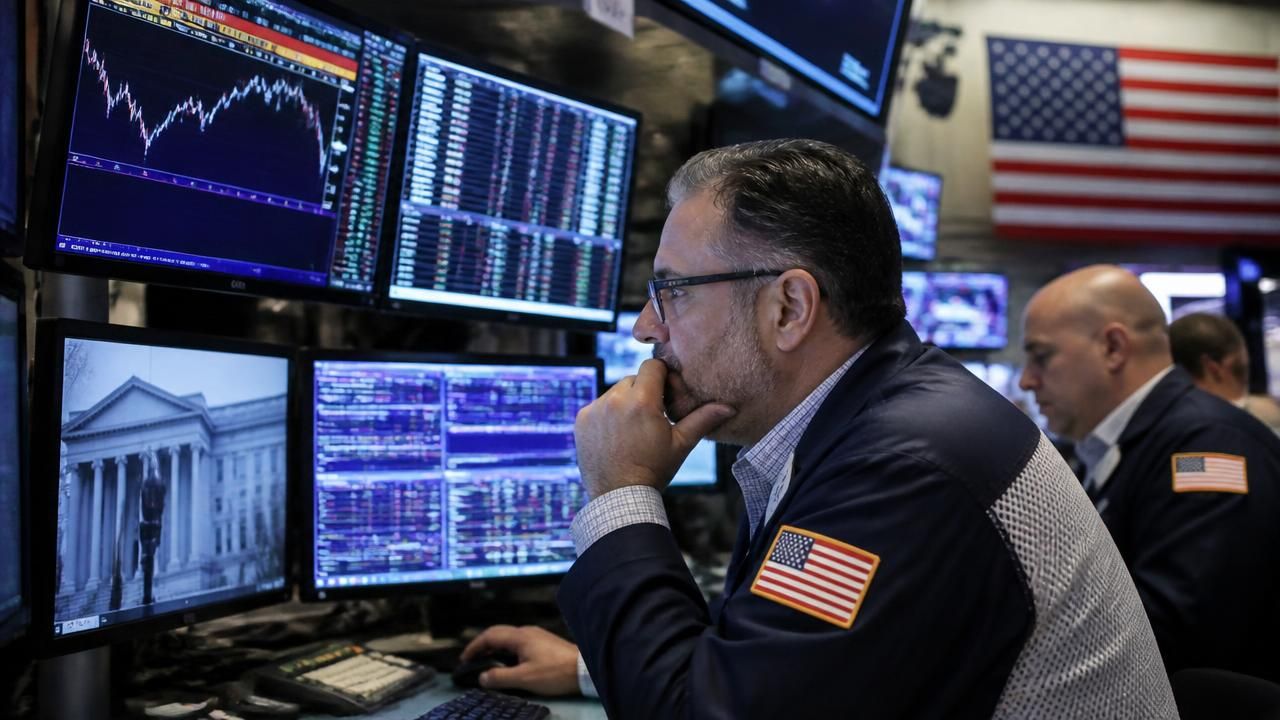
The U.S. Treasury market has become the proving ground for Wall Street's biggest question of the moment: whether an unprecedented wave of investment in artificial intelligence and computing infrastructure can sustain economic growth — or whether the trade has simply run ahead of itself.
In a stretch of trading that produced unusually divergent headlines, government bonds drew fresh demand as U.S. equities gave back a slice of the prior session's steep rally. Yet in other sessions, Treasury futures slipped as rising stocks dulled appetite for havens, underscoring how quickly money is rotating between risk and safety depending on the day's mood.
A Market Swinging Between Fear and Greed
Bloomberg Markets reported that Treasuries advanced on haven demand as U.S. stocks surrendered a portion of Monday's sharp gains, a pullback that suggested "investors remain uneasy about the potential for technology investment to continue to drive economic growth." That framing places the bond rally not as a bet on recession, but as a hedge against the possibility that the market's confidence in an AI-fueled expansion is overdone.
Other coverage captured the mirror image of the same trade. Treasury futures fell as a rising equity market dampened demand for safe havens, a straightforward risk-on signal in which investors preferred stocks to the guaranteed income of government debt. MarketScreeners' coverage likewise pointed to falling Treasury yields — the mirror image of rising bond prices — as investors sought safe-haven assets, though the headline and the market direction it described reflected the same underlying story of money moving toward safety.
The Same Trade, Two Lenses
The apparent contradictions are less a contradiction than a snapshot of a market that is being pulled in both directions and trading in rapid, headline-driven bursts. When equities stumble, the bid for Treasuries returns; when stocks surge, that bid evaporates. Taken together, the reports describe a bond market acting as a real-time referendum on the durability of the technology-led expansion.
The competing tapes tell one story: investors are not convinced either way, and they are paying up for protection whenever stocks wobble.
Japan Catches the Wave
The move was not confined to U.S. shores. Japanese government bonds edged higher, tracking gains in U.S. Treasuries, according to market coverage — a familiar pattern in which the world's deepest debt market sets the tone for global rates. JGBs have long been sensitive to overnight moves in U.S. yields, and the spillover illustrates how quickly a shift in risk appetite in New York transmits to Tokyo, London and beyond.
For Japanese investors in particular, the relationship cuts both ways. Domestic institutions are among the largest foreign holders of U.S. government debt, and moves in Treasury yields influence hedging costs and repatriation decisions. When U.S. yields fall, the calculus for those investors shifts, feeding back into demand for both U.S. and domestic bonds.
Why Treasuries Matter Beyond Trading Desks
Treasury yields serve as the risk-free benchmark that anchors pricing for mortgages, corporate credit, auto loans and virtually every other form of borrowing in the world's largest economy. A bid for bonds driven by haven demand can lower those benchmarks, offering mild relief to consumers and companies — but it also signals caution about the growth outlook. Conversely, when yields rise on risk-on enthusiasm, it reflects confidence, but raises financing costs across the board.
- Safe-haven bid: Equities weakness has repeatedly channeled money into Treasuries, and from there into JGBs.
- Risk-on pressure: Equity rallies drain that haven demand, pushing Treasury futures lower.
- Global transmission: U.S. yield moves set the direction for Japanese bonds within hours.
- Underlying debate: Whether technology capital spending can carry economic growth is unresolved.
The Growth Question Beneath the Noise
The deeper issue animating these swings is the concentration of market returns and economic optimism in a handful of technology and AI-related companies. Capital expenditure on data centers, chips and power infrastructure has become a meaningful driver of U.S. investment, and bulls argue that spending is a multi-year runway that will support earnings and hiring. Skeptics counter that the payoff timeline is uncertain, that depreciation from heavy buildouts will weigh on margins, and that equity valuations already discount years of flawless execution.
Bond investors sit at the intersection of those views. A weakening growth outlook typically supports Treasuries, while persistent inflation or heavy government issuance pushes yields higher. The fact that haven demand keeps resurfacing after every equity pullback suggests investors are hedging rather than panicking — a posture consistent with a market that expects volatility but not a downturn.
What to Watch Next
Traders will be focused on incoming economic data, Federal Reserve communications and the tone of corporate technology spending plans, all of which feed directly into the haven-versus-risk calculation. Equity earnings from the largest technology firms remain the single biggest swing factor: a strong set of results could revive risk appetite and push Treasury futures lower again, while disappointment would likely cement the safe-haven bid.
For now, the bond market's message is one of equivocation. Money is moving toward safety when stocks slip and away from it when they climb — a pattern that reveals investors are deeply invested in the technology growth story but unwilling to bet everything on it. In that sense, the day-to-day direction of Treasury prices matters less than what the crosscurrents reveal: a market hedging its enthusiasm, one wobble at a time.