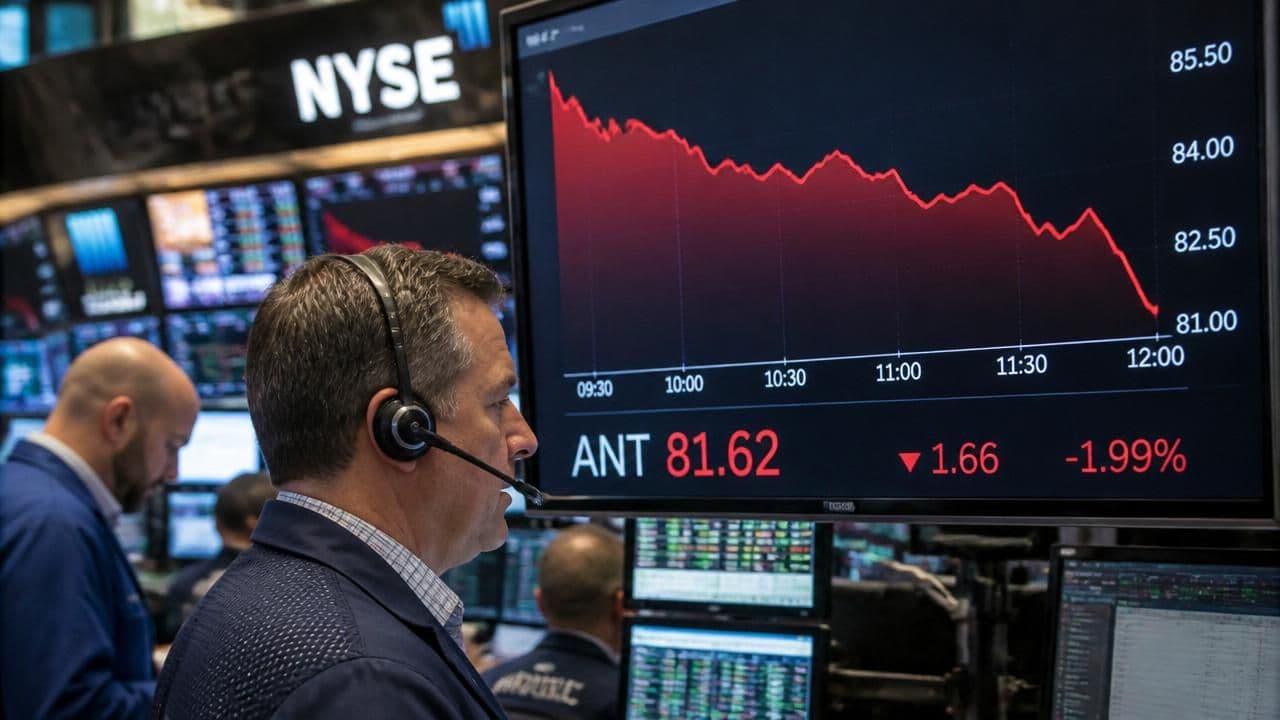
European natural gas prices jumped sharply this week as weather models abruptly turned colder, exposing a market that has little cushion left before the heating season peaks. Benchmark Dutch front-month futures rose as much as 8.6% in a single session, according to traders cited by MSN, capping a run of gains that has unsettled utilities, industrial buyers and policymakers across the continent.
The move was not driven by a single event but by the collision of three: a cold snap in the forecast, storage levels that have been drained to unusually low levels, and renewed disruption to global supply routes tied to escalating tensions between the United States and Iran.
A weather flip that caught the market short
For much of the autumn, mild temperatures and comfortable inventories had lulled traders into a bearish posture. That changed when medium-range forecasting models — the same European and American weather runs that gas desks watch hour by hour — swung toward below-normal temperatures across northwest Europe. Coverage from Bloomberg, The Guardian and MSN all led on the same trigger: a sharply colder outlook that would pull forward heating demand and accelerate withdrawals from storage.
Yahoo Finance framed the shift in more colorful terms, pointing to a "polar vortex taking a U-turn" and the knock-on effect for gas-linked exchange-traded funds. The phrasing matters: for retail investors and ETF allocators, the story is a tradable weather event. For physical buyers, it is a supply-security problem.
Analysts quoted across the coverage converged on a single message: the market had priced in a mild winter, and the forecast no longer supports that assumption.
Inventories sitting near record lows
The cold snap would be manageable in a normal year. It is not a normal year. CNBC reported that European gas stocks have dwindled toward record lows for this point in the season, leaving the continent with a much thinner buffer than the 90%-plus fill levels that Brussels had made a political priority after the 2022 energy shock.
That depletion changes the arithmetic of the winter. Every additional heating-degree day now draws down a smaller reserve, and each drawdown makes summer restocking more expensive. It also strengthens the hand of suppliers during the next round of contract negotiations, and it narrows the margin for error if a cold snap is followed by a prolonged freeze rather than a brief dip.
Middle East escalation compounds the squeeze
The second pressure point comes from outside Europe. OilPrice.com led its coverage on the Middle East escalation, and Yahoo Finance tied the rally directly to tanker attacks in the region, noting that the risk premium has outweighed any relief implied by ceasefire headlines. Bloomberg's markets desk linked the supply anxiety to export disruptions connected to the US-Iran conflict.
Europe's exposure is indirect but real. Gas and oil markets are increasingly coupled through the LNG trade: when Middle East shipping risks rise, cargoes are rerouted, insurance costs climb, and Asian buyers compete harder for the same flexible volumes that Europe depends on to replace lost pipeline supply. A conflict premium in crude filters into European gas through fuel-switching economics and through the simple psychology of risk.
The Guardian's framing emphasized this compounding effect — a cold snap arriving into a market that was already fragile rather than a market reacting to weather alone. The Edge Singapore, aggregating the same wires, struck the same note: the cold snap is "threatening tight inventories," not full ones.
How the coverage diverges
- Market-first framing: Bloomberg led with the price move and the weather trigger, treating the Middle East merely as background pressure.
- Consumer-first framing: CNBC foregrounded the risk of "another gas price shock" for households and industry, placing depletion and record-low stocks at the center of the story.
- Geopolitical framing: OilPrice.com and Yahoo Finance put tanker attacks and the US-Iran conflict at the top, reading the rally as a conflict trade.
- Retail-investor framing: Yahoo's ETF coverage translated the same weather data into a product story — which funds benefit when the polar vortex reverses.
The divergence is instructive. Each outlet is describing the same market, but assigning causality differently: weather, inventories, or war. In practice, all three are amplifiers of one another. Cold weather matters more when storage is low; low storage matters more when LNG cargoes are being diverted; and diversion matters more when shipping lanes are risky.
What happens next
The near-term path hinges on the forecast verifying. If the cold arrives and persists, analysts expect further drawdowns and continued upward pressure on front-month contracts, with the risk of a repeat of the volatility that defined the 2021–22 winter. If the models moderate — as they frequently do beyond ten days — much of the rally could unwind quickly, since speculative positioning, not just physical scarcity, has driven part of the move.
Beyond the weather, three variables matter: the trajectory of US-Iran tensions, the pace of Asian demand for flexible LNG cargoes, and whether European governments intervene again with subsidies or storage mandates. Each of those is a policy question, not a meteorological one — and none of them will be settled before the first hard freeze tests how thin the continent's buffer really is.