NASA, acting on behalf of the National Oceanic and Atmospheric Administration, has awarded Northrop Grumman Systems Corporation a contract to build the next generation of microwave sounders destined for NOAA's Near Earth Orbit Network, or NEON — a deal worth $290.6 million that stretches nearly two decades into the future.
The award covers three Sounder for Microwave-Based Applications, or SMBA, instruments, which will ride aboard NEON satellites and feed temperature and moisture data into the numerical models that underpin everyday weather forecasting. The announcement places a foundational piece of NOAA's future polar-orbiting architecture under contract at a moment when both agencies are pushing to modernize how the United States observes the atmosphere.
What the Contract Covers
The agreement is a hybrid instrument, combining cost-plus-fixed-fee, firm-fixed-price, and time-and-materials elements — a structure that spreads risk between the government and the contractor across a long performance window. The period of performance runs from Nov. 23 through April 1, 2042, with work to be carried out at the awardee's facility.
The cost-plus-fixed-fee, firm-fixed-price, and time-and-materials hybrid contract has a value of $290.6 million, with a period of performance running from Nov. 23 through April 1, 2042.
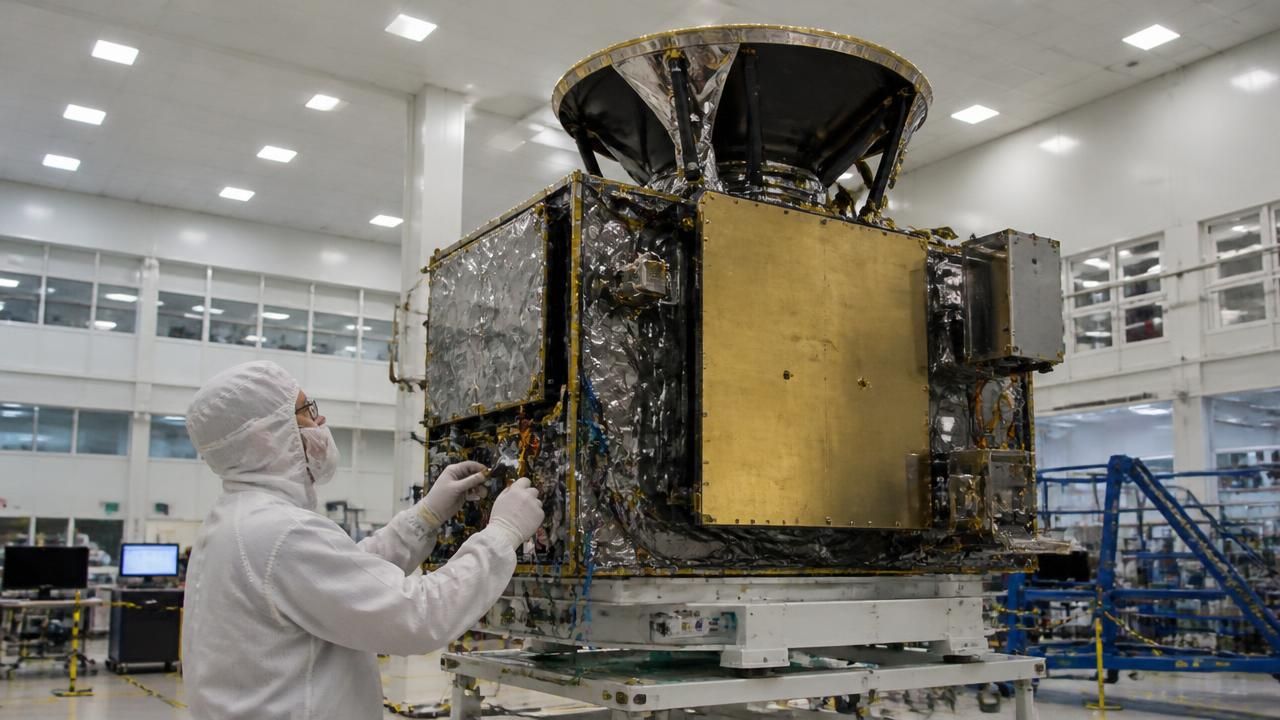
Under the terms, Northrop Grumman will handle design, development, production, testing, and mission support for all three instruments. NASA's Goddard Space Flight Center in Greenbelt, Maryland, is managing the acquisition on NOAA's behalf. NOAA will own and operate the instruments and distribute their data to users around the world — a detail that matters, because the output of these sensors feeds global forecast models rather than serving a single national customer.
Why Microwave Sounders Matter
Microwave sounders are workhorses of modern meteorology. By measuring how the atmosphere absorbs and emits microwave energy at multiple frequencies, they profile temperature and humidity at different altitudes — the raw ingredients that determine how weather systems form, intensify, and move.
Those measurements are especially valuable because they can be taken through clouds, unlike visible and infrared imagery, and because polar-orbiting satellites sweep the entire globe twice a day. The data is ingested by numerical weather prediction models, the same systems that generate the multi-day outlooks issued by NOAA's National Weather Service.
According to NASA, the SMBA instruments could improve medium-range forecasts — the three-to-ten-day window that governs everything from weekend travel plans to agricultural decisions to emergency preparation. Forecast skill in that range has improved steadily over the past two decades, and satellite sounding data is widely credited as one of the largest single contributors to those gains.
The new instruments represent a generational step beyond the microwave sounders now flying on NOAA's current polar-orbiting satellites, which are nearing the end of their planned service lives. SMBA is described by NASA as the next generation of low Earth orbit microwave sounders.
A Two-Agency, Public-Private Enterprise
NEON is structured as a collaboration with clearly divided responsibilities. NOAA leads the mission, providing funding, technical requirements, and post-launch operations. NASA manages the development of the NEON satellites and will launch them for NOAA. Both agencies will work with commercial partners to design and build the spacecraft and instruments.
That division of labor reflects a broader shift in U.S. environmental observation, in which the government increasingly buys capacity from commercial providers rather than owning every piece of the pipeline outright. NASA's Goddard center sits at the center of the acquisition model, translating NOAA's scientific requirements into hardware contracts that industry can execute.
- Contract value: $290.6 million
- Instruments: Three SMBA microwave sounders
- Contractor: Northrop Grumman Systems Corporation
- Managing agency: NASA Goddard Space Flight Center for NOAA
- Performance window: Nov. 23 through April 1, 2042
The Stakes for Forecasters and the Public
The practical payoff hinges on how much the new sensors improve the data stream feeding forecast models. Medium-range forecasting is a game of small margins: modest reductions in atmospheric uncertainty can translate into meaningfully better predictions of storm tracks, precipitation, and temperature extremes days in advance. For the National Weather Service, gains in that window carry direct economic value across sectors such as aviation, energy, shipping, and agriculture.
There is also a continuity dimension. Satellite observing systems are only as good as their unbroken record; gaps between one generation of instruments and the next degrade forecast skill quickly. Locking in a contract that runs to 2042 gives NOAA a long planning horizon, though the extended timeline also underscores how far ahead satellite meteorology must operate — hardware ordered today will still be defining forecast quality when today's models are long obsolete.
For Northrop Grumman, the award adds to a growing portfolio of civil space and environmental sensing work. For NASA and NOAA, it is another step in assembling NEON, the network intended to carry U.S. weather observation through the coming decades. And for the public, the contract is the unglamorous groundwork behind a familiar question: how far ahead can you trust the forecast?