Mexican special forces captured one of the FBI's ten most wanted fugitives late Friday night in the northern state of Sinaloa, ending a manhunt that had stretched across more than a decade and setting off a violent backlash that left at least 11 people dead.
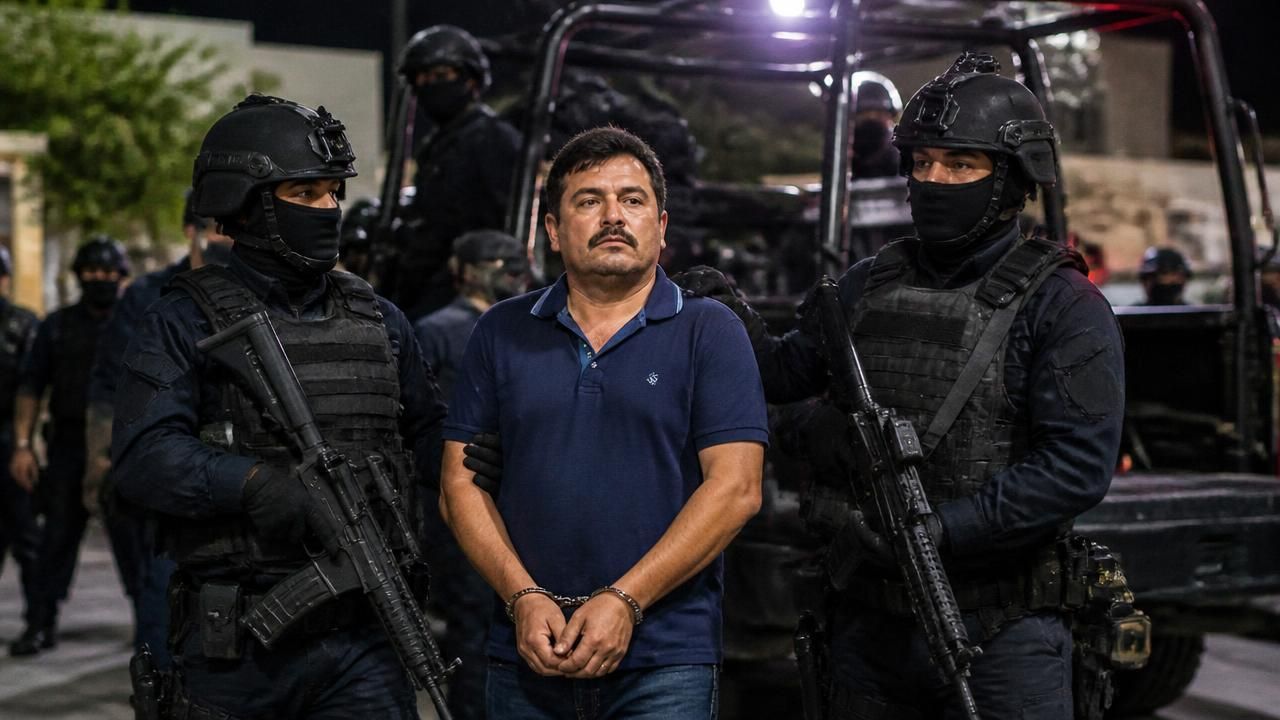
Fausto Isidro Meza Flores, known widely as "El Chapo Isidro," was detained in the city of Guasave along with two other alleged leaders of his criminal organization following a fierce gun battle that sent residents scrambling for cover, according to the Guardian, the Associated Press, Al Jazeera and other outlets reporting from the scene.
Who Is 'El Chapo Isidro'?
Despite a nickname that invites comparison with the far more famous Joaquín "El Chapo" Guzmán, Meza Flores built a distinct and durable criminal franchise of his own. According to the AP, he rose from a small-time trafficker to a regional drug lord, ultimately commanding the remnants of the Beltrán Leyva organization through a faction known as Los Mazatlecos, based in the coastal and agricultural towns of northern Sinaloa.
His longevity set him apart. While Guzmán was recaptured twice and eventually extradited to the United States, and while successive cartel bosses were killed or jailed, Meza Flores evaded every dragnet. The FBI placed him on its Ten Most Wanted Fugitives list, offering a reward for information leading to his capture, and US prosecutors have long sought him on drug trafficking and related charges.
Analysts note that his organization's relatively low profile — focused on drug distribution and enforcement rather than spectacular acts of violence — may have helped him survive a period in which Mexican authorities prioritized higher-profile targets.
How the Raid Unfolded
Details remained fluid in the hours after the operation, but multiple accounts describe a special forces assault in Guasave on Friday night that rapidly escalated into a running firefight. According to reports compiled by the Guardian and Telegraph India, Meza Flores was seized together with two other alleged leaders of his gang following the exchange of gunfire.
Al Jazeera published the first images of the captured cartel boss after his detention — a moment that Mexican security analysts described as symbolically important in a country where the public has grown accustomed to arrests being announced without visual confirmation.
The operation did not end with the arrest. Within hours, armed men blocked highways, torched vehicles and engaged security forces in several parts of Sinaloa, prompting schools and businesses to close and residents to stay indoors. Reports from MSN and other aggregators put the death toll at 11, though officials cautioned that the figure could rise and that the identities of the dead were still being established.
"The capture of a figure of this stature rarely happens quietly in Sinaloa — the immediate violence is both a retaliation and a signal that the organization is not finished."
A String of High-Profile Arrests
Yahoo News framed the detention as "the latest in a string of arrests," reflecting a broader shift in Mexican security policy. Under pressure from Washington, Mexican forces have in recent years targeted senior cartel figures more aggressively, while simultaneously trying to avoid the kind of large-scale confrontations that in the past turned cities into battlefields.
That policy has produced a mixed record. Successive captures have weakened some organizations while fragmenting others into smaller, more predatory gangs — a dynamic that has driven much of the violence that has pushed Mexico's homicide totals to record levels in some years.
The US dimension is central. Republic World reported that the arrest prompted a security alert from American authorities, and the timing underscores how closely Washington tracks Mexican operations. Meza Flores's presence on the FBI's most-wanted list made his capture a deliverable for bilateral security cooperation, and it remains unclear whether Mexico will pursue his prosecution domestically or move toward extradition.
Why It Matters
- Symbolic weight: Removing a ten-year fugitive from the board is a measurable win for Mexican security forces at a time when public confidence in the strategy is fragile.
- Fragmentation risk: Historically, the removal of a top boss has accelerated internal disputes, often producing more violence rather than less in the short term.
- Regional spillover: Sinaloa's drug corridors supply markets across North America; disruptions tend to ripple through trafficking networks and pricing.
- Bilateral stakes: The arrest will feature prominently in US-Mexico security discussions, particularly around intelligence sharing and extradition.
Differing Frames
The international coverage diverged in emphasis. British and Indian outlets such as the Guardian and Telegraph India led with the FBI's most-wanted designation and the deadly aftermath, foregrounding the violence that accompanied the arrest. US-based aggregators leaned heavily on the "most wanted" hook, with a cluster of MSN-syndicated headlines repeating variations of the same framing. Al Jazeera focused on the visual confirmation of the capture, while regional outlets emphasized the local toll in Guasave and the panic that gripped the city.
What the accounts share is a recognition that Friday's raid is a significant moment — but not necessarily a decisive one. Mexican cartel history is littered with captures that promised stability and delivered new rounds of bloodshed. Whether the takedown of El Chapo Isidro weakens his organization or merely reshuffles it will become clear only in the weeks ahead, as authorities assess the fallout on the streets of Sinaloa.