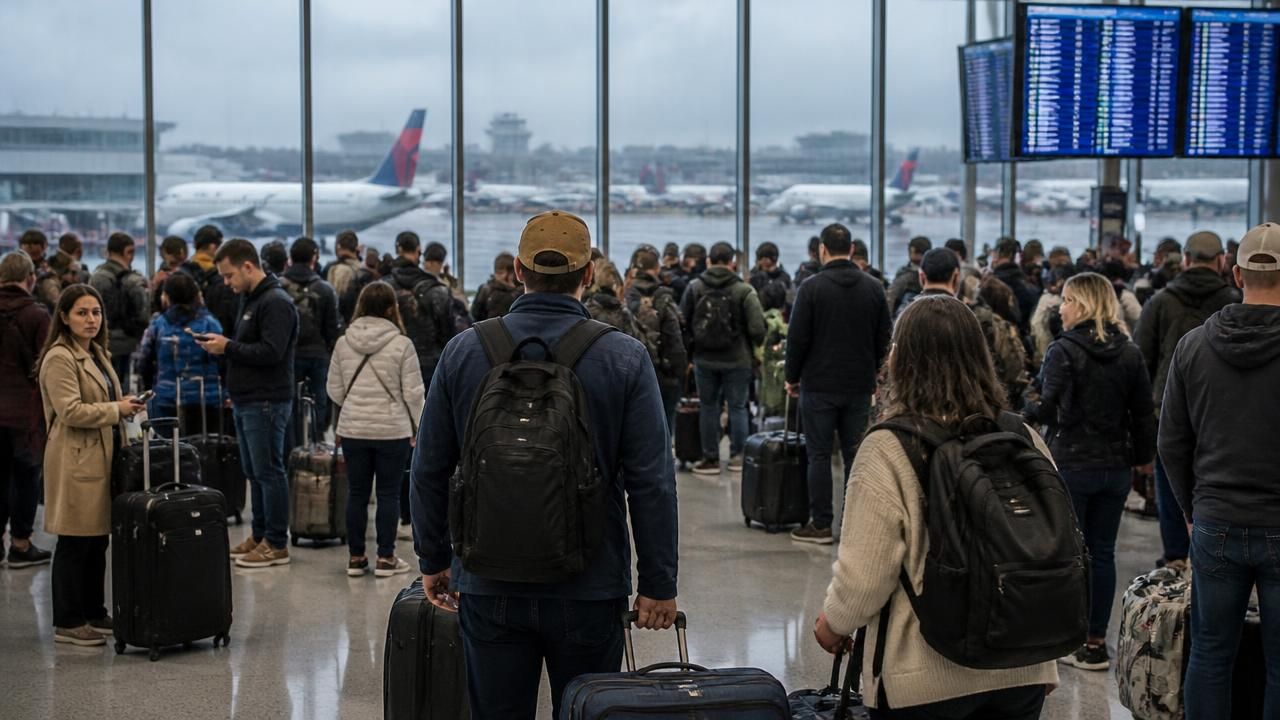
A pair of storm systems is threatening to scramble Thanksgiving travel across the United States, with hazardous weather forecast on both coasts just as millions of people prepare to fly, drive and gather for the holiday. The disruptions range from a brewing coastal storm that could affect the Eastern Seaboard to a Western system expected to bring rain and mountain snow, while officials in San Francisco are already urging residents to avoid unnecessary travel.
NPR News reported that San Francisco’s mayor is asking people in the city not to travel unless it is “absolutely essential,” a striking public-safety message ahead of one of the year’s busiest travel periods. At the same time, a storm moving up the Eastern Seaboard could cause delays for travelers along the Atlantic corridor, adding to concerns about airport congestion, road conditions and holiday timing.
“Absolutely essential” travel only — the message from San Francisco’s mayor as storms threatened both coasts.
A holiday rush under pressure
The scope of the threat has been framed by MSN as a large-scale disruption: millions of people across more than 20 states could face Thanksgiving travel problems as powerful storms take aim at both coasts. AccuWeather’s headline sharpened the regional split, warning of rain in the East and a mix of rain and snow in the West. That combination matters because the United States’ holiday travel system is highly interconnected: a storm in one region can ripple through airports and highways far beyond the immediate forecast zone.
Forecasters caution that small changes in storm track, timing and intensity can substantially alter local impacts. In the East, the main concerns are rain, coastal wind and reduced visibility or visibility-related delays at airports. In the West, rain and snow could make mountain passes and rural highways especially difficult, while urban areas may face slick roads and localized flooding. The San Francisco advisory reflects how seriously local officials are treating the Western system’s potential to disrupt movement.
Two coasts, two kinds of hazards
On the East Coast, the story is a developing coastal storm. MSN reported that the system threatens East Coast travel ahead of Thanksgiving and could be named Subtropical Storm Kyle. The possibility of a named storm adds a layer of uncertainty: naming is a meteorological designation, but for travelers it signals a system with enough organization and wind to demand attention. Even if the storm does not receive a name, it could still bring rain, wind and travel delays from the Mid-Atlantic into New England.
In the West, the hazard is more varied. AccuWeather described rain in the East and rain and snow in the West, a reminder that Thanksgiving weather is not a single story but a patchwork of regional risks. Snow in higher elevations can close passes or require chains, while rain in lower elevations can slow traffic and raise the risk of accidents. For travelers departing San Francisco and other Western cities, the mayor’s “absolutely essential” guidance is both a public-safety appeal and a recognition that holiday demand can overwhelm roads and transit during bad weather.
How outlets are framing the story
Different outlets have emphasized different dimensions of the same event. NPR led with the public-safety advisory from San Francisco and the Eastern Seaboard storm’s potential to cause delays, focusing on what travelers should do. MSN emphasized scale, highlighting millions of people across more than 20 states and the possibility of a named storm. AccuWeather provided the most granular weather framing, distinguishing rain in the East from rain and snow in the West. MSN’s coverage of Macy’s balloons then added a cultural and symbolic angle: the Thanksgiving parade’s giant balloons have wind limits, and a coastal storm could test them.
Those framings are complementary rather than contradictory. The public-safety frame answers the question of how people should respond. The scale frame answers how many people may be affected. The meteorological frame answers what kind of weather is coming and where. The parade frame answers why the storm matters beyond airports and highways: it threatens a beloved holiday ritual that depends on precise wind conditions.
Macy’s balloons and the wind test
Macy’s Thanksgiving Day Parade has long-standing wind limits for its giant character balloons, and the coastal storm threatens to test those rules. The balloons are a signature part of the parade, but they are also weather-sensitive. If sustained winds or gusts exceed the parade’s thresholds, officials can ground the balloons or alter the route. That decision would be made with public safety in mind, but it would also carry symbolic weight: a Thanksgiving tradition shaped by the same storm that is disrupting travel.
The parade angle illustrates how weather stories become cultural stories. For many Americans, Thanksgiving travel and the Macy’s parade are intertwined rituals. A storm that delays flights and threatens balloons touches both the practical and the emotional dimensions of the holiday. It also shows how forecast uncertainty travels: a slight shift in wind speed or storm track can determine whether the parade proceeds as planned or whether millions of viewers see a different kind of celebration.
What travelers should know
- Check forecasts and airline advisories before departing, especially if traveling through the East Coast or Western mountain corridors.
- Allow extra time for roads, airports and transit, and consider flexible bookings where possible.
- In San Francisco, local officials are asking residents to avoid travel unless it is absolutely essential.
- Monitor parade and event updates if attending or watching Thanksgiving traditions in New York.
- Expect ripple effects: delays in one region can cascade through connecting flights and interstate travel.
The bigger picture is a familiar one for Thanksgiving week: high travel demand colliding with volatile weather. What is unusual is the simultaneous threat on both coasts, with a potential named subtropical storm in the East and a rain-snow system in the West. For travelers, the best strategy is preparation and flexibility. For forecasters and public officials, the challenge is communicating uncertainty without understating risk. And for the Macy’s parade, the coming days will determine whether a holiday spectacle proceeds as planned or whether wind limits become the story.