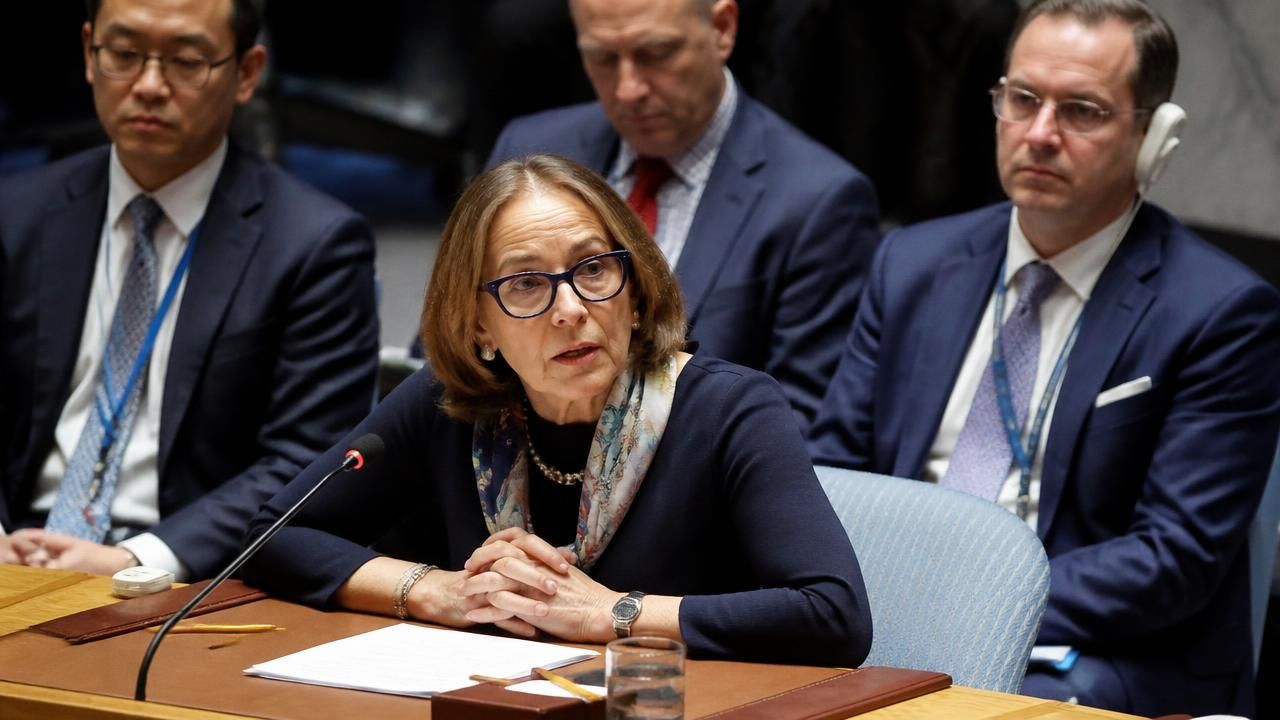
The contest to become the next United Nations secretary general is heading toward a decisive moment on Friday, when a vote in the 15-member Security Council is expected to show whether the Costa Rican frontrunner, Rebeca Grynspan, can survive the vetoes of the body's most powerful members — or whether her candidacy will be stopped by the same handful of governments the process was meant to open up.
According to reporting by The Guardian, Grynspan, an economist and veteran UN insider, has led all but one of the eight straw polls held since the first secret ballot on 30 July. In each round, council members work down a list of candidates casting a single verdict on each: "encourage," "discourage" or "no opinion." The tallies are informal but closely watched, because a "discourage" vote from any of the five permanent members — Britain, China, France, Russia and the United States — signals a likely veto in the formal ballot that follows.
A frontrunner with an unusual biography
Grynspan's profile cuts across several of the blocs that typically shape UN appointments. An economist by training, she has held senior posts inside the UN system, including at the helm of the UN's development arm, and has served in her country's government. She is also the descendant of Polish-Jewish wartime refugees who found sanctuary in Costa Rica — a biography her supporters present as emblematic of the organization's founding promise of refuge and international solidarity.
Her sustained lead in the straw polls has made her the benchmark against which the rest of the field is measured. Yet the fact that she has never converted that lead into a decisive, uncontested result speaks to the peculiar arithmetic of the process, in which popularity among the council's ten elected members counts for far less than the sufferance of the P5.
The UAE candidacy and the veto question
The race grew sharper this week with reporting that Britain and France are believed to have vetoed the United Arab Emirates' choice for the post. The disclosure, first surfaced in UK and French diplomatic circles and reported by The Guardian, underscores how quickly a field that includes several credible candidates can be narrowed by the preferences — or the objections — of a few capitals.
The episode has been framed by some diplomats as evidence of a broader dynamic: Western permanent members are prepared to use their veto power at the earliest stage of the selection, rather than allow a contested name to build momentum in the General Assembly. For the UAE, whose growing diplomatic ambitions at the UN have been matched by an increasingly visible role in humanitarian and climate diplomacy, the reported veto is a significant setback — and one that will fuel arguments that the process remains opaque.
'A chaotic race'
How the story is being told depends heavily on where it is being read. The New York Times has characterized the contest as "a chaotic race for the world's top diplomat," emphasizing the sheer number of candidates and the unpredictable sequencing of rounds. The Guardian's coverage stresses structural questions — specifically, that a setback for Grynspan would "reignite a debate about the dominance of the permanent five members at the United Nations." Other outlets, including the Business Standard, have framed the same developments around "global power rivalries," casting the vote less as a meritocratic selection than as a proxy contest among competing geopolitical blocs.
The differing emphases are not merely editorial. They reflect genuine disagreement among member states about what the process is for. For the P5, the secretary general must be someone no permanent member will find intolerable, particularly on matters of peace and security. For much of the wider membership, that test is precisely the problem.
"The race to become the next UN secretary general could reach a decisive moment on Friday when a UN security council vote is likely to reveal whether the Costa Rican frontrunner for the post would be blocked by the big powers." — The Guardian
Why the process matters beyond one name
The current contest has unfolded against a backdrop of sustained pressure to reform the selection. Campaign groups and a bloc of mid-sized and smaller states have pushed for published lists of candidates, formal public hearings and, above all, an end to the convention that the top job rotates by region — a practice that effectively reserves the post for particular parts of the world in particular cycles.
- The straw poll system was designed to give candidates an early, anonymous reading of their standing; in practice it functions as a series of elimination rounds in which the P5 exercise their leverage long before a formal ballot.
- The veto threshold means a single permanent member can end a candidacy regardless of majority support in the Security Council or the General Assembly.
- Regional rotation remains informal and contested, and this year's field — drawn from Latin America, Eastern Europe, the Arab world and beyond — has strained the convention further.
Historically, the pattern is familiar. The 2016 contest, which ultimately produced António Guterres, was marked by early frontrunners who faltered under the glare of public scrutiny and by discreet vetoes that reshaped the field before any formal vote. Observers expect a similar dynamic this time: names that look strong in the General Assembly's informal dialogues can disappear quickly once the council's permanent members begin to signal displeasure.
What Friday will reveal
A strong showing for Grynspan on Friday, with no "discourage" votes from the P5, would likely set her on course for a formal recommendation to the General Assembly. A damaging signal from London, Paris, Washington, Moscow or Beijing would reopen the whole field within days — and hand fresh ammunition to those arguing that a system built in 1945 cannot credibly choose the world's chief diplomat in 2026.
Either way, the episode has already done something the campaigners have long sought: it has forced the arcana of the secretary general selection into public view, and made clear that the answer to "who leads the UN?" is determined less by the ballot box than by the calculations of five capitals.