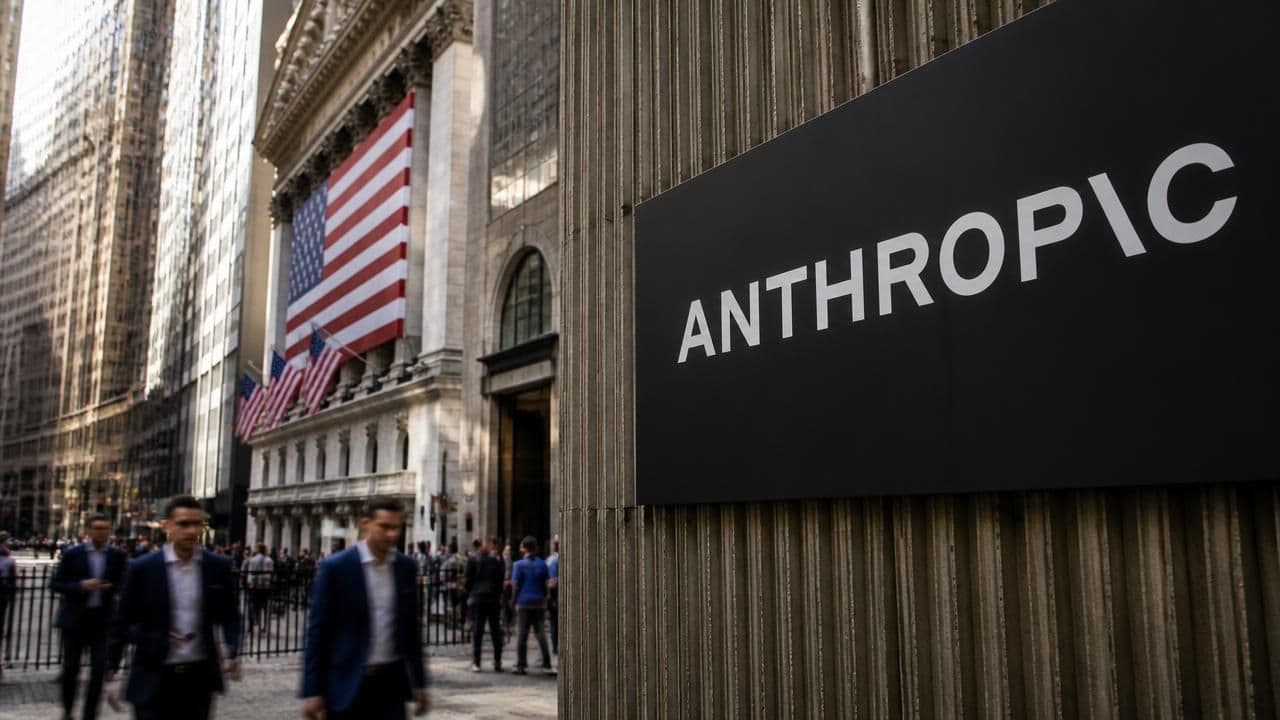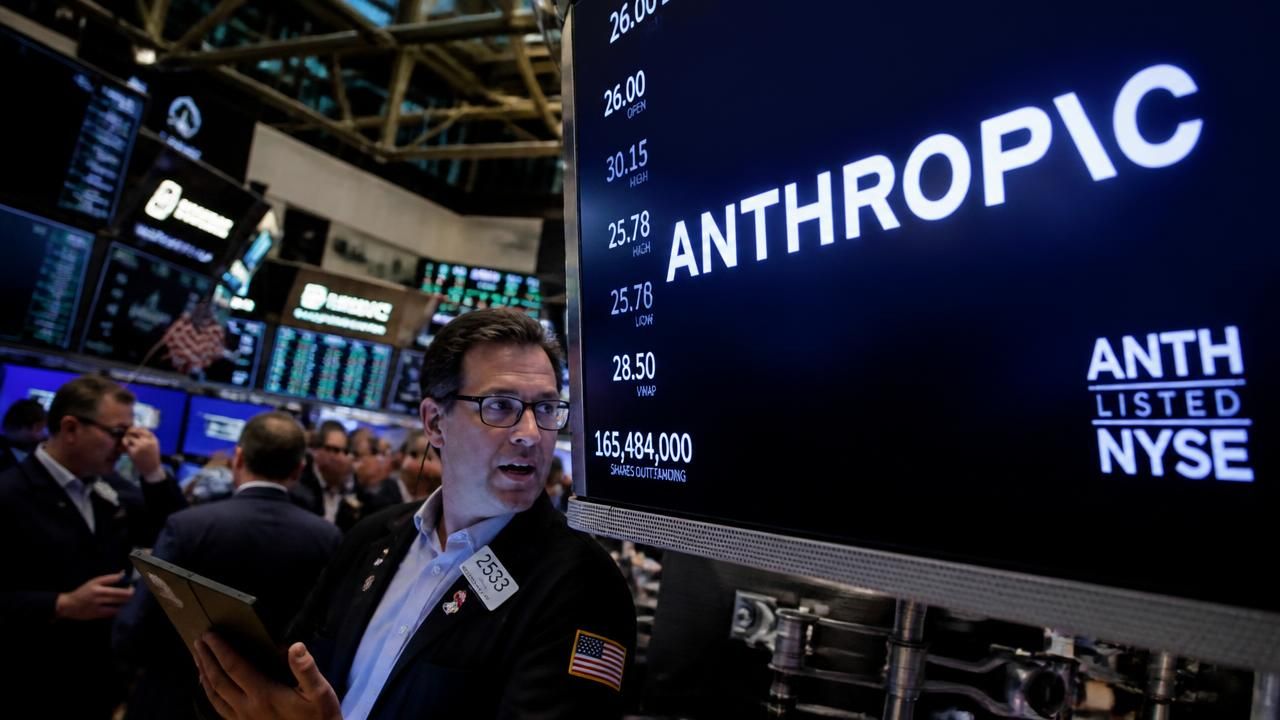
Anthropic's long-anticipated debut on public markets has become the defining financial event of the AI era — and a stress test for nearly every assumption underpinning the sector's staggering private valuations. The AI lab, maker of the Claude family of models, surged past a $2 trillion market capitalization in its first sessions of trading following a record-breaking offering, according to CNBC's live coverage of the listing. The debut instantly reshaped the hierarchy of the world's most valuable companies and handed Wall Street its largest-ever technology float.
Yet the headline number masks a messier story. The run-up to the listing was marked by an unusually public fight over price, a parade of valuation cuts from Wall Street's most-followed number-crunchers, and growing anxiety about how AI companies pay for one another's growth.
A pricing fight in public view
Anthropic's offering did not arrive at the number bankers originally floated. Investors reportedly pushed for a valuation closer to $1.5 trillion to $1.6 trillion as the pace of revenue growth showed signs of slowing, according to reporting cited by Seeking Alpha and Yahoo Finance. That pressure forced underwriters to recalibrate expectations for what had been billed as an unprecedentedask.
JPMorgan Chase landed the assignment — its second trillion-dollar IPO role in succession — and chief executive Jamie Dimon was personally among the sellers in both deals, a detail that drew scrutiny about insider participation at the top of the market. The bank declined to comment beyond its prospectus disclosures.
Even after the discount, the debut valuation exceeded the most optimistic private-round marks. Evan Schlossman, principal at Neostellar, told Bloomberg Markets that the listing effectively "backs up" the valuations that venture investors had assigned to Anthropic in private rounds — a validation that had been far from guaranteed. Others read the same pop as something less flattering: a public-market subsidy for private marks that had outrun fundamentals.
The dean of valuation weighs in
New York University's Aswath Damodaran, widely known as the "dean of valuation," trimmed his own estimate for Anthropic to roughly $1.45 trillion ahead of the float, flagging what he called the "fragility" of the company's path toward a trillion-dollar revenue target. Damodaran's model, circulated widely on financial social media, implies that the bull case requires years of near-flawless execution.
"The revenue trajectory is extraordinary, but extraordinary is not the same as inevitable," the thrust of his argument ran: a trillion dollars in annual revenue is a destination no enterprise software company has ever reached, and the assumptions required to get there leave little room for a slowdown in enterprise AI spending.
Other analysts were more sympathetic. Jim Cramer argued that Anthropic's explosive revenue growth could justify a record-breaking offering, pushing back on skeptics who, in his telling, want to "derail" the IPO. Cramer warned that a single high-profile disappointment could become "the straw" that breaks sentiment across the entire AI complex.
The circular-financing question
Perhaps the most consequential debate concerns how AI companies fund each other. Anthropic's revenue is heavily tied to cloud and chip partners who are also among its largest investors — a loop in which capital invested flows back as compute spending. MSN framed the IPO as a direct test of that "circular financing boom": if public shareholders accept the model, the structure spreads; if they balk, the private market's most aggressive bets come under pressure.
Paul Kedrosky has argued that the real AI bubble, if one exists, may be hiding in private markets rather than public ones. Public investors, he contends, can mark prices down daily and exit; private holders cannot. An Anthropic IPO that prices richly but trades volatilely would expose that asymmetry — and could force late-stage venture funds to reassess marks across their entire AI portfolios.
Morningstar's pre-listing analysis made a similar point from the opposite direction: even before shares traded, the offering was already casting a long shadow over private AI stocks, as fund managers prepared to benchmark their unlisted holdings against a newly observable public price.
Why Chinese peers lag
Anthropic's valuation also sharpened a global comparison. As MSN asked, why are Chinese tech valuations so far behind? The gap reflects a combination of export controls on advanced chips, restricted access to Western capital markets, and a domestic regulatory environment that has compressed multiples across the sector. For Beijing, the Anthropic debut is a data point in a broader argument about capital-market openness.
Advisors: slow down
Wealth management firms, meanwhile, are counseling restraint. Advisors quoted by WealthManagement.com urged clients to resist the urge to chase the first-day pop, citing lockup expirations, index-inclusion timing, and the volatility that has accompanied other mega-cap technology debuts. Their advice: size positions deliberately and treat Anthropic as a long-duration holding rather than a trade.
What to watch
- First earnings report: Whether revenue growth re-accelerates will determine if the $2 trillion mark holds.
- Lockup expiry: Early investors and employees become sellers within months, testing demand.
- Private marks: Rival AI labs and their backers will reprice against Anthropic's public multiple.
- Compute economics: Gross margins will reveal how much of the growth is being purchased with partner capital.
The offering has settled one question — that public investors will pay a historic premium for a leading AI franchise. It has left the harder one open: whether that premium reflects durable earnings power, or merely the last, largest round of a private boom finding its public exit.