The United Nations' highest court has ruled that Myanmar committed genocide against its Rohingya minority, finding that the country's security forces "acted with genocidal intent" during the 2017 military operations in northern Rakhine State. The judgment from the International Court of Justice (ICJ), based in The Hague, marks the first time the court has found a state responsible for genocide — a landmark that rights groups and Rohingya survivors greeted as a rare, hard-won victory.
News of the ruling cascaded across global outlets within minutes, with Reuters, The Guardian, the BBC, CNN, NBC News, NPR, France 24, The New York Times, The Irrawaddy, the Saudi Gazette and others carrying the same core finding: that Myanmar — also known as Burma — bore state responsibility for atrocities committed against the Rohingya. MSN aggregated a dozen near-identical headlines, a sign of how unambiguously the verdict was being read around the world.
What the court decided
The ICJ's panel of judges concluded that the 2017 "clearance operations" in Rakhine State were not a counterinsurgency campaign gone wrong but a campaign waged with the specific intent to destroy, in whole or in part, the Rohingya as a group. That finding — genocidal intent, the most demanding legal threshold in the 1948 Genocide Convention — is what distinguishes this judgment from earlier determinations of war crimes or crimes against humanity.
Several outlets emphasized the singular nature of the decision. MSN's headline called it "the first such ruling against a state," while NPR and the BBC foregrounded the court's language on intent rather than the scale of the violence alone. NBC News described it as a finding of "state-sponsored genocide," underscoring that the court treated the atrocities as policy, not the work of rogue units.
The road to The Hague
The case was brought by The Gambia, a small West African nation acting on behalf of the Organisation of Islamic Cooperation — an unusual arrangement that allowed a country with no direct connection to the events to invoke the Genocide Convention's clause permitting any signatory to sue another. Myanmar's lawyers argued for years that the court lacked jurisdiction over what they characterized as internal affairs and disputed incidents.
In January 2020, the ICJ ordered provisional measures requiring Myanmar to prevent genocidal acts and preserve evidence — orders the court's critics say were never properly enforced. Nearly all reporting on the new ruling frames it as the payoff, however delayed, of that earlier finding that the case was plausible enough to proceed.
Reaction and the view from the camps
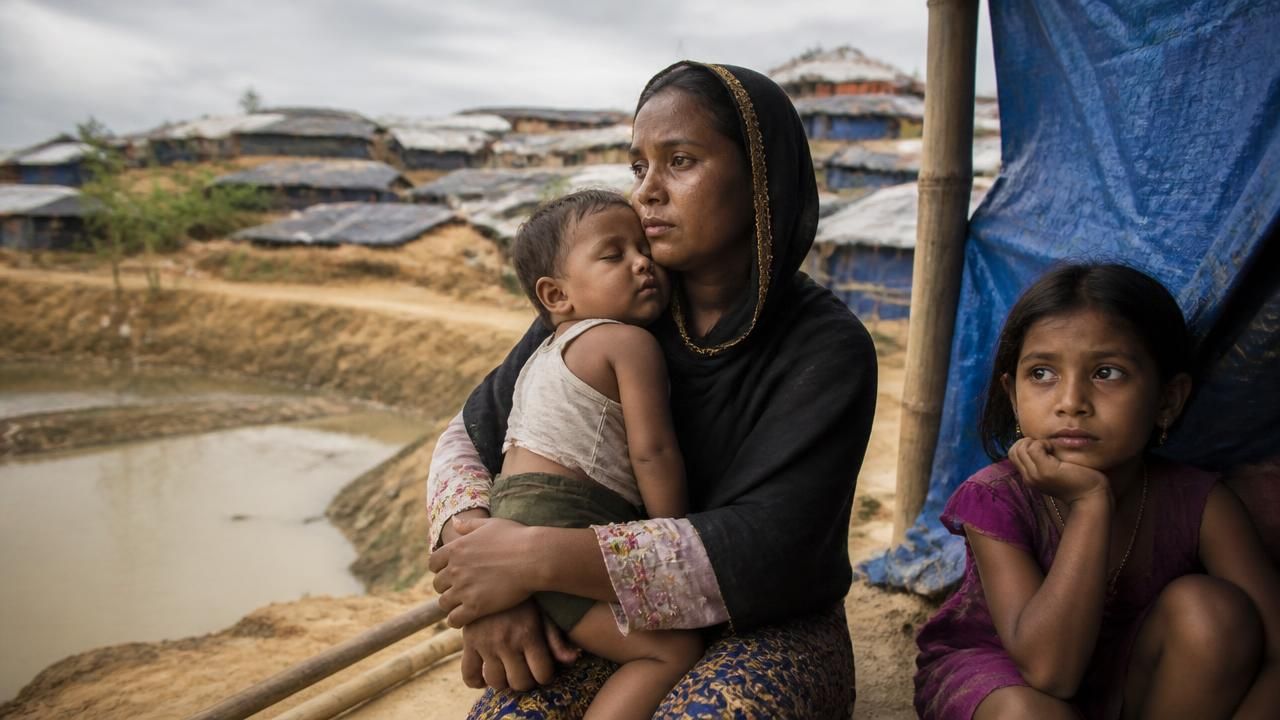
For the roughly one million Rohingya living in refugee camps in Bangladesh's Cox's Bazar district, most of whom fled in 2017, the verdict was received with relief mixed with skepticism. Survivor testimony describing the burning of villages, mass killings and systematic sexual violence formed much of the evidentiary backbone of the case.
The ruling is a rare and historic victory for survivors — one that affirms what Rohingya communities have said for years, even as they continue to wait for justice on the ground.
Amnesty International, which has documented the military's campaign for years, called the judgment "a historic UN ruling" and "a rare victory for survivors," while cautioning that legal recognition without enforcement would leave the community exposed. Myanmar's military-led government rejected the findings outright, as it has rejected every prior international finding, maintaining that its operations targeted militants rather than civilians.
Even where the language was uniform, framing differed. Wire services such as Reuters and AP emphasized procedure and next steps. The Guardian and CNN led with the human toll and survivor reaction. Regional outlets, including The Irrawaddy and India's Express, treated the verdict as a story about Myanmar's isolation and its fraught relationship with international law.
Enforcement: the hard part
The ICJ has no police force. Its judgments are binding, but enforcement falls to the UN Security Council — where Myanmar's allies, including China and Russia, hold veto power. That structural reality means the ruling's immediate effect is more moral and legal than coercive: it strengthens the evidentiary record for future tribunals, complicates diplomatic rehabilitation of the junta, and gives Rohingya plaintiffs a formal finding to cite in national courts pursuing universal jurisdiction cases.
Separately, the International Criminal Court has been investigating related crimes, and individual accountability proceedings remain underway in other jurisdictions. The ICJ's judgment concerns state responsibility; it does not convict any individual commander, but it makes the legal ground for such prosecutions firmer.
Why it matters
The Genocide Convention was drafted in 1948 in the shadow of the Holocaust, yet in more than 75 years the World Court had never issued a final judgment finding a state guilty of genocide. That record was widely cited as evidence of how difficult the convention is to enforce. Tuesday's ruling — delivered in a case that took years to reach judgment — changes that, at least on paper.
For the Rohingya, a stateless Muslim minority denied citizenship under Myanmar's 1982 citizenship law and subjected to decades of incremental persecution before the 2017 catastrophe, the judgment offers recognition rather than restitution. Almost all Rohingya still live in camps, with return to Rakhine considered unsafe by rights groups amid continuing restrictions on movement and documentation. Whether the ruling translates into accountability on the ground will depend less on The Hague than on capitals that have so far shown little appetite to force the issue.