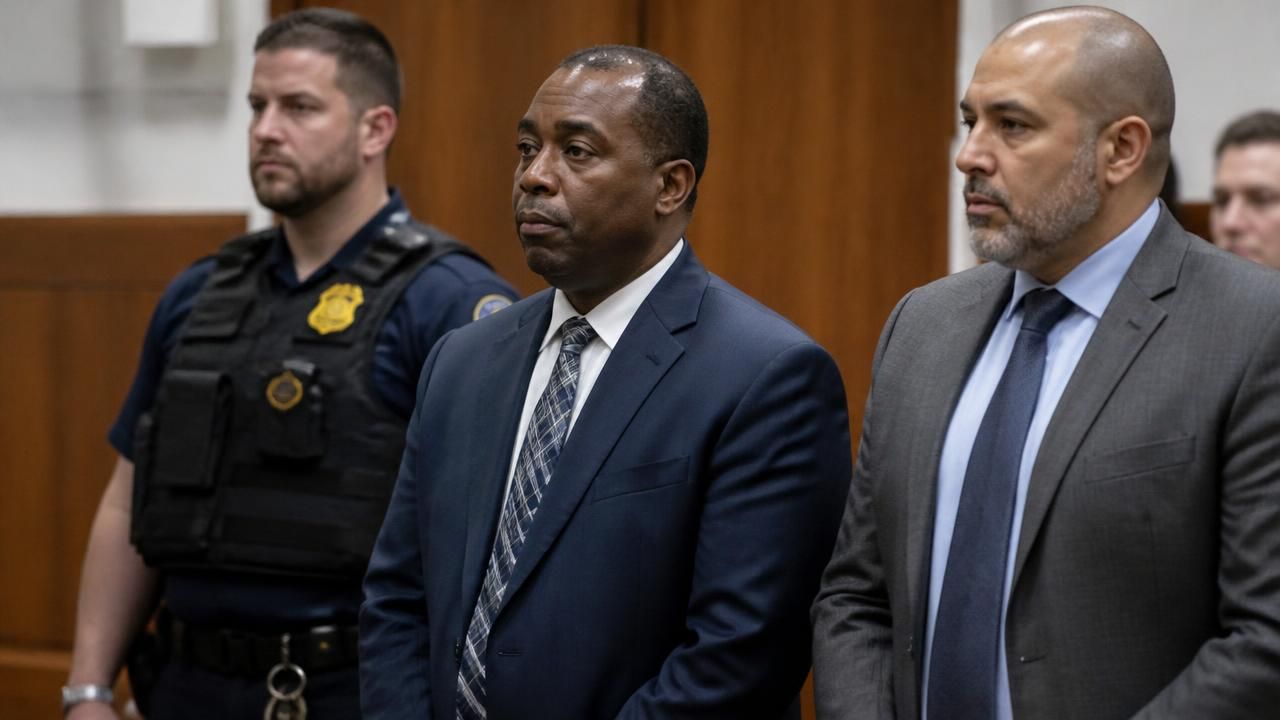
MIAMI — Christian Emmanuel Sanon, a Florida pastor with dual Haitian-American citizenship, was convicted on Wednesday of federal charges arising from the 2021 assassination of Haitian President Jovenel Moïse, a verdict that closes one of the most closely watched U.S. prosecutions linked to the killing.
The jury in Miami federal court returned its verdict after a trial that lasted nearly eight weeks. Sanon, who had faced eight charges, was found guilty of charges including conspiring to kill Moïse and conspiracy to kidnap or kill a person outside the United States. He faces a potential sentence of life in prison, with sentencing set for a later date.
A case that crossed borders
Moïse was killed on July 7, 2021, when gunmen stormed his private residence in Port-au-Prince, the Haitian capital. His wife, Martine Moïse, was wounded in the attack. The killing plunged Haiti deeper into political turmoil and gang violence, and it set off investigations in Haiti, the United States and elsewhere.
U.S. prosecutors alleged that Sanon played a central role in a sprawling plot to remove Moïse from power and install himself as Haiti's leader. The case brought together Haitian-American suspects and former Colombian soldiers, highlighting the transnational networks that investigators say were mobilized around the assassination.
Several other defendants in the U.S. case have already pleaded guilty, and the conviction of Sanon marks a significant milestone for prosecutors who have spent years piecing together the conspiracy from events in Florida, Haiti and Colombia.
Competing frames
Different outlets emphasized different dimensions of the story. The Guardian focused on the verdict itself, describing Sanon as a Florida pastor convicted of U.S. charges in the assassination and noting that he faces life in prison. The Detroit News framed the outcome around his Haitian American identity, while Le Monde presented the conviction as a U.S. legal reckoning over the killing of a foreign head of state.
MSN and other outlets highlighted a detail that has drawn particular attention: that the plot was funded partly by U.S. COVID-19 relief money. The claim, which featured prominently in coverage of the case, underscores the strange and sprawling financial trail that prosecutors say ran through the conspiracy.
The New York Times took a more biographical approach, publishing a profile under the headline “From Failed Businessman to Accused Plotter in the Killing of Haiti's Leader.” That framing cast Sanon less as a mastermind than as a man whose ambitions and failures led him into an extraordinary criminal case.
Sanon's defense broadly argued that he was not the architect of the plot and had been drawn into events beyond his control. The jury's verdict rejected that characterization, at least on the counts it considered.
Why the verdict matters
The conviction is one of the most consequential outcomes in the international response to Moïse's assassination. Haiti's own investigation has been hampered by instability, violence and repeated changes in government. The U.S. case has therefore become a key avenue for accountability, even as it has illuminated the limits of what courts can establish about a killing rooted in Haitian political and criminal networks.
The trial also offered a rare public window into the conspiracy's alleged mechanics: the recruitment of foreign fighters, the movement of money and the planning that prosecutors say preceded the raid on Moïse's home.
“Conspiracy to kidnap or kill a person outside the United States” was among the eight charges Sanon faced, according to the Guardian.
For Haiti, the verdict is unlikely to resolve the broader crisis. The country remains gripped by gang violence, political paralysis and a security vacuum that has worsened since Moïse's death. International efforts to stabilize Haiti, including a Kenya-led security mission, continue amid deep uncertainty.
What happens next
Sanon now awaits sentencing, where he could face life in prison. His legal team may pursue appeals, and the case could continue to generate attention as other defendants are sentenced and as investigators pursue leads connected to the killing.
The verdict also raises questions about how the United States handles cases involving foreign officials and transnational plots. Prosecutors have argued that U.S. courts have a role in deterring such crimes when they touch American soil, American citizens or American money.
For now, the Miami conviction stands as a definitive legal finding against a man who, by his own account, once hoped to lead Haiti — and who instead became the most prominent figure convicted in the United States over the assassination of its president.
- Who: Christian Emmanuel Sanon, a Florida pastor with dual Haitian-American citizenship.
- What: Convicted of U.S. charges including conspiracy to kill Haitian President Jovenel Moïse.
- When: Verdict returned Wednesday after a nearly eight-week trial.
- Where: Federal court in Miami.
- Why it matters: The conviction is a major accountability step in the 2021 assassination, though Haiti's political and security crisis remains unresolved.