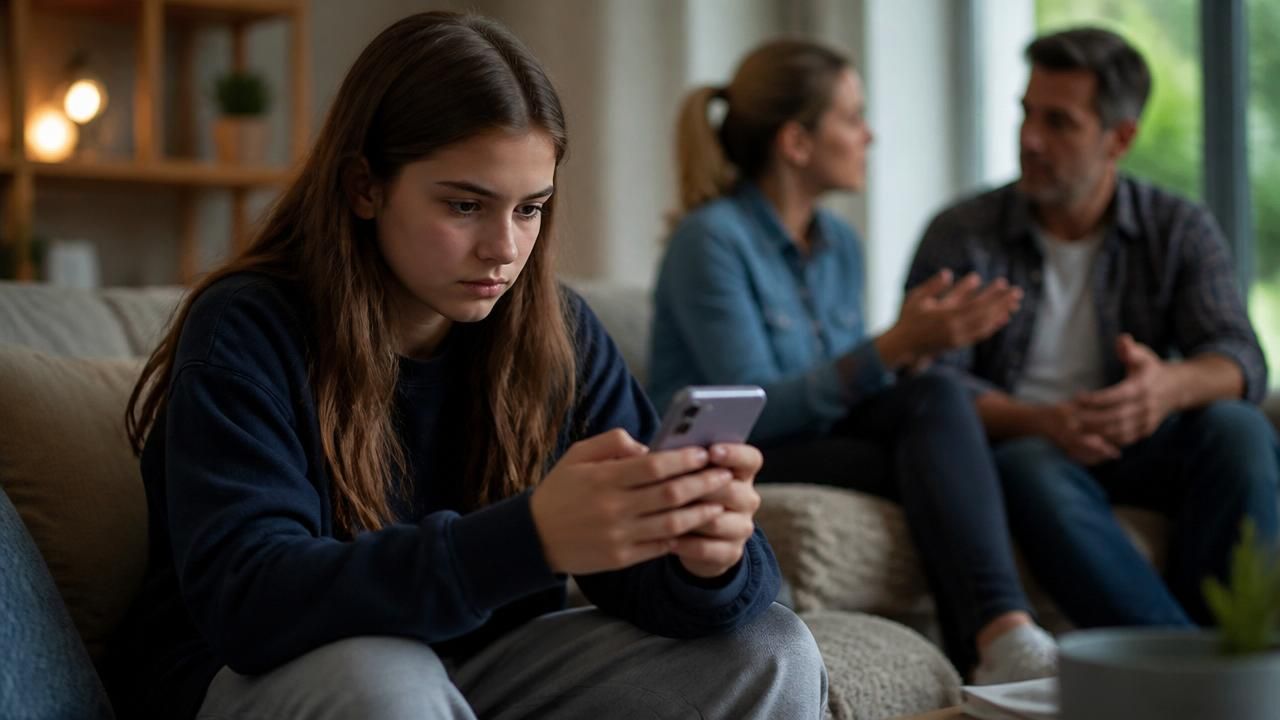
The UK government has announced sweeping new measures to protect children online, including a total ban on social media for under-16s and a default overnight curfew for 16- and 17-year-olds. The proposals, revealed by Prime Minister Keir Starmer and detailed in a government press release, aim to curb what officials describe as 'addictive' platform features and give children their childhood back. The move has sparked intense debate among parents, tech companies, and young people themselves.
What the Proposals Entail
Under the plan, children under 16 will be completely barred from accessing major social media platforms such as TikTok, Instagram, Snapchat, and YouTube. For 16- and 17-year-olds, platforms will be required to enforce a default midnight curfew, during which access to social media apps will be blocked. Additionally, features like infinite scrolling and algorithmic recommendations that encourage prolonged use will be restricted for all under-18s. However, the curfew can be turned off by parents or guardians, according to reports from Wired and Sky News. The government is also considering AI chatbot restrictions and two-hour screen time limits for children, as noted by AOL.
Timeline and Enforcement
The ban is expected to be implemented through the Online Safety Act, which is already in force but requires further secondary legislation. The government has indicated that the measures could come into effect within the next 12 to 18 months, though exact dates remain unclear. The BBC reports that questions remain about how the ban will be enforced, particularly regarding age verification. Tech firms may be required to use biometric age estimation or government ID checks, raising privacy concerns. Companies that fail to comply could face fines of up to 10% of global turnover, as per the Guardian.
Reactions from Young People and Experts
The proposals have drawn mixed reactions. In interviews with the Guardian, 16- and 17-year-olds expressed frustration, with one saying, 'It makes no sense. We are old enough to vote, drive, and join the army, but not to use social media after midnight?' Others acknowledged the potential benefits, citing concerns about sleep and mental health. Child safety advocates have largely welcomed the move. The NSPCC called it a 'landmark step,' while the Children's Commissioner emphasized the need for robust enforcement. However, digital rights groups warn of unintended consequences, such as driving young people to less regulated platforms or undermining their digital autonomy.
Historical Context and Global Trends
The UK is not alone in pursuing stricter online age restrictions. Australia recently passed a law banning under-16s from social media, while France has introduced measures requiring parental consent for minors. The EU's Digital Services Act also imposes stricter rules on platforms targeting children. The UK's approach, however, is notable for its combination of an outright ban for younger teens and a curfew for older ones. Critics argue that the curfew, being opt-out, may be ineffective if parents do not enforce it. Tech companies have pushed back, with Meta and TikTok warning that such measures could infringe on freedom of expression and be difficult to implement without compromising user privacy.
Expert Views and Data Points
Research cited by the government indicates that excessive social media use is linked to increased anxiety, depression, and poor sleep among adolescents. A 2023 study by the Royal Society for Public Health found that 91% of 16-24 year olds believe social media harms their mental health. However, some academics caution that the evidence is correlational, not causal. Dr. Amy Orben, a psychologist at the University of Cambridge, told the BBC that blanket bans may not address underlying issues and could stigmatize social media use. The government maintains that the measures are proportionate and necessary to protect children from harmful content and addictive design.
What Happens Next
The government will now consult on the proposals, with a public comment period expected to last 12 weeks. Parliament will then vote on the secondary legislation. If passed, the measures will be phased in, with the under-16 ban taking effect first. The curfew and feature restrictions for older teens will follow. The tech industry is likely to challenge the rules in court, arguing that they violate digital rights and are impractical. Meanwhile, parents and educators are being urged to prepare for a future where social media is off-limits for many children. As the debate continues, one thing is clear: the UK is charting a bold new course in online safety, with implications that could ripple across the globe.