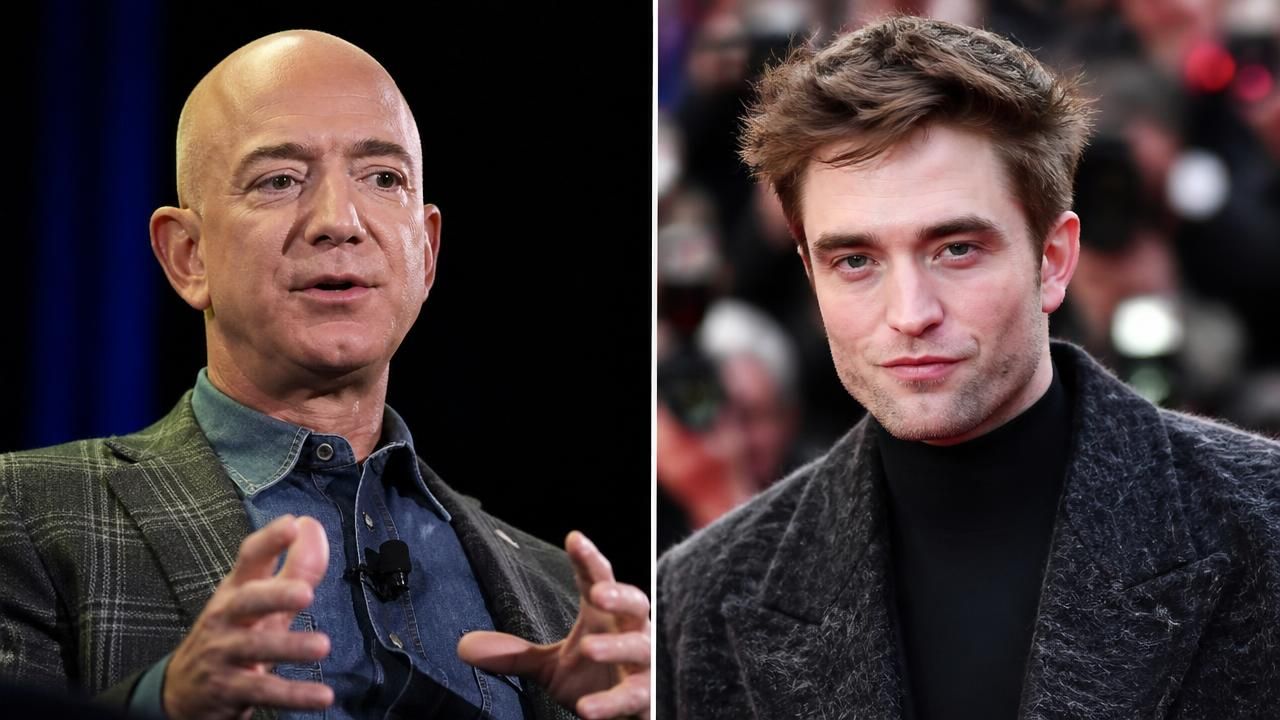
Amazon founder Jeff Bezos confirmed on Tuesday that he personally participated in the selection of Robert Pattinson as the next James Bond, telling an audience at Semafor's Silicon Valley and the World conference that he was "heavily involved" in the casting process that concluded late last week. The disclosure marks an unusually public acknowledgment of corporate influence over one of cinema's most closely guarded creative decisions, and it immediately reframed the conversation around Amazon's stewardship of the 007 franchise.
According to Bezos, the search was structured less like a Hollywood casting call than like an executive hiring round. A large initial field of candidates was whittled down to five finalists, each of whom was then put through what Bezos described as traditional screen tests before the final choice was locked in on Friday.
We ran a really tight process and we made the final decision on Friday. There was a big group initially, and we down-selected to five finalists. Then we did real old-fashioned screen tests of those five finalists.
The result places Pattinson, the former Twilight lead and recent The Batman star, in the role of a lifetime — and pairs him with director Denis Villeneuve, who is helming the franchise's next installment for Amazon. Pattinson and Villeneuve have recently been working together, a connection that made the casting feel natural to close observers of the project even before it was confirmed.
A franchise under new management
The casting is the most visible milestone yet in Amazon's still-new era as creative steward of James Bond. In February 2025, Amazon MGM Studios struck a landmark joint venture with longtime producers Barbara Broccoli and Michael G. Wilson that handed the tech giant creative control of the franchise for the first time in its six-decade history — a deal that ended an unusually long period of speculation about the series' direction and effectively transferred custody of a British cultural institution to a Seattle-based technology company.
The choice of Villeneuve, announced later in the year, was widely read as a signal that Amazon intended to pursue a prestige, auteur-driven vision rather than a rapid expansion into streaming spinoffs, which had been a persistent worry among fans and industry veterans. Pattinson's selection extends that logic: he is a critically respected actor with franchise experience and an art-house pedigree, and he arrives at Bond after a stretch of deliberately unconventional roles.
How the story was reported
Coverage of Bezos's remarks diverged sharply by outlet, reflecting each publication's core audience and instincts.
- The Verge framed the news around the collision of Silicon Valley management culture and Hollywood creative tradition, emphasizing Bezos's description of a "tight process" and the novelty of a tech founder personally narrating a Bond casting decision on a conference stage.
- Yahoo led with Bezos's candor about his initial hesitation, reporting that he admitted early fears about casting Pattinson "because he's already so famous" — a concern that speaks to the delicate balance Bond producers must strike between star power and the character's own dominance over the brand.
- IGN concentrated on the mechanics, surfacing the granular details of the shortlist and screen-test process that Bezos volunteered during the appearance.
Taken together, the accounts describe a decision that was both meticulously stage-managed and, by Bezos's own telling, driven by old-fashioned auditioning rather than data or algorithms.
Why the fame question matters
Bezos's reported concern about Pattinson's existing celebrity touches on a genuine tension in the Bond franchise. Historically, the role has often made its star as much as the star has carried the role — Sean Connery was a relative unknown, as was George Lazenby, and Daniel Craig arrived best known to British audiences for television and indie film work. Casting an actor already firmly associated with two of the biggest franchises of the past two decades risks the character being overshadowed by the performer's prior personas.
Yet the modern market rewards exactly that kind of recognition. A-list casting gives a franchise immediate global marketing reach, and Amazon, which is investing heavily in theatrical distribution for Bond, has strong incentives to maximize opening-weekend visibility. Pattinson's tenure as Bruce Wayne also demonstrated that he can absorb an iconic role without being defined by it.
What happens next
Neither Amazon MGM Studios nor representatives for Pattinson have publicly commented beyond Bezos's remarks. Attention now turns to Villeneuve's production timeline, the film's release window, and how aggressively Amazon will expand the Bond universe across film and television. The company has not detailed a slate, and the joint venture's structure leaves Broccoli and Wilson with producing roles even as creative authority sits with the studio.
For fans, the immediate takeaways are a name, a director, and — unusually — a window into the room where it happened. For the industry, the lasting image may be a technology billionaire describing the casting of a British secret agent in the language of portfolio decisions: a wide funnel, a shortlist of five, and a final call made on a Friday.