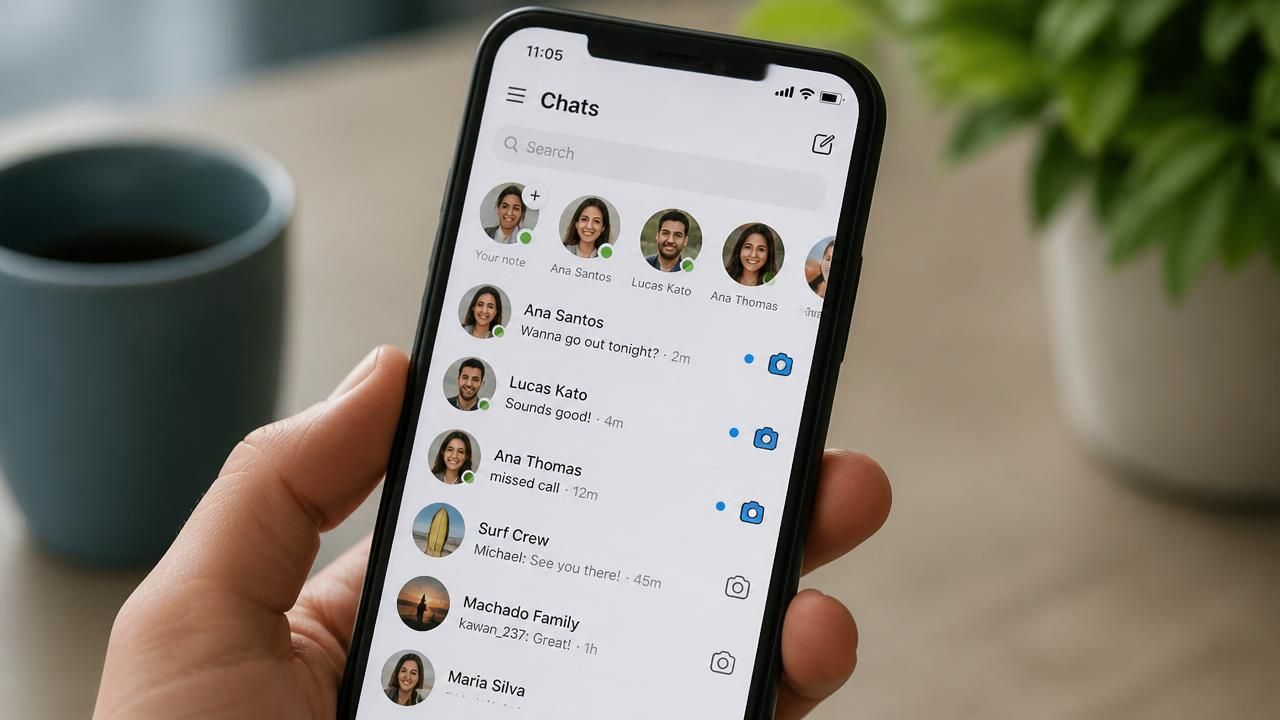
Meta is testing a new standalone messaging app called Direct, which spins Instagram's direct messages out into a separate product that can, for the first time, be used without an Instagram account at all. The company confirmed the test is running on iOS and Android in Turkey and Thailand, two markets Meta has historically used as early proving grounds for messaging experiments.
The news was reported across a wave of outlets on Tuesday, with framing that varied sharply by publication. The Verge positioned Direct as the latest entry in Meta's sprawling messaging portfolio; Digital Trends summarized it bluntly as "Instagram DMs without the Instagram"; and WERSM framed the launch as a return — "Instagram Is Bringing Back Its Standalone Messaging App, With A Twist."
What Direct actually is
Functionally, Direct is Instagram's inbox stripped of everything else. There is no feed, no Reels, no Stories, no Explore tab — just conversations. Users who sign in with the same credentials they use on Instagram will see their existing chats sync across both apps, meaning a message sent from Direct appears in Instagram and vice versa.
The more consequential detail is who can use it. Direct also accepts sign-ups with just an email address or a phone number, lowering the barrier to entry far below any previous Meta messaging product. The trade-off is a narrower social graph: Meta says that if you use Direct without an Instagram account, "only your contacts can start a chat with you or add you to a group."
"If you use Direct without an Instagram account, only your contacts can start a chat with you or add you to a group." — Meta
That restriction is likely designed to blunt spam and unwanted contact, a persistent problem for any messaging service that lets strangers reach users by phone number. It also means a no-account Direct user cannot be discovered through Instagram's broader search and recommendation surfaces, keeping the app's social layer deliberately closed.
A messaging strategy that keeps multiplying
Direct is far from Meta's first foray into standalone chat. The company already operates Messenger, which for years required a Facebook account, and WhatsApp, which Meta acquired in a $19 billion deal in 2014. Both are among the most-used messaging services on earth; WhatsApp alone counts more than two billion users.
Instagram has tried this specific experiment before. In late 2017, it launched a standalone Direct app in a handful of countries — Chile, Israel, Italy, Portugal, Turkey, and Uruguay — as a camera-first messaging client. The product never expanded broadly and was discontinued in 2019, with Instagram folding the features back into the main app. The revival of the name, and of the underlying bet, suggests Meta believes the messaging-only experience now has a better chance of standing on its own.
The strategic logic is familiar: Meta has repeatedly unbundled core features into separate apps when it wants a cleaner, faster, more focused surface. That was the rationale for Messenger's split from Facebook in 2014, and more recently for Threads, the text-based app launched in 2023 as a rival to X, which crossed 100 million sign-ups within days of launch.
Why now: AI rivals and regulatory pressure
The Next Web framed the launch as Instagram "taking on AI copycats," a reference to the wave of AI-native chat products and companion apps that have siphoned attention from conventional social platforms. A stripped-down, fast messaging client with a low sign-up barrier is one way to defend the inbox — arguably the stickiest part of any social network — against competitors that never needed a feed in the first place.
There is also a regulatory dimension. Under Europe's Digital Markets Act, Meta has been designated a gatekeeper and is required to make its messaging services interoperable with rivals. A separate messaging brand with its own onboarding flow, identity rules, and account system gives the company more architectural room to maneuver as those obligations phase in — though Meta has not framed Direct in those terms, and the current test is confined to Turkey and Thailand, outside the EU.
What to watch
- Conversion versus cannibalization: Direct's clearest value is reaching people who want Instagram chats but not Instagram. The risk is fragmenting the audience Meta has spent a decade consolidating.
- The no-account user: Letting people message without an Instagram profile is a genuine departure, and it will be scrutinized for how it handles abuse, spam, and account recovery.
- Rollout signals: Turkey and Thailand are small, mobile-first markets with high messaging engagement — useful bellwethers. A wider launch would signal Meta sees durable demand.
- Privacy posture: End-to-end encryption has been a long-running, contentious project inside Meta's messaging apps. Direct's default settings have not been detailed.
For now, Direct remains a test, and Meta has a long history of killing messaging experiments that fail to find traction — the 2017 Direct app being the obvious precedent. But the company also has a habit of persistence: Messenger was spun out, absorbed, and rebuilt more than once before it became the product it is today. Whether Direct is a serious new pillar or a limited regional experiment will become clear only after the Turkey and Thailand results come in. What is unambiguous is Meta's continued willingness to unbundle Instagram — and to bet that the inbox, not the feed, is where the next round of user growth lives.