For three decades, Texas was the most reliable piece of political infrastructure in Republican politics — and, in recent years, in Elon Musk's corporate strategy as well. On Tuesday night, both assumptions collapsed at once.
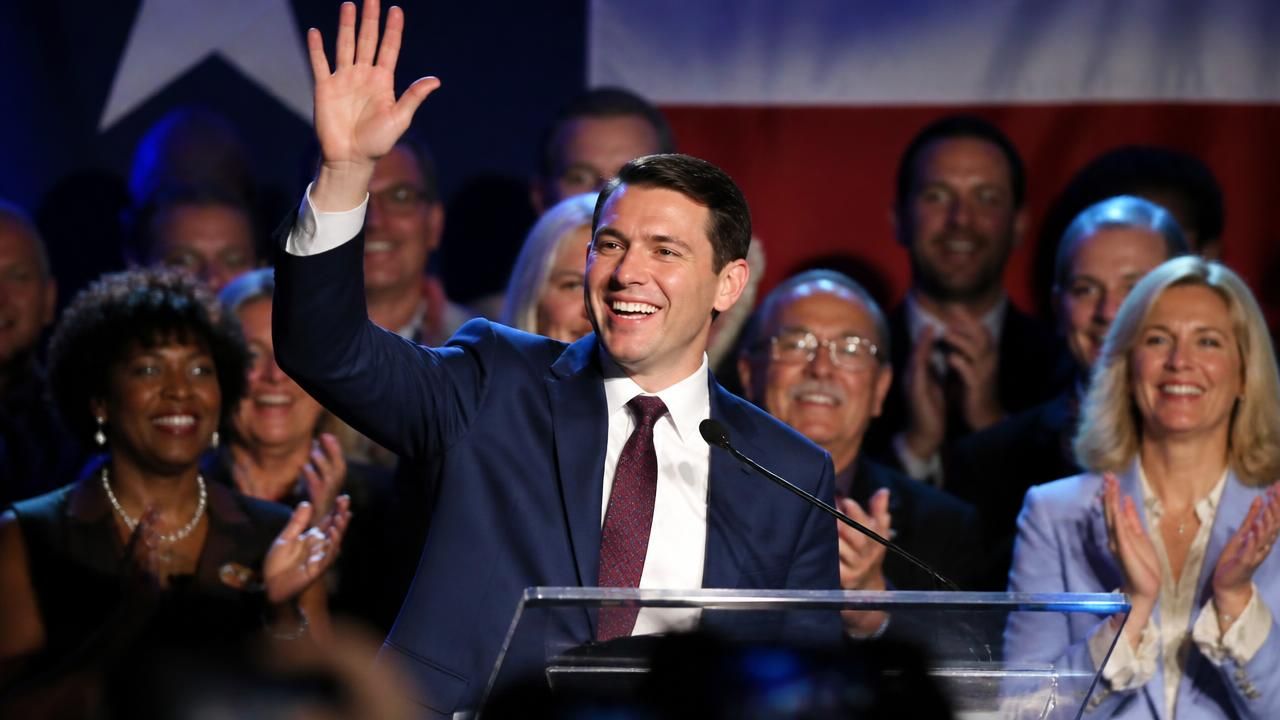
Democrat James Talarico flipped a U.S. Senate seat in Texas, ending roughly 30 years of uninterrupted GOP control of the seat and capping a Democratic rout that swept the party into statewide power. The New York Times described the night in blunt terms — “An Earthquake” — while Newsday reported that the result “sends a shock through the GOP.” The implications radiate well beyond Austin and Washington: they land directly on the balance sheets of Tesla, SpaceX and the constellation of companies Musk has anchored in the state.
An 'earthquake' in Texas
The scale of the swing is the story. Democrats did not simply win a Senate race; according to contemporaneous coverage, they captured statewide offices across the Texas ballot and gained ground in Congress as well. MSN's analysis of “5 key takeaways” from the Texas midterms framed the outcome as a structural realignment rather than a one-off, and separate coverage pointed to Ohio, where Democrats' performance was described as “remarkable” — evidence, analysts argued, of a national mood rather than a Texas anomaly.
The timing matters. Musk had relocated much of his personal and corporate footprint to Texas, a move widely characterized — including by NBC News, which put it plainly in its headline — as an effort to escape Democratic governance in California. Now the Democrats he left are, in effect, in charge of his backyard.
The $500 million that bought almost nothing
According to reporting from the Financial Express and MSN, Musk spent nearly $500 million in the midterm cycle backing Republicans — a sum that would make him one of the largest individual political donors in American history. The return on that investment, by Tuesday night's measure, was close to zero. MSN's headline was unsparing: the money “bought him almost nothing.”
The counter-programming came from Talarico's campaign, which MSN characterized as having beaten “Musk's millions” with a strategy the candidate himself summarized as: “Tell a story, be normal.” It is a formulation Democratic strategists are already circulating as a template — that a well-defined, personally legible message can outrun a flood of outside money, particularly when that money is attached to an unpopular out-of-state billionaire.
“Tell a story, be normal.” — James Talarico, on the strategy that carried him past Musk's spending
Musk's Texas gamble becomes a liability
Bloomberg's framing was the most pointed of the business press: Musk's “Texas gamble” has “become liability with Democrats taking over.” The logic is straightforward. Tesla built a headquarters and a gigafactory in the state; SpaceX operates launch infrastructure on the Gulf Coast; and those operations were cultivated in part by Republican lawmakers who offered incentives, tax abatements and favorable policy treatment. The New York Times, drawing on its investigative reporting, noted that this support was a two-way relationship — and that Democratic control opens those policies to fresh scrutiny.
What that scrutiny looks like in practice is the central open question:
- Incentive audits. Legislators could revisit the package of property-tax abatements, grants and local agreements that drew Musk's facilities to Texas counties, particularly where job-creation targets were missed or revised.
- Regulatory posture. State agencies and attorneys general can influence permitting timelines, environmental review, grid interconnection and consumer-protection actions — all friction points for a company that prizes speed.
- Oversight and subpoenas. With Democrats also gaining in Congress, committee gavels translate into document requests, hearings and public pressure on federal contracts, including launch and defense work.
- Procurement risk. Federal contracts are the single largest revenue exposure for SpaceX; congressional scrutiny rarely changes awards outright but reliably slows them.
A $3 trillion tremor on Wall Street
The market reaction was immediate and, at first, indiscriminate. U.S. stocks lost more than $3 trillion in value as the Democratic victory rattled Wall Street's AI trade, according to Financial Express — a striking reaction given that neither party has proposed anything resembling a frontal assault on artificial intelligence.
But the sell-off was not uniform, and the recovery was quick. TipRanks reported that AI chip stocks — Nvidia and AMD among them — actually rose despite the Democratic win, with AMD's strong forward forecast fueling renewed optimism. That divergence is the more instructive signal: investors appear to be repricing political risk around specific companies and specific policy exposures — Musk-linked names, government-adjacent contractors, heavily subsidized infrastructure — rather than abandoning the AI thesis itself.
Fast Company's analysis catalogued seven ways the midterms could shape the AI boom, a reminder that the sector's fortunes are now entangled with questions of antitrust enforcement, energy policy, immigration and research funding — all of which shift with control of Congress and statehouses.
How the outlets framed it
The coverage divides into three distinct lenses. The New York Times and Bloomberg treat the story as one of corporate accountability: favorable policy, purchased with political capital, now exposed. NBC News frames it as irony — a billionaire who moved to escape Democrats now governed by them. The financial press frames it as volatility, focused on the trillion-dollar markdown and the durability of the AI trade. Each is partial; together they describe a single phenomenon: the growing entanglement of private capital and political outcomes, and what happens when the bet goes wrong.
Wider questions about money in politics — including a Yahoo examination of whether Musk represents “a threat to democracy” — have moved from the opinion pages into the reporting of the same week.
What comes next
The immediate watch items are concrete. Which incentive agreements Democrats choose to reopen will signal whether this is a messaging exercise or a legal one. How quickly congressional committees move on SpaceX contracts will set the tone for federal relations. And whether the AI trade stabilizes — as the chip rally suggests — will determine if Tuesday's $3 trillion drawdown is remembered as a repricing or a turning point.
For Musk, the strategic question is uncomfortable: the political spending he used to buy influence produced neither the candidates nor the policy environment he sought. For Texas Democrats, the opportunity comes with a test — whether scrutiny of a single high-profile company becomes a governing agenda or a grudge. Both now have to operate in the same state.