China has blocked SoftBank Group's $5.4 billion purchase of ABB's robotics division, a rare and pointed regulatory veto that throws one of the defining bets on "physical AI" into limbo and underscores Beijing's determination to keep strategic automation technology inside its own orbit. The decision, confirmed by ABB and reported across financial and trade media, lands at an awkward moment for SoftBank chief executive Masayoshi Son, who has staked a large share of the group's future on robots, embodied intelligence and the industrial infrastructure that underpins them.
The rejection is being read less as a narrow antitrust ruling than as a statement of industrial policy. As OilPrice framed it in a widely shared analysis, this is a case of "Robot Wars" — a contest in which China already holds much of the global robotics industry "in its grip."
A veto that reshapes a $5.4 billion bet
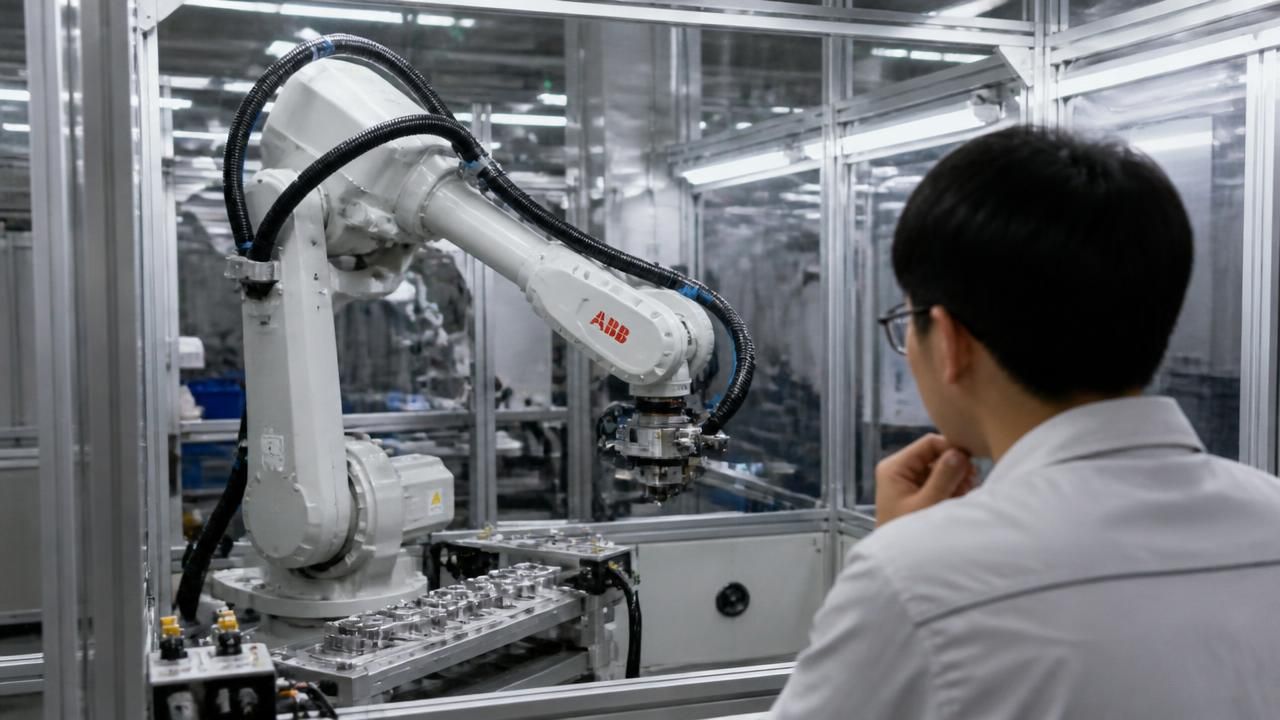
ABB had agreed to sell its robotics unit to SoftBank in a transaction valued at roughly $5.4 billion, a deal that would have handed the Japanese conglomerate a global installed base of industrial arms, a European engineering heritage and a direct route into factory automation at scale. Under Chinese merger-control rules, the transaction required clearance from Beijing's market regulator, which declined to grant it. ABB subsequently confirmed that China had barred SoftBank's purchase of the robotics business in the country.
The story did not end there. According to Bloomberg News, ABB and SoftBank are now exploring a China carve-out — a structural workaround that would separate the Chinese portion of the business from the rest of the transaction in an attempt to salvage what remains. ABB's chief executive has kept talks with SoftBank open following the veto, signaling that both sides still see value in a revised structure rather than a clean abandonment.
Telecoms.com summarized the mood in the industry with a blunt headline: SoftBank's robot strategy had run into "a China-shaped spanner." For a group that markets itself around futuristic ambition, the obstacle is unusually prosaic — a regulatory filing in Beijing.
Why Beijing said no
The veto fits a broader pattern of Chinese scrutiny over foreign control of automation, semiconductor and AI assets. Robots are increasingly treated as dual-purpose strategic technology: the same machine vision, motion control and AI planning stacks that drive a factory arm also underpin logistics, defense-adjacent supply chains and the next generation of humanoid platforms.
The scale of China's position explains the sensitivity. China installs roughly 59 percent of the world's industrial robots, according to industry data widely cited by analysts, and domestic manufacturers have climbed the value chain from components to complete systems. Reporting from CNBC's Gecko Robotics interview captured the split picture: China leads in industrial robotics deployment, while the United States retains an edge in AI intelligence — the software layer that increasingly determines what a robot can actually do.
- China accounts for about 59% of global industrial robot installations.
- The blocked deal was valued at approximately $5.4 billion.
- ABB and SoftBank are now studying a China carve-out to preserve the transaction.
- Beijing's approval was required under its merger-control regime.
SoftBank's physical AI problem
For SoftBank, the timing is painful. The group was already facing questions about its AI strategy ahead of earnings, following a sharp selloff in technology shares that tested investor patience with Son's expansive vision. SoftBank Group stock now trades against two competing narratives: aggressive AI expansion, and the reality that geopolitics can veto a marquee acquisition overnight.
The ABB robotics unit was meant to be a cornerstone of SoftBank's push into embodied AI — the idea that intelligence will move off screens and into machines that manipulate the physical world. Without it, Son's conglomerate must either build, partner or look elsewhere, and each option is slower and more expensive.
The view from the factory floor
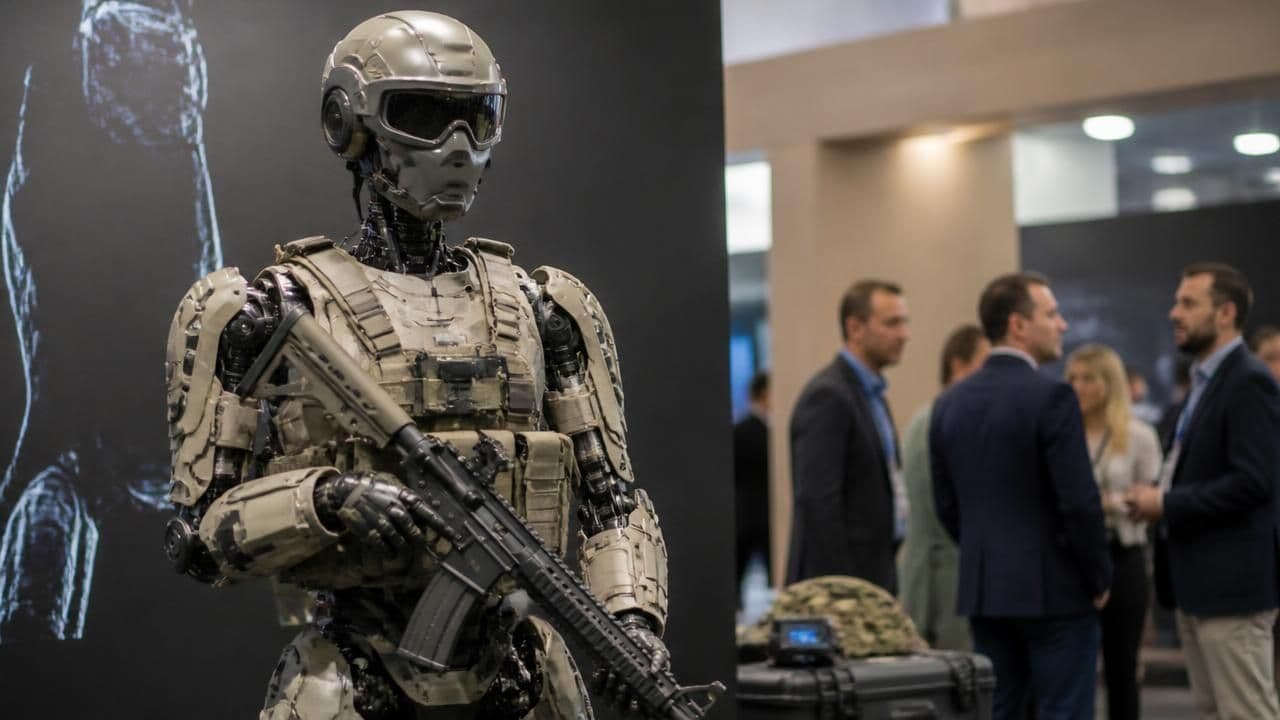
The veto also arrives as the underlying technology accelerates. At the APEC meetings in Shenzhen, Guo Yandong, founder and CEO of China's AI² Robotics, talked up the pace of innovation in the country's humanoid technology sector — a reminder that domestic champions are being cultivated precisely as foreign consolidation is being discouraged. Chinese firms have unveiled humanoid machines weighing around 159 pounds that can handle factory materials, and logistics specialists such as Expoline are already building international shipping and handling projects for humanoid robots.
In the United States, the debate is shifting toward control and governance. Gecko Robotics' chief executive argued that China leads in industrial robotics but that the US holds an advantage in AI intelligence, while warning that humans must remain in control of physical AI as autonomous systems take on more consequential tasks.
"Humans must remain in control of physical AI."
Further out on the risk curve, Detroit News reported that fast-improving AI and robotics could make "dark" auto factories — plants running with minimal lighting and few people — a realistic prospect, a scenario that would deepen dependence on whoever supplies the machines. And in the capital markets, the theme is already being traded: Faraday Future disclosed roughly $2.3 million in cumulative revenue from its acquired FFR robotics business in its 2026 third-quarter results, alongside robotaxi and AI VisiCabin programs, while The Robot Report's coverage of a reported NVIDIA leadership change added another layer of uncertainty to the sector's outlook.
What to watch
The immediate question is whether a carve-out can satisfy Beijing. If it cannot, SoftBank faces a strategic reset and ABB faces the prospect of retaining or re-marketing an asset it had chosen to exit. For investors, Forbes' warning is apt: China's robot boom tests discipline, rewarding those who distinguish between genuine deployment and narrative. The larger lesson is that in physical AI, the balance sheet is only half the story — the other half is who controls the factory gate.