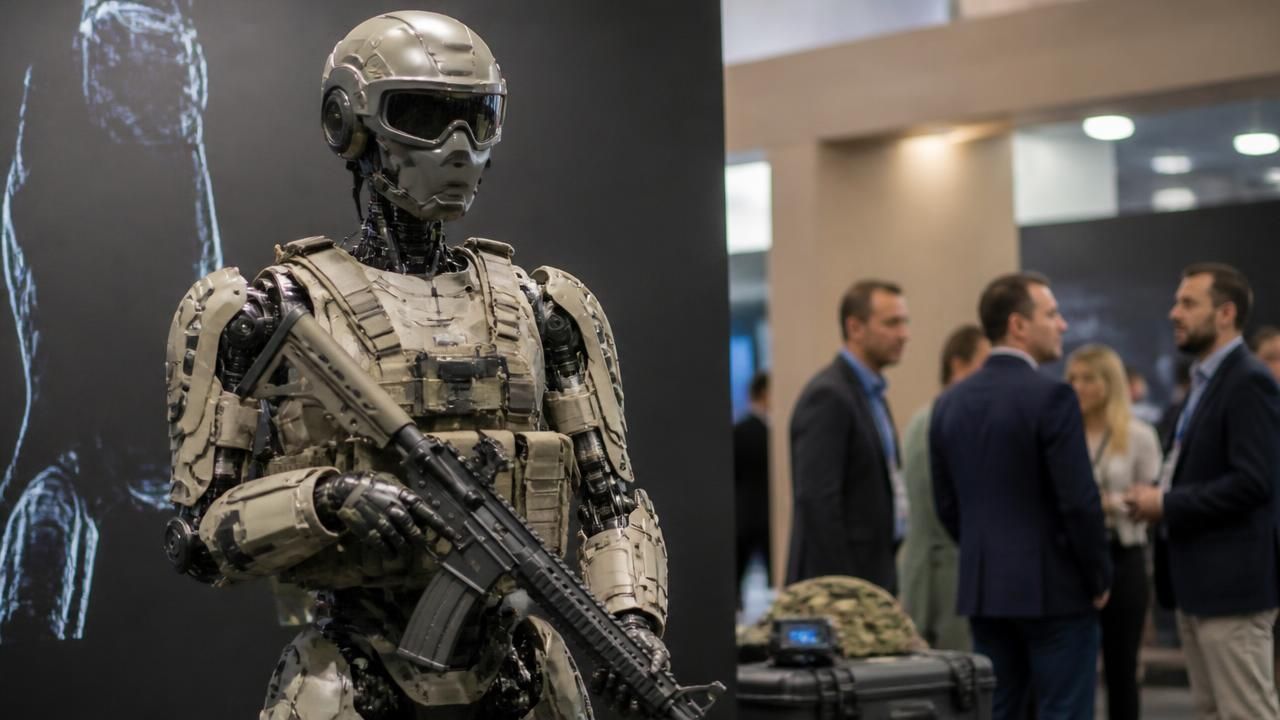
A Silicon Valley humanoid robotics startup that has cultivated ties to the White House failed to make payroll late last month, according to a CNBC report, throwing into doubt the future of a company that has promised to put weapon-wielding robots on battlefields from Ukraine to Gaza.
Foundation Future Industries, which is backed and advised by Eric Trump, the president's son, did not pay employees for the payroll period ending October 30, people familiar with the matter told CNBC. The sources spoke on condition of anonymity because they were not authorized to discuss the company's finances. The report was first detailed by Ars Technica and subsequently picked up by a cluster of aggregators and financial outlets, including Yahoo Finance and MSN, which amplified the payroll failure to a broader audience over the weekend.
A Loan, a House, and a Cash Crunch
What has inflamed staff, according to the reporting, is not only the missed paycheck but how company money was used beforehand. Foundation co-founder and chief executive Sankaet Pathak reportedly borrowed $4.6 million in company funds roughly a year ago to purchase a luxury home overlooking San Francisco Bay. Employees cited by CNBC described the arrangement as a serious breach of trust at a moment when the startup is asking them to accept deferred compensation and investors to accept extraordinary risk.
The optics are particularly acute for a defense-adjacent company. Startups courting Pentagon contracts are typically expected to demonstrate rigorous financial controls, auditable books, and governance structures that can survive a government audit. A personal real-estate transaction funded from the corporate treasury — even if structured as a loan — invites exactly the kind of scrutiny that procurement officers and institutional investors are trained to apply.
"The staff is especially angry," Ars Technica reported, noting that the missed payroll landed alongside revelations about the seven-figure home loan.
The Pitch: Combat-Ready and $3 Billion Valuable
Foundation's commercial proposition is unusually aggressive even by the standards of the current defense-tech boom. The company says it is developing and testing humanoid robots for military roles, machines it claims will be capable of wielding a variety of weapons and operating in active conflict zones. Leadership has been seeking capital at a $3 billion valuation on the strength of that promise.
The startup's emergence coincides with a broader gold rush in autonomous systems. Venture money has flooded into defense technology firms such as Anduril and into humanoid robotics developers including Figure and Tesla's Optimus program. Foundation is attempting to sit at the intersection of both trends — the perceived inevitability of legged robotics and the urgent demand signal from governments rethinking their force structures.
But the field's most hyped valuations rest on timelines that have repeatedly slipped industry-wide. No humanoid robot has been fielded in a combat role by any military, and the technical, ethical, and legal questions surrounding armed autonomous machines remain largely unresolved. International humanitarian law experts have warned for years that delegating lethal decisions to machines raises accountability problems that no current treaty framework cleanly answers.
How the Story Is Being Framed
Different outlets have emphasized different facets of the same set of facts. Ars Technica, a technology-focused publication, led with the collapse risk and the company's battlefield claims, framing the story as a cautionary tale about hype in the robo-soldier sector. Yahoo Finance, by contrast, foregrounded the CEO's $4.6 million company loan, treating the episode as a corporate governance failure. The MSN syndications ran more sensational headlines, with one declaring the startup "can't pay staff after founder borrowed $4.6 million from company to buy home" — a framing that pushed the political connection to the top of the story.
That divergence matters. For technology readers, Foundation is a symbol of an overheating robotics market. For business readers, it is a case study in founder control and related-party transactions. For political readers, the Eric Trump connection is the headline — an advisory role at a defense startup that sits close to a presidential administration shaping defense budgets and procurement priorities. The company has not publicly addressed whether that relationship influenced its fundraising efforts.
Background and Precedent
Pathak's prior venture offers uncomfortable context. He founded Synapse Financial Technologies, a banking-as-a-service startup that filed for bankruptcy in 2024 amid a dispute over missing customer funds that left roughly $85 million in deposits unaccounted for and prompted regulatory scrutiny of the fintech middleware sector. The episode made Pathak a familiar figure to regulators and to reporters covering startup governance failures.
Foundation did not respond publicly to requests for comment, and it is unclear whether employees will eventually be paid. What is clear is that the company's fundraising window is narrowing. Investors who might tolerate a missed payroll at an early-stage software startup are considerably less forgiving when the product is a weaponized machine and the customer is the U.S. military.
What Happens Next
- Payroll: Employees are owed wages for the period ending October 30; whether they will be made whole depends on a funding close that has not been announced.
- Fundraising: The $3 billion valuation target now faces headwinds from both the missed payroll and the related-party loan disclosure.
- Governance: The board — and Eric Trump in his advisory capacity — will face questions about oversight of corporate funds.
- Legal exposure: A loan drawn from company funds by an executive can raise fiduciary duty and disclosure issues, depending on how it was documented and approved.
For now, Foundation Future Industries stands as a test of whether the defense-tech boom's enthusiasm can survive contact with its own balance sheet.