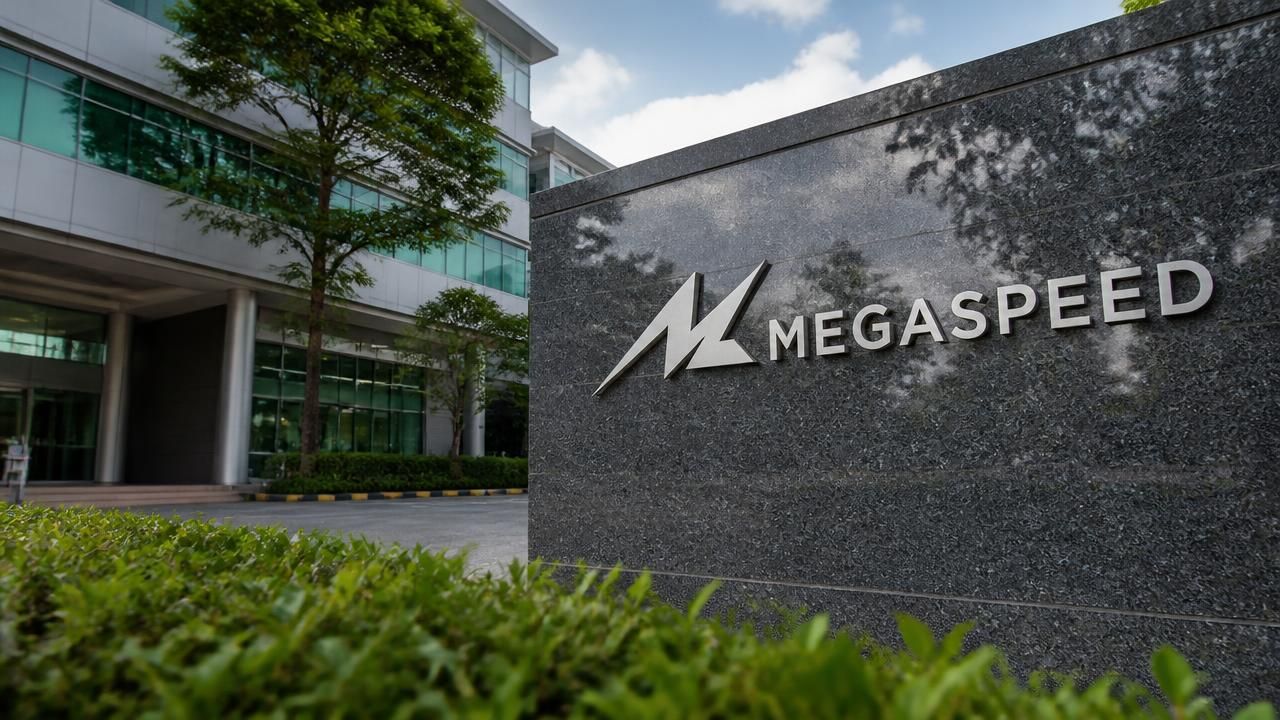
Singapore-based Megaspeed broke its silence this week, confirming that Alice Huang — a former executive whose personal relationship with Nvidia chief executive Jensen Huang has drawn intense scrutiny — left the company in August 2025, and announcing an internal investigation into reports about its business. The statement, first reported by The New York Times and carried swiftly by NBC News, CNBC TV18, the South China Morning Post, Digitimes and a wave of other outlets, marked the company's first public comment on Huang's status since U.S. officials alleged she was engaged in espionage on behalf of China.
The disclosure converts what had been a swirl of anonymous briefing and tabloid speculation into a corporate crisis with geopolitical stakes, touching the intersection of the global AI chip trade, U.S. export controls and one of the world's most valuable companies.
What Megaspeed actually said
According to the company, Huang departed in August 2025 — a timeline that had not previously been confirmed publicly. Megaspeed also said it was launching an internal probe into "reports about its business," a reference to allegations swirling around its role in the AI chip supply chain, and explicitly denied any wrongdoing. The company sought to distance itself from its former executive, stressing that she no longer holds any position there.
Megaspeed said Alice Huang "left the company in August 2025" — its first statement addressing the status of the former executive, according to The New York Times.
The careful phrasing reflects a company trying to contain damage on two fronts at once: the personal scandal attaching it to Nvidia's CEO, and the far more consequential allegation that its operations may have been a conduit in the diversion of restricted American technology.
Who is Alice Huang, and why it matters
Alice Huang is a Chinese-born businesswoman who served as chief executive of Megaspeed, a Singapore-registered firm that has positioned itself in the AI computing and chip supply ecosystem. Reports of a romantic relationship between Huang and Jensen Huang — who are not related — surfaced alongside U.S. officials' claims that she was acting on behalf of Chinese intelligence. Some outlets, including the Times of India, framed the story squarely as a "spy scandal," while others like The Week emphasized Megaspeed's effort to distance itself from her after revelations about a probe by Singapore's Ministry of Home Affairs.
Jensen Huang has not been accused of any wrongdoing, and the allegations against Alice Huang have not been proven in court. Nvidia has not commented substantively on the matter. The coverage has nonetheless blurred the line between an individual's alleged conduct and the reputation of the company he leads — a dynamic that has amplified the story far beyond its evidentiary base.
The chip supply chain at the center of the storm
Behind the personal drama lies a harder-edged commercial question: how Nvidia's advanced accelerators reach buyers in countries subject to U.S. export restrictions. Washington has spent years tightening rules on the sale of high-end AI chips to China, and has repeatedly warned that third-party intermediaries in Southeast Asia — Singapore and Malaysia in particular — can serve as transshipment points.
Megaspeed's announcement of an internal probe into "chip supply chain claims," as CNBC TV18 characterized it, suggests the company is now formally reviewing how its business has been described. The South China Morning Post reported that Megaspeed rejected claims about its supply chain as scrutiny linked to Nvidia intensified. That denial is likely to be tested against whatever the internal review finds.
Singapore's role
Singapore's Ministry of Home Affairs has reportedly been examining the matter, adding a sovereign dimension that raises the stakes for a city-state that guards its reputation as a trustworthy hub for global commerce and technology. Singapore has previously cooperated with U.S. authorities on export-control enforcement, and any finding that a Singapore-registered entity facilitated restricted transfers would be diplomatically costly.
How different outlets framed it
- U.S. legacy press: The New York Times and NBC News led with the corporate confirmation and the espionage allegation, treating it as a national-security-adjacent business story.
- Asian financial media: CNBC TV18, SCMP and Digitimes centered the supply chain and chip-flow questions, emphasizing Megaspeed's denial and the internal probe.
- Indian and aggregator outlets: Outlook India, Times of India and MSN affiliates leaned into the "Nvidia spy row" framing, foregrounding the relationship between the two Huangs.
- Trade press: Digitimes treated the exit as a personnel and corporate-governance disclosure with implications for the regional AI hardware trade.
Several outlets also carried minor discrepancies — some described Jensen Huang as Nvidia's "ex-CEO" or "former boss," though he remains chief executive — a reminder of how quickly details can distort in a fast-moving story.
What happens next
Three tracks now run in parallel: Megaspeed's internal review, Singapore's official examination, and U.S. scrutiny of chip diversion more broadly. The outcome of each will shape how aggressively Washington treats Southeast Asian intermediaries and whether the reputational cloud extends to Nvidia itself.
For Megaspeed, the immediate task is separation — from a former executive, from allegations of espionage, and from any suggestion that its business was a channel for restricted technology. Whether a statement and an internal probe are enough to achieve that will depend on what the investigations uncover, and on how long the story keeps circling back to the CEO of the world's most important chipmaker.