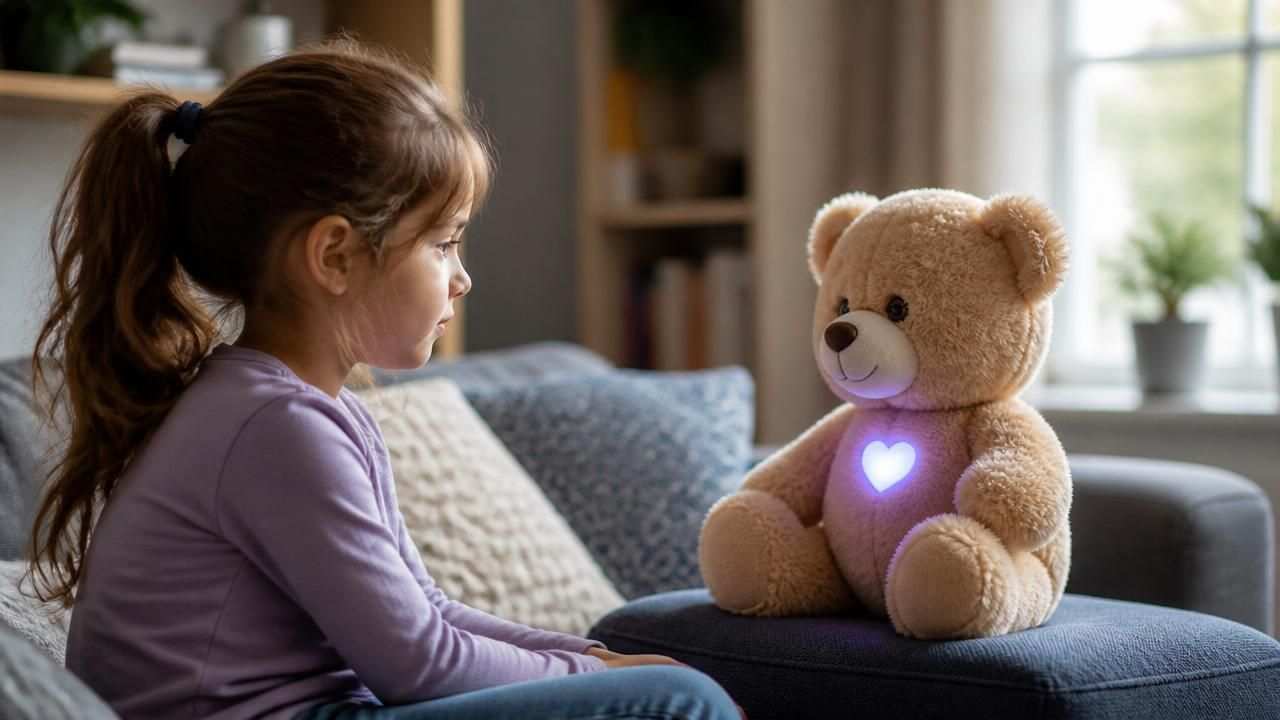
A new wave of artificial intelligence is moving beyond chatbots and into the realm of childhood, with toys, dolls, and robots designed to befriend children. This development, reminiscent of the fictional teddy bear in the film 'A.I. Artificial Intelligence,' has sparked a debate among child-development experts about the potential benefits and risks of AI companions for the youngest members of society.
The Rise of AI Companions
Companies are increasingly embedding AI into plush toys, interactive dolls, and robotic pets that can converse, recognize emotions, and provide comfort. These devices are marketed as tools for learning, companionship, and even therapy. A leading child-development expert, quoted in an NPR report, notes that the technology offers real promise but also carries significant risks. The expert warns that AI companions could crowd out the human relationships that children need most for healthy development.
Expert Perspectives
According to the NPR story titled 'The Trojan Teddy Bear,' the AI teddy bear is capable of conversation and emotional support, much like the character Teddy in Spielberg's film. The expert emphasizes that while AI can supplement care, it should not replace human interaction. Other sources, including WVIA and North Country Public Radio, echo this sentiment, highlighting the need for careful integration of AI into children's lives.
Potential Benefits
- Emotional Support: AI companions can provide comfort to children who are lonely, anxious, or facing social challenges.
- Educational Aid: Interactive AI toys can teach language, problem-solving, and other skills in an engaging way.
- Accessibility: For children with disabilities, AI companions can offer tailored support and interaction.
Risks and Concerns
- Displacement of Human Relationships: Children may become overly attached to AI, reducing time spent with parents, siblings, and peers.
- Privacy Issues: AI toys that listen and respond raise concerns about data collection and surveillance.
- Developmental Impact: The expert warns that AI cannot replicate the nuanced emotional exchange of human interaction, which is crucial for empathy and social skills.
Historical Context
The concept of AI companions is not new. From Tamagotchis to Furby, children have long been fascinated by interactive toys. However, recent advances in natural language processing and machine learning have made these toys far more sophisticated. The film 'A.I. Artificial Intelligence' (2001) presciently explored the emotional bonds that could form between a child and an AI. Today, that fiction is becoming reality, prompting urgent discussions among psychologists, educators, and parents.
Differing Viewpoints
While some outlets like NPR focus on the cautionary tale, others highlight the innovative potential. The KEDM source, though its main content was about other news, indirectly underscores the broader societal shift toward AI integration. Meanwhile, WVIA's coverage emphasizes the need for regulation and parental guidance. A balanced view suggests that AI companions can be beneficial if used as a supplement to, not a substitute for, human relationships.
"The technology offers real promise — but also risks crowding out the human relationships children need most." — Child-development expert quoted in NPR
What’s Next?
As AI toys become more common, experts call for research into their long-term effects. Some advocate for design standards that prioritize child development and privacy. Parents are advised to monitor usage and ensure that AI companions do not replace real-world interactions. The story of the Trojan Teddy Bear serves as a cautionary tale: while the gift of AI companionship may seem harmless, it carries hidden risks that society must address.