Nine members of the Kennedy family have moved to join a legal challenge against a proposed triumphal arch in Washington, arguing that the structure would disrupt sightlines and cast shadows across the graves of their ancestors at Arlington National Cemetery, according to court filings reported by NPR, HuffPost and other outlets.
The motion marks an unusually public intervention by one of America's most storied political dynasties into a dispute over how the nation's capital commemorates power — and who gets a say in the landscape surrounding its most visited burial ground.
What the family is arguing
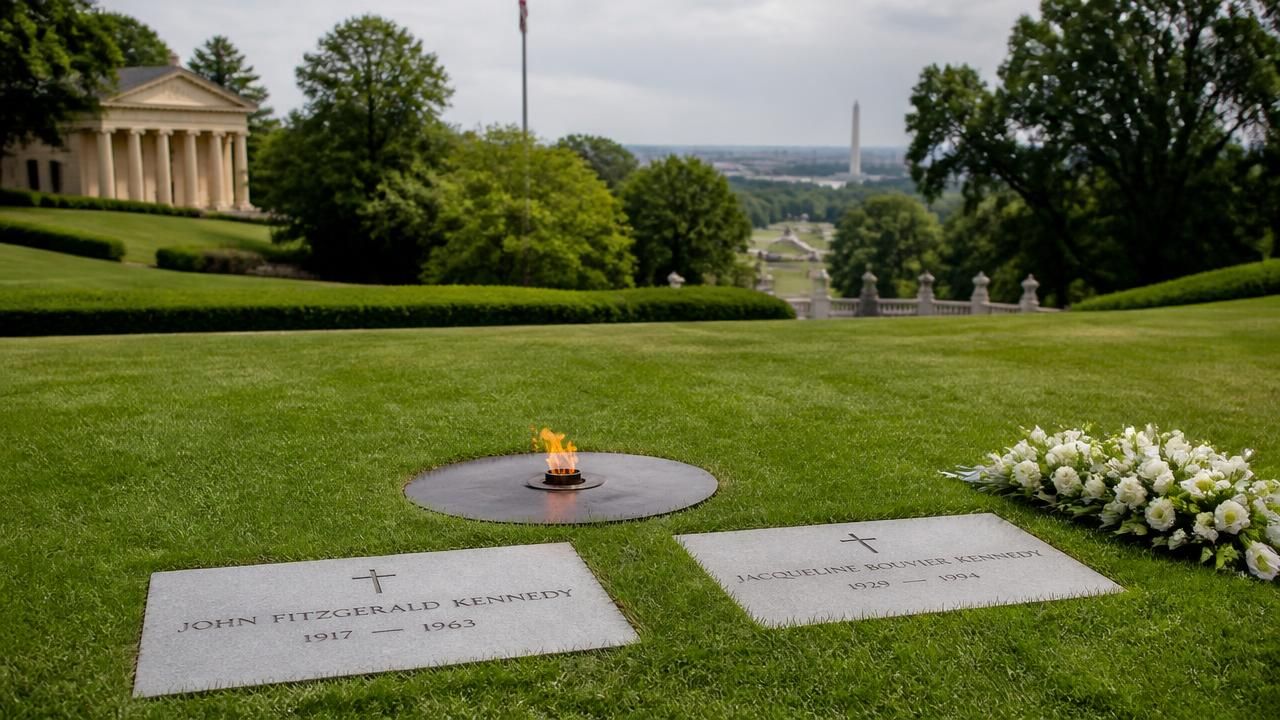
The relatives are seeking to formally enter an existing lawsuit rather than file a separate one, a procedural move that would give them standing as interested parties. Their core claim is concrete rather than ideological: that the arch's scale and placement would alter the viewshed above and around the Kennedy plot and would shade the graves themselves.
The arch, the relatives argue, would disrupt views from the site and cast shadows over the graves of their ancestors — a harm they say is specific to them and not merely a general objection to the project.
Arlington National Cemetery, across the Potomac from Washington in Virginia, is the resting place of President John F. Kennedy, buried in 1963 beneath an eternal flame, as well as Senator Robert F. Kennedy, interred nearby in 1968, and Senator Edward M. Kennedy, buried there in 2009. The site is among the most heavily visited locations in the cemetery, which holds the remains of roughly 400,000 service members and their families and is administered by the U.S. Army.
How the outlets frame it
Coverage of the filing has varied in emphasis. NPR led with the family connection, framing the story around nine named relatives and the specific alleged harm to John F. Kennedy's grave — a personal, almost intimate framing. HuffPost's headline foregrounded the legal ask itself, presenting the dispute as a straight fight between the Kennedy family and the president over a memorial. The MSN and Yahoo aggregations, drawing on wire copy, described the structure alternately as a "ceremonial arch," a "triumphal arch" and "Trump's Washington arch," language that shifts the story from a land-use question toward a referendum on presidential self-commemoration.
That variation matters. A triumphal arch is a classical form historically raised to celebrate military victory or imperial rule — the Arch of Constantine, the Arc de Triomphe. To critics, a triumphal arch in the capital honors a living president in a register usually reserved for generals and empires. To supporters, memorial arches are simply part of Washington's architectural vocabulary, and objections are partisan noise dressed as preservation concern.
The legal terrain
The dispute ultimately turns on administrative law rather than aesthetics. Construction on or affecting federal land in the capital typically requires review under the National Environmental Policy Act and the National Historic Preservation Act, along with sign-off from the National Capital Planning Commission and the Commission of Fine Arts — bodies that weigh visual impact, historic viewsheds and public comment.
Arlington itself sits under Army jurisdiction, with its own stringent rules governing what can be built near graves. Relatives of the interred have previously succeeded in shaping the cemetery's design and access rules, and courts have generally treated familial interest in a grave as a cognizable, if limited, legal stake.
- The movants: nine Kennedy family members seeking to join the suit as parties.
- The defendant side: the federal entities and project proponents behind the arch.
- The claimed harm: obstructed views and shadowing of graves at Arlington.
- The venue: a federal court, with parallel review likely before D.C. design commissions.
Why it resonates
The Kennedy name carries outsized weight in American memory, and the family has historically been selective about when it enters the fray — usually on matters of civil rights, immigration or the family's own legacy. That nine relatives signed on together signals that they see the arch not as a routine design question but as a threat to a sacred site's integrity.
There is also a political dimension that none of the filings need state outright. Any legal challenge to a project bearing the president's imprimatur will be read through the country's polarized lens regardless of its technical merits. Expect the project's defenders to characterize the suit as a dynastic grievance, and the family's lawyers to insist it is about little more than sunlight and sightlines.
What happens next
A judge must first decide whether to grant the relatives' motion to intervene. If granted, they would gain access to the record, the ability to argue before the court and — crucially — standing to appeal. If denied, the underlying suit proceeds without them, though the family could pursue separate claims.
Either way, the case is likely to slow a project that had been moving through administrative channels, and it raises a question with no easy answer: when a monument is designed to project national glory, who counts as the aggrieved neighbor? In this instance, the answer may be the descendants of the man whose grave the arch would overlook.