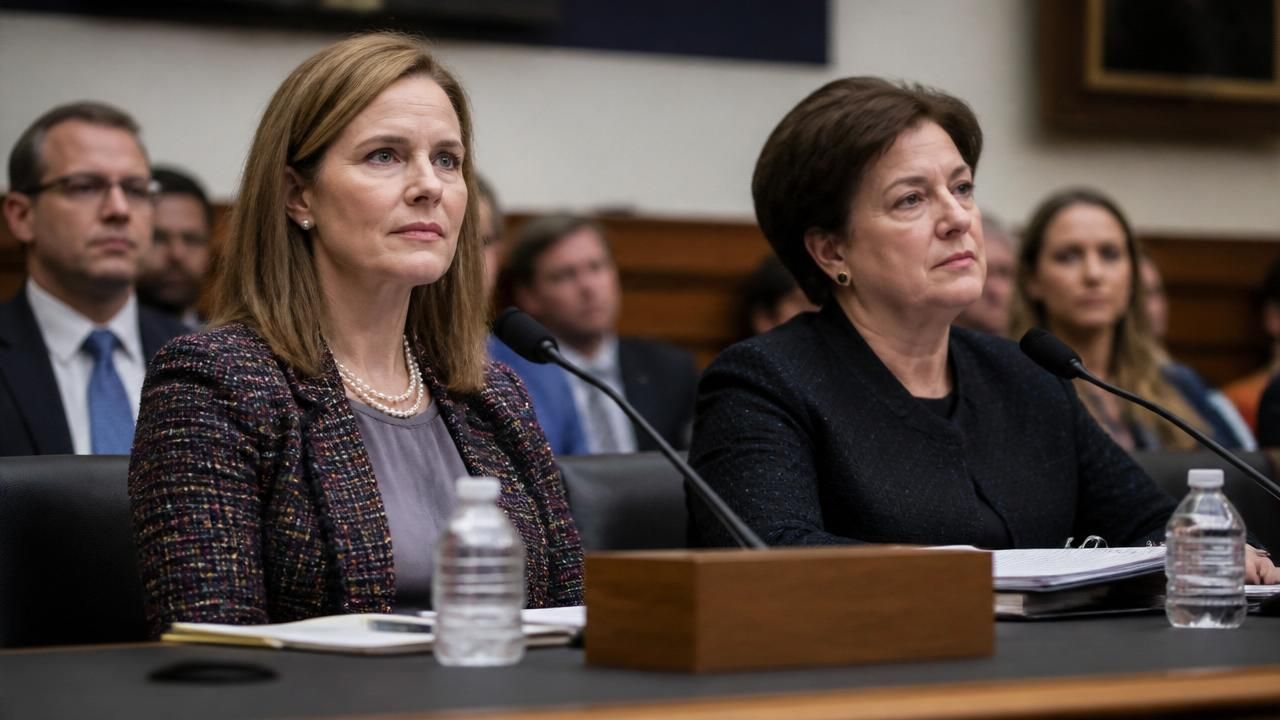
In a rare and striking display of unity, Supreme Court Justices Amy Coney Barrett and Elena Kagan crossed the street to Capitol Hill on Tuesday to personally appeal for a significant increase in security funding. The justices, accompanied by the Supreme Court's marshal, asked lawmakers for $25.4 million in additional funds for the 2027 fiscal year, with the bulk earmarked for protecting the justices and their families from an escalating wave of threats. The appearance, the first time justices have testified before Congress since 2019, underscores the deepening security crisis facing the federal judiciary.
A Surge in Threats
The request comes amid a dramatic rise in threats against Supreme Court justices and other federal judges. According to data cited by multiple sources, including Reuters and CNN, threats against federal judges have more than doubled in recent years, with the Supreme Court's police force reporting a 400% increase in threats since 2019. The leak of the Dobbs v. Jackson Women's Health Organization draft opinion in May 2022, which ultimately overturned Roe v. Wade, triggered a particularly sharp spike. In the aftermath, protests erupted outside justices' homes, and an armed man was arrested near Justice Brett Kavanaugh's residence. Justice Clarence Thomas described the situation as 'very dicey,' while Justice Neil Gorsuch broke his silence to warn of the 'violence' directed at the judiciary.
“The threats are real, they are serious, and they are not going away,” said Justice Elena Kagan during her testimony, as reported by USA Today and Fox News. “We need the resources to ensure that the judiciary can continue to function independently and safely.”
The Funding Request
The Supreme Court's budget request for fiscal year 2027 includes $19.4 million specifically for security upgrades, including enhanced protection for justices' homes, increased cybersecurity, and additional personnel. The remaining funds would go toward technology improvements and operational costs. Reuters reported that the total increase represents a roughly 15% jump over the court's current budget. The White House has signaled support, with President Biden's administration backing the request after the killing of a federal judge's family member in New Jersey, as noted by The New York Times.
However, the request has become entangled in partisan politics. A Republican bill in the House would fund extra security for Supreme Court justices but explicitly excludes lower court judges, according to NBC News. This has drawn criticism from judicial advocacy groups, who argue that threats are not limited to the high court. The Washington Examiner noted that the last time justices testified on the budget was in 2019, and the current request is the largest in recent memory.
Security Measures and Controversies
The court has already taken significant steps to bolster security. CNN reported that the Supreme Court has ramped up armed security hiring, and the marshal's office has asked Maryland and Virginia officials to stop picketing at justices' homes. The Intercept criticized the post-Roe security expansion as a 'sprawling security detail' that insulates justices from public accountability. Meanwhile, state-level courts are also feeling the pressure: the Indiana Supreme Court has asked for state funding for courthouse security, and the Minnesota Supreme Court's chief justice has made security a top priority, as reported by WFYI and the Star Tribune.
Differing Perspectives
The coverage varies widely. Conservative outlets like Fox News and Newsmax emphasize the justices' personal safety and the need for immediate action, while liberal-leaning sources such as The Intercept question the extent of the security buildup. USA Today and NBC News focus on the bipartisan nature of the request, though they note the political divisions over funding for lower courts. Internationally, the National Post reported that Canada's chief justice has also raised similar concerns, highlighting a global trend.
Historical Context
Security for Supreme Court justices has been a concern since the 1970s, when the court established its own police force. However, the current level of threat is unprecedented. The 2022 leak of the Dobbs opinion led to a crisis of confidence, with Justice Gorsuch calling for an investigation into the leak. The New York Times reported that the marshal's office had asked for help in 2022 to end protests at justices' homes, but tensions have only escalated since then.
Implications
The outcome of this funding request will have far-reaching implications. If approved, it will set a precedent for increased militarization of the judiciary, potentially affecting public perception of the court's independence. If denied, it could leave justices vulnerable. As Justice Barrett stated, as quoted by CNN: 'We cannot do our jobs if we are worried about our safety.' The debate now moves to Congress, where lawmakers must balance security needs with fiscal responsibility and civil liberties.
- The Supreme Court is seeking $25.4 million in additional security funding for FY2027.
- Threats against federal judges have doubled since 2019, with a 400% increase in threats against the Supreme Court.
- Justices Barrett and Kagan testified before Congress for the first time since 2019.
- The request includes $19.4 million for security upgrades, including home protection and cybersecurity.
- A Republican bill would fund Supreme Court security but exclude lower court judges.