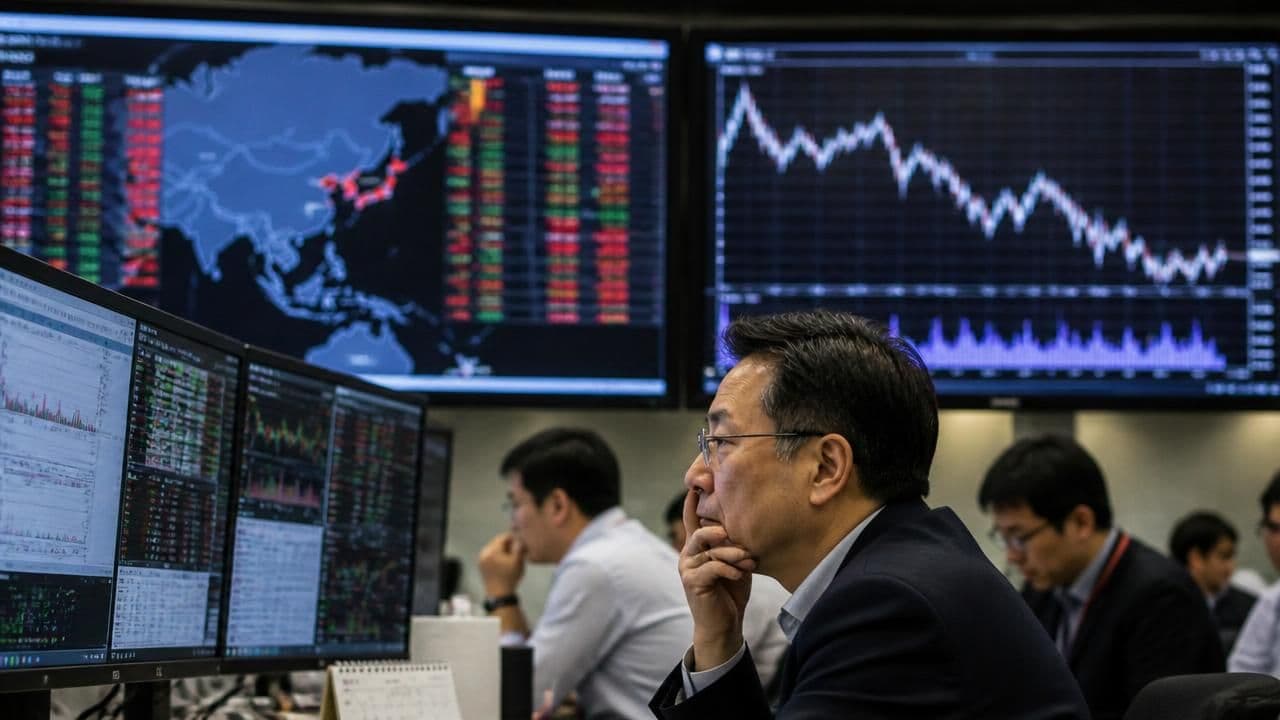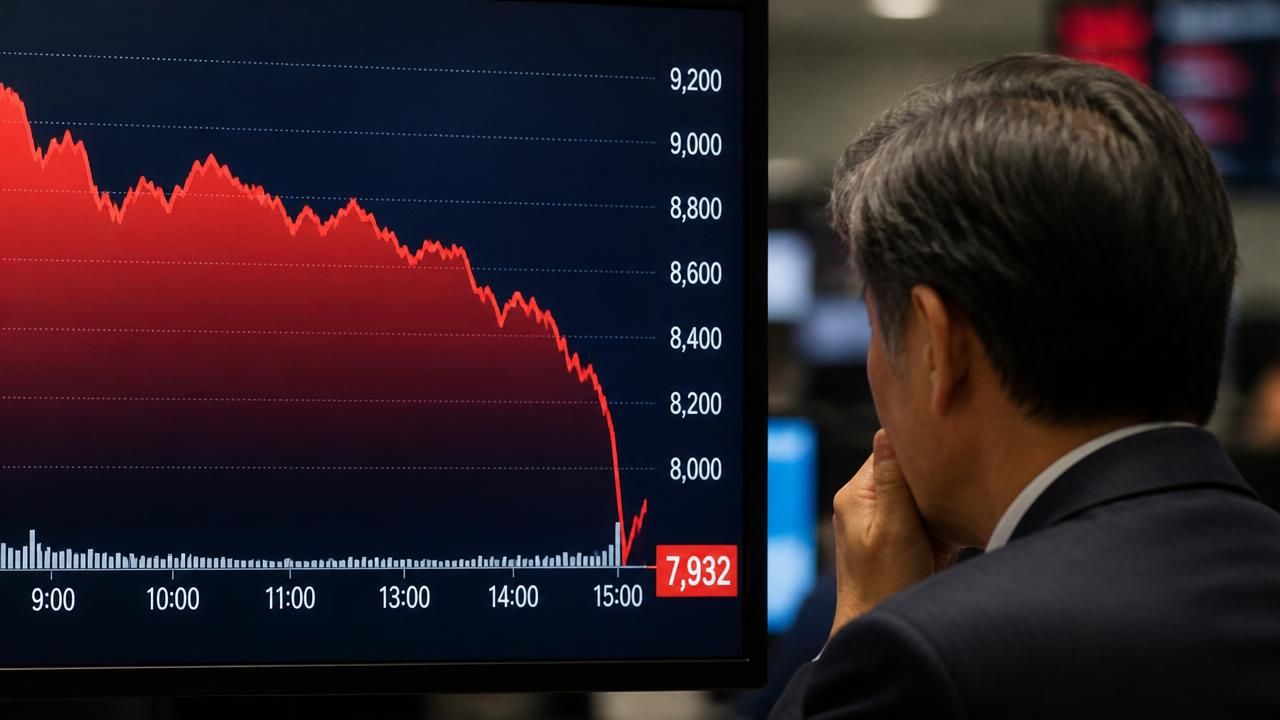
SoftBank Group Corp. shares fell as much as 11% after the Japanese technology investor reported a net loss of roughly $7 billion for its fiscal second quarter — its first quarterly net loss in almost two years — as a $3.7 billion writedown on US data-center projects combined with falling valuations across the artificial-intelligence trade and rising financing costs.
The swing is stark. A year earlier, SoftBank booked a profit in the region of $16 billion, a result that cemented Masayoshi Son's comeback narrative and his pivot toward an all-in bet on AI infrastructure. Twelve months later, the same strategy is the source of the damage, and investors responded by selling the stock aggressively.
The numbers behind the reversal
Across the coverage, the headline figure is consistent: about $7 billion in red ink for the quarter. What differs is the emphasis each outlet places on the causes.
- Bloomberg Markets led on the market reaction, noting shares dropped as much as 11% and framing the result as SoftBank's first net loss in almost two years.
- Two MSN reports split the blame between the US data-center hit and "financing costs," and between the writedown and a wider "tech selloff."
- A third MSN headline went further, declaring simply that SoftBank posted the loss "as the AI trade falters."
- Invezz framed the result in comparative terms, asking "what went wrong?" between the $16 billion profit of a year ago and the $7 billion loss now.
The common thread is that SoftBank's most ambitious bets — data centers built to serve the compute demands of the AI boom — are precisely the assets that have become hardest to value in a market that has turned abruptly skeptical of AI-related spending.
Where the money went
The $3.7 billion writedown tied to US data-center projects is the single largest identifiable charge. Those projects sit at the intersection of SoftBank's two defining obsessions: infrastructure and artificial intelligence. Building hyperscale capacity requires enormous upfront capital, long construction timelines and anchor tenants willing to commit to multi-year leases. When valuations across the AI complex compress — as they did during the quarter — the mark-to-market assumptions underpinning those projects move in the wrong direction.
Layered on top are financing costs. SoftBank is a leveraged investor by design, funding its Vision Fund commitments and its own balance-sheet purchases with debt. Higher borrowing costs therefore bite twice: they raise the cost of carrying existing positions and they lower the present value of future returns.
Arm is the number that matters
Yahoo Finance's framing of the story was the most pointed: "SoftBank's $7 Billion Loss Is Bad News for Arm. Here's the Number That Matters." The logic is that SoftBank's stake in the British chip designer Arm Holdings has become the central pillar of its valuation. Arm's post-IPO share price has swung violently with the AI trade, and SoftBank has used its holding as collateral and as a source of strategic optionality.
For investors, the quarterly loss itself may matter less than what it implies about the value SoftBank can extract from Arm — through secondary sales, margin loans or future transactions. A softer Arm valuation narrows the group's financial room to maneuver at exactly the moment it needs flexibility to fund its AI infrastructure ambitions.
"SoftBank posts $7 billion loss as AI trade falters" — the headline framing used by MSN, which captured the quarter in six words.
How the story is being framed
The divergence in coverage is instructive. Financial newswires concentrated on the mechanics — the writedown, the financing costs, the share-price reaction — treating the quarter as an accounting and leverage story. Consumer-facing aggregators leaned into the narrative arc, contrasting last year's $16 billion profit with this year's loss and framing Son's AI pivot as a high-stakes wager now being stress-tested. Investor-focused outlets looked past the income statement to the balance sheet, asking what the loss does to SoftBank's ability to keep funding its own thesis.
All of them, however, converge on one point: the era in which SoftBank could point to paper gains in AI-linked assets as proof of strategic genius is over, at least for now. Mark-to-market gains that flattered results during the boom have become mark-to-market losses.
Historical context
SoftBank's results have always been a proxy for risk appetite in technology. The Vision Fund's aggressive backing of unprofitable growth companies produced record profits during the 2021 liquidity boom and record losses during the 2022 downturn. Son subsequently retreated, sold down assets including a large portion of his Alibaba stake, and repositioned the group around Arm and AI infrastructure. That repositioning revived the stock and restored Son's reputation as a contrarian.
The current quarter is the first serious test of that repositioning. Unlike the 2022 drawdown, which was driven by private-market markdowns in consumer internet names, this loss stems from the very thesis Son has publicly championed: that AI compute demand will grow without interruption and that owning the physical infrastructure will be the most durable way to capture it.
What to watch
Three questions will determine whether this is a bump or a turning point. First, whether the data-center writedown proves to be a one-off adjustment or the beginning of a sustained repricing of SoftBank's infrastructure pipeline. Second, whether Arm's valuation stabilizes; its earnings and design wins have been strong, but its multiple leaves little room for disappointment. Third, whether SoftBank's lenders and credit investors remain comfortable with its leverage profile as financing costs stay elevated.
For now, the market has delivered its verdict: an 11% drop in a single session is not a mild rebuke. It suggests investors are no longer willing to fund Son's AI conviction at any price, and that the premium they once awarded his vision now has to be earned quarter by quarter, on the balance sheet as well as in the pitch deck.