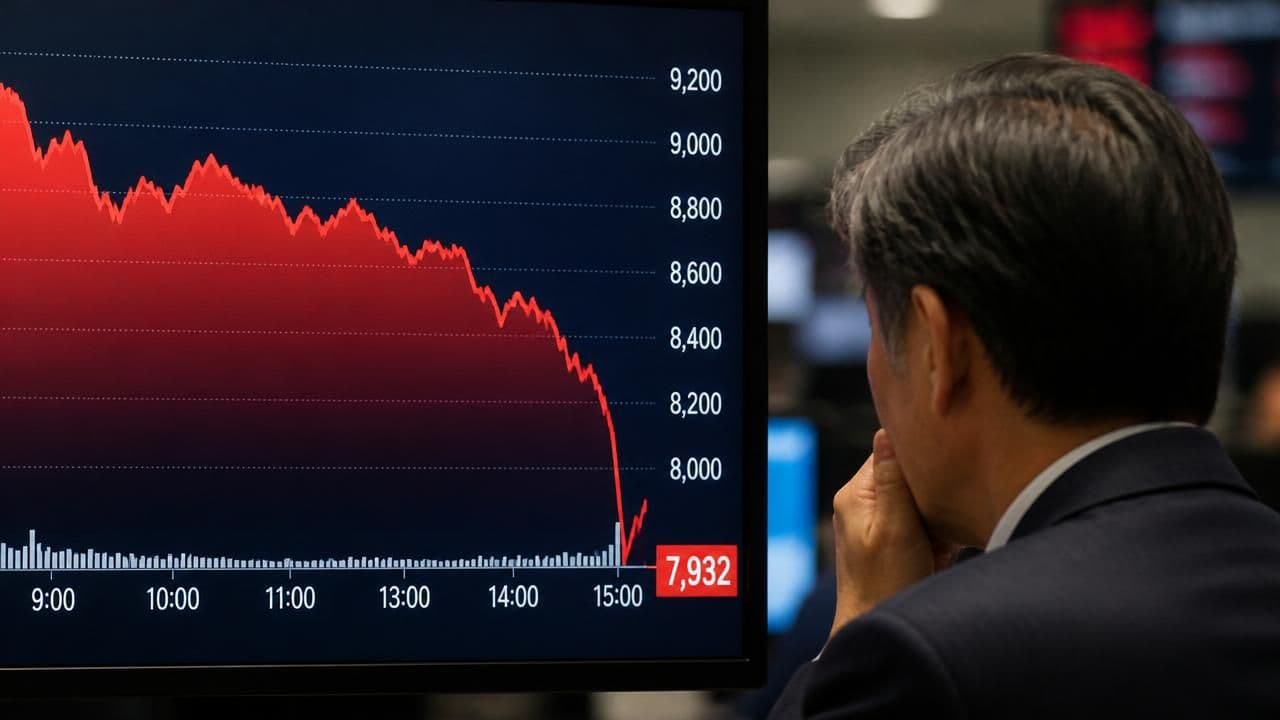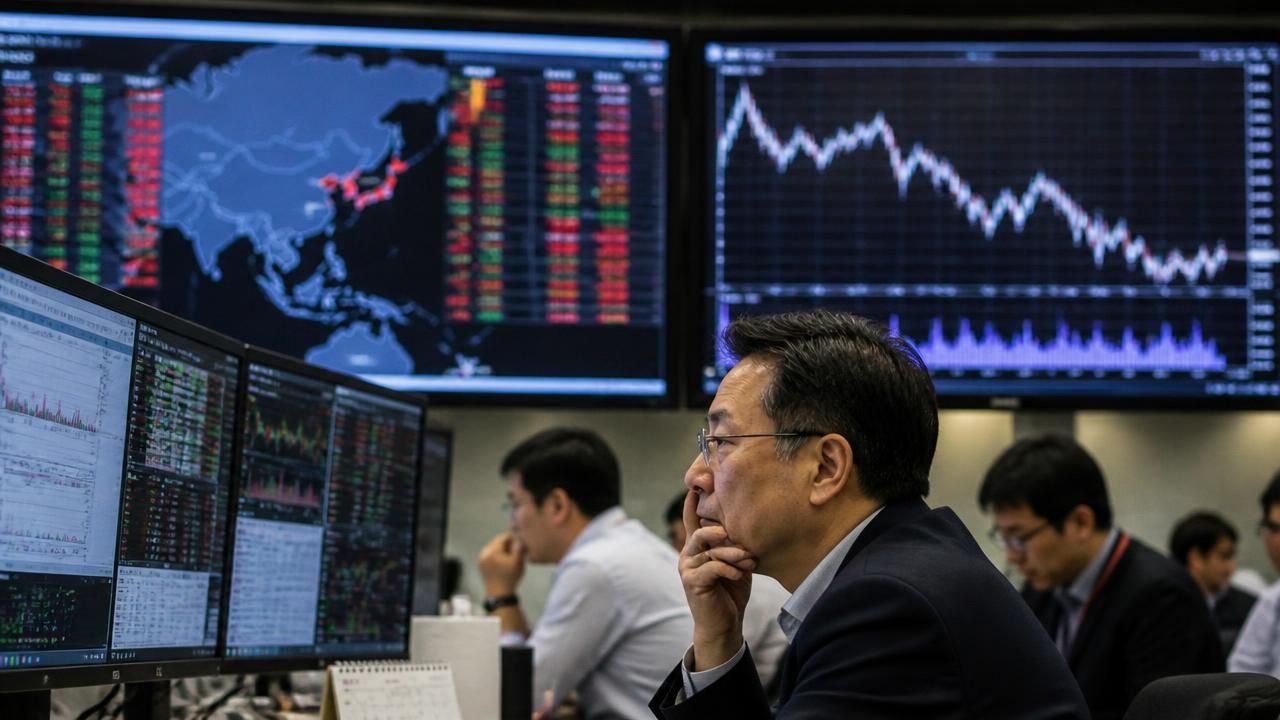
Asian equity markets opened the week to sharply conflicting signals, as investors tried to reconcile renewed enthusiasm for artificial intelligence stocks with a Wall Street selloff triggered by hotter-than-expected U.S. inflation data. Depending on where you looked — and which trading session you watched — the story was either an AI-driven rally, a tech-led retreat, or a cautious pause ahead of a dense slate of central bank decisions.
The confusion was visible in the headlines themselves. Bloomberg framed the session as a straightforward risk-on move, reporting that Asian stocks rose as better-than-expected earnings from AI infrastructure firm CoreWeave Inc. helped sustain interest in the artificial intelligence trade. That gain, Bloomberg noted, was enough to offset a Wall Street selloff fueled by stubbornly high U.S. inflation. A separate market wrap aggregated by MSN echoed the tone, describing Asian shares and U.S. futures rising on what it called an "AI-trade revival."
A Split Screen for Tech
Yet other outlets told the opposite story. MarketWatch reported that Asian stocks fell, with Alphabet's slide weighing heavily on the technology sector — a reminder that the AI trade is no longer a single, monolithic bet. The divergence between CoreWeave, a pure-play AI infrastructure name riding a wave of data-center demand, and Alphabet, the search giant navigating the expensive transition to AI-powered products, captures a broader rotation underway within the sector.
"Asian Stocks Fall as Alphabet's Slide Weighs on Tech" — MarketWatch headline
The picture grew murkier still from Morningstar's early market headlines, which flagged that AI stocks were sliding after earnings disappointed, even as French bonds tumbled and oil topped $112 a barrel. That combination — weakening tech leadership, stress in European sovereign debt and an oil price shock — describes a far more fragile macro backdrop than a simple "AI enthusiasm returns" narrative would suggest.
Why the Framing Matters
The divergence in coverage reflects genuine regional dispersion rather than mere editorial spin. AI-linked semiconductor and infrastructure names in North Asia have been buoyed by capital expenditure commitments from hyperscalers and by results such as CoreWeave's. Meanwhile, platforms and advertising-dependent megacaps face investor skepticism about the payoff timeline for their AI spending. When one index is weighted toward chipmakers and another toward internet platforms, the same underlying news flow can produce opposite index moves.
Macro factors are compounding the noise. The hotter-than-expected U.S. inflation print has revived questions about how quickly the Federal Reserve can ease policy, pushing bond yields higher and pressuring rate-sensitive growth stocks. Reports of French bonds tumbling add a European dimension, reviving memories of sovereign spread anxiety that has periodically unsettled global markets. And oil above $112 a barrel is a direct tax on household budgets and corporate margins across Asia's import-dependent economies.
- AI infrastructure: Strong earnings from CoreWeave support the buildout thesis.
- AI platforms: Alphabet's slide shows investors are discriminating between winners and spenders.
- Rates: Hot U.S. inflation data keeps bond markets on the back foot.
- Commodities: Oil above $112 complicates the inflation outlook for Asia's importers.
- Europe: French bond weakness adds a fresh source of volatility.
The Week Ahead: Central Banks Take Center Stage
Several sources pointed to an unusually heavy calendar of central bank decisions and earnings releases as the next catalyst. The framing from regional coverage — that AI enthusiasm had returned "ahead of earnings and central bank decisions" — is telling: investors are willing to add risk, but only selectively, and only until the next data point lands.
That selectivity is the defining feature of the current market regime. The early-2024 phase, in which virtually any company mentioning AI rallied, has given way to a discriminating market that rewards visible revenue and punishes open-ended spending. CoreWeave's beat fits the first category; Alphabet's slide fits the second.
What to Watch
Three variables will determine whether the bulls or bears win the next session. First, the durability of AI capital expenditure guidance from major cloud providers, which underpins demand for chips, servers and data-center power. Second, the trajectory of U.S. inflation and the resulting shape of the yield curve — a renewed leg higher in yields would pressure equity valuations broadly. Third, oil, where a sustained move above $112 would force central banks in Asia to choose between supporting growth and containing imported inflation.
"Better-than-expected earnings from CoreWeave Inc. helped sustain interest in the artificial intelligence trade, offsetting a Wall Street selloff fueled by hotter-than-expected US inflation data." — Bloomberg Markets
The Bigger Picture
Beneath the daily swings, the underlying story is one of transition. The AI trade is maturing from a theme into an industrial cycle with real capex, real earnings and real winners and losers. At the same time, the disinflationary tailwind that powered the 2023–2024 rally is fading, replaced by sticky inflation, volatile bond markets and geopolitical energy risk. Investors who treated AI enthusiasm and easy money as the same trade are now being forced to separate them.
For Asian markets in particular — home to the world's most important semiconductor supply chains and some of its most oil-dependent economies — that separation will play out in real time. The region's exporters benefit from the AI buildout; its importers suffer from expensive crude. The result is likely to be more sessions like this one: indices moving in opposite directions, and headlines that seem to describe entirely different worlds.
As one regional wrap succinctly put it, AI enthusiasm has returned. The question investors must now answer is: returned for whom?