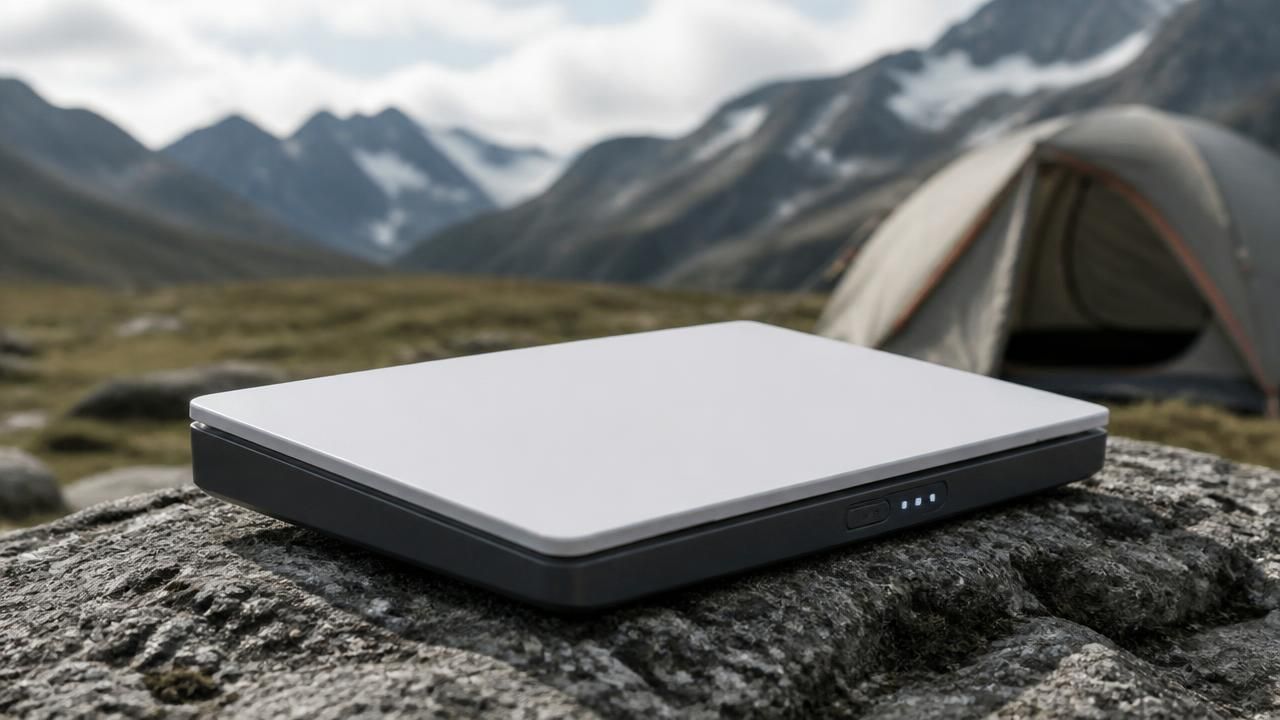
SpaceX appears to be preparing a second generation of its all-in-one Starlink terminal, and this time the company is betting that mobility — not just portability — is the selling point. According to reporting from The Verge, the new Starlink Mini 2 integrates a dish, a Wi-Fi router, and now a rechargeable battery into a single unit roughly the size of a laptop, letting users get online for hours without plugging into a wall or a vehicle's power outlet.
The device has not been formally unveiled. Details are emerging from two directions: screenshots of order invitations shared by users on X, and firmware code uncovered by PCMag. Together they paint a picture of a launch that is functionally underway even if the press release has not yet gone out.
What the $999 Kit Actually Includes
The headline number circulating among early invitees is $999. That figure is more generous than it first appears, because the bundle reportedly includes a full year of Starlink's Roam Unlimited service — a plan SpaceX itself values at $2,100. In effect, the hardware is being positioned as a giveaway attached to a twelve-month service commitment, a classic satellite-internet economics play in which subscriber acquisition matters more than terminal margin.
Battery life is quoted at up to 4.5 hours on a full charge. That ceiling is not fixed: SpaceX says users can extend runtime by hot-swapping additional batteries, which will be sold separately, or by tethering the dish to any 60W power source over USB-C. Hot-swapping matters more than the raw hours suggest — it means a user can carry spare packs and keep a connection alive indefinitely without ever shutting the terminal down, a meaningful difference for field researchers, overlanders, and emergency responders.
"The Starlink Mini 2 will run for up to 4.5 hours on a full charge, SpaceX claims, but that can be expanded by hot-swapping in additional batteries that will be sold separately, or by connecting the dish to a 60W power source over USB-C." — The Verge
How the Story Broke: Firmware First, Invitations Second
The two outlets covering the launch emphasize different evidence, and the contrast is instructive. PCMag approached the story as a code investigation, reporting that the Mini 2 first surfaced inside Starlink firmware — a common pre-launch pattern for connected hardware, where device identifiers, power-management routines, and configuration flags ship to existing terminals ahead of retail availability. Tech Digest framed the same evidence as preparation activity, describing a company readying a launch rather than one that had already announced a product.
The Verge, meanwhile, led with the consumer experience: users on X posting screenshots of invitations to order, complete with pricing and plan terms. That distinction matters for anyone trying to read the timeline. Firmware strings indicate engineering is complete. Order invitations indicate fulfillment and billing systems are live. Neither constitutes an official announcement, and SpaceX has a long history of quietly enabling products in select markets before acknowledging them publicly.
The Accessory Economy Is Already Moving
Perhaps the clearest signal that the Mini form factor has found a real audience is that third parties are building around it. PeakDo has introduced a battery pack for the Starlink Mini dish featuring an integrated fan and puncture-resistant construction — a design aimed squarely at the abuse a portable terminal takes when it is strapped to a roof rack, thrown in a Pelican case, or set up on rocky ground.
That accessory exists for the current-generation Mini, not the Mini 2, and it highlights a tension SpaceX will have to manage. By building the battery in, the company absorbs a job that aftermarket vendors currently do better and more cheaply. Owners of the original Mini have already invested in external power solutions; Mini 2 buyers will instead be choosing between first-party hot-swap packs and whatever the ecosystem produces next.
Why This Matters Beyond the Hardware
Starlink's portable tier has quietly become one of the most consequential products in consumer connectivity. The original Mini shrank a terminal that once required a tripod and a clear view of the northern sky into something that fits in a backpack, and it opened up use cases — remote work from a campsite, connectivity during disaster response, live reporting from places with no cell coverage — that the fixed residential dish never could.
The limiting factor has always been power. A satellite terminal that needs a wall outlet is portable in name only. A terminal with a swappable, field-replaceable battery is genuinely untethered, and that shifts Starlink from a broadband substitute into direct competition with cellular hotspots, portable generators, and the entire overlanding electronics market.
- Price: $999, including one year of Roam Unlimited (SpaceX-assigned value: $2,100)
- Runtime: Up to 4.5 hours per charge, extendable via hot-swapped batteries
- Charging: 60W over USB-C, or swappable first-party packs sold separately
- Form factor: Dish, Wi-Fi router, and battery in one unit about the size of a laptop
- Status: Not officially announced; details from firmware and user order invitations
The Open Questions
Several things remain unresolved. SpaceX has not confirmed the $999 price publicly, nor whether the bundled Roam Unlimited year applies to every market or only to the invitation cohort that surfaced this week. The cost of additional hot-swap batteries — arguably the number that determines whether the Mini 2 is genuinely useful off-grid — has not been disclosed. And the launch date is still a matter of inference rather than announcement.
What is clear is the strategic direction. SpaceX is no longer selling a dish; it is selling a subscription, and it is willing to bundle hardware aggressively to get one. If the Mini 2's battery lives up to its billing, the company will have removed the last practical obstacle between satellite internet and the people who most need it — those working, traveling, or surviving far from any outlet.