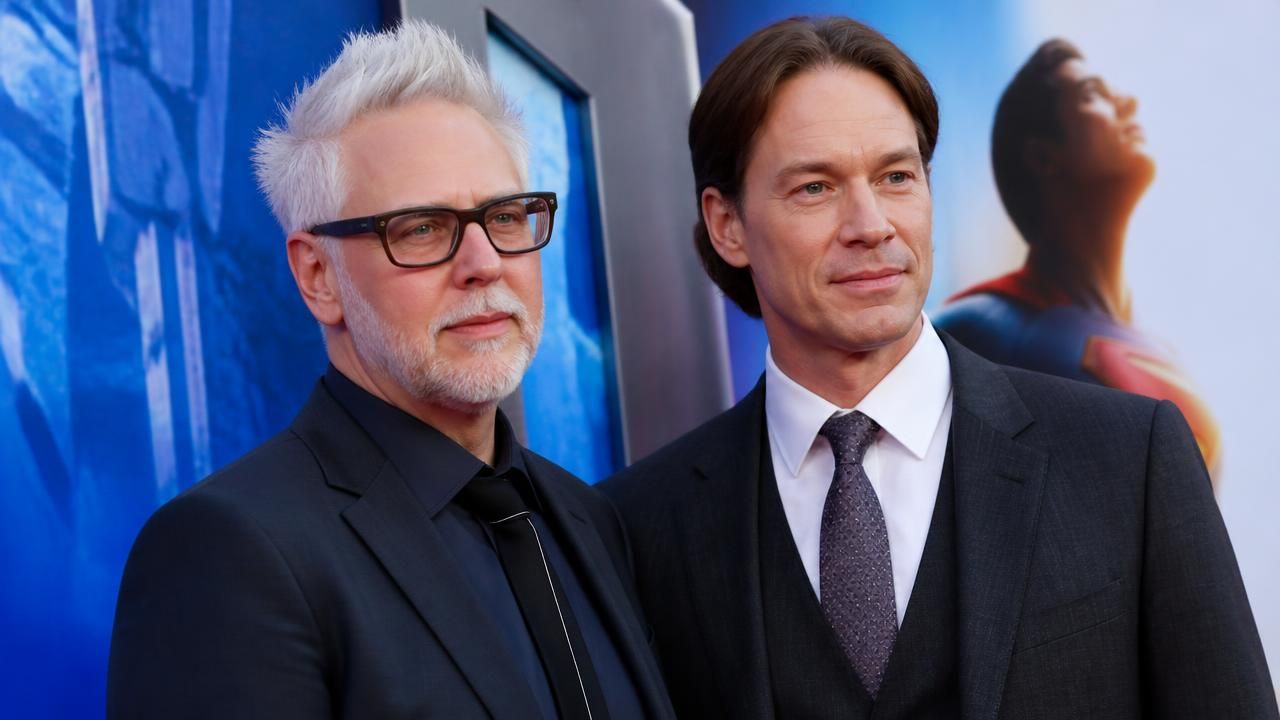
DC Studios is changing hands at the top. James Gunn and Peter Safran, the co-CEOs who have run Warner Bros. Discovery's comic-book film and television division since 2022, are stepping down from their executive roles and will be replaced by Jeremy Latcham, the former Marvel Studios senior vice president of production and development, according to a Deadline report confirmed across the industry trades.
The pair will not leave the building entirely. Both Gunn and Safran are expected to remain attached to DC projects as producers, and Gunn is still shepherding Man of Tomorrow, the follow-up to his 2025 Superman. In an Instagram post reacting to the news, Gunn said he and Safran had "just been engaged on another DC project which I'm writing," and described his tenure running the studio as "trying, to say the least."
A leadership change years in the making
The shakeup ends one of the most closely watched experiments in modern franchise management. When David Zaslav installed Gunn and Safran in late 2022, the mandate was to reset a DC film universe that had fragmented across a decade of competing visions — from Zack Snyder's operatic trilogy to standalone detours like Joker and The Batman. The new chiefs promised a single, coherent continuity across film, television and animation, with Gunn, a former Guardians of the Galaxy director, serving as the creative architect and Safran as the producing hand.
That reset produced a small slate of announced projects, a revamped Superman, and a running argument with fandom about what, exactly, it was all building toward. It is that argument — and the uneven commercial returns attached to it — that industry observers point to as the backdrop for the change.
Who is Jeremy Latcham?
Latcham arrives with a résumé drawn from the rival camp. As a senior production executive at Marvel Studios, he worked across the company's most commercially dominant era, helping steer interconnected storytelling across more than a dozen films before moving into producing. His appointment signals a preference at the corporate level for a studio operator steeped in the Marvel method: tightly managed continuity, disciplined release calendars, and a producer-led rather than auteur-led creative process.
For DC's rank and file, the shift raises immediate questions about which announced projects survive, whether Gunn's outlined continuity remains canon, and how quickly a new architect can put a stamp on a slate already in motion.
Gunn's report card
Assessment of Gunn's tenure splits sharply along the same lines it did during his tenure. Supporters credit him with ending a period of drift, delivering a well-reviewed Superman, and articulating a plan — including a publicly clarified reset of what counted as the first canon DC Universe film — where his predecessors had offered only improvisation. Detractors, including a vocal segment of fans, argue the studio's output was thin for the elapsed time, that the announced slate was longer on logos than release dates, and that a creator with his own filmography could not credibly serve as an impartial steward of a shared universe.
Aggregators and fan sites spent the morning compiling verdicts — "report cards" — in a format that treated the executive change as a referendum on Gunn personally rather than on the structural problems of franchise filmmaking in a contracting theatrical market.
'Clayface' and the commercial question
The timing is awkward in one respect: Clayface, a lower-budget, villain-centric DC title, just topped the box office with a $24 million opening. That figure is respectable for a mid-tier genre film but far from a franchise-defining number, and the trades read it as a signal that DC's new strategy was producing a wider range of bets at smaller scales — a portfolio approach rather than a tentpole monoculture.
Gunn, characteristically, spent part of the promotional cycle defending the project against the inevitable snark. When a fan asked publicly, "Who asked for a 'Clayface' movie?", Gunn fired back rather than deflecting, arguing that the question misunderstands how the studio is meant to operate. He made a similar case when pressed on what his various announced projects were "building toward," and again when critics attacked the internal consistency of his DCU's continuity.
"I dislike the at-times cor—" Gunn wrote in his Instagram post, before the platform's excerpt cut him off, framing his tenure as "trying, to say the least."
Two ways of framing the same story
The coverage reveals as much about the outlets as the outcome. The Hollywood trades — Deadline first among them — framed the move in structural terms: an executive reorganization, sourced to the studio, with attention to contracts, producer deals and slate continuity. The Verge emphasized Gunn's persona, headlining his departure around his blunt public style and pulling his Instagram commentary to the front. Fan-oriented sites like ComicBookMovie and aggregator pages leaned into the combativeness, cataloguing every exchange Gunn had with critics — over Clayface, over continuity, over casting — as though the executive's departure were the final round of an argument conducted in real time on social media.
Scattered through that coverage is a subtler thread: praise for the studio's recent Batman casting, and speculation that the new hire is strong enough to be folded into whatever continuity survives Gunn's exit. It is a reminder that much of the creative work already completed — casting, scripts, produced films — does not disappear when a chief executive's nameplate does.
What comes next
Latcham inherits a slate in motion, a restless fan base, and a parent company that has spent years restructuring its film assets. The immediate questions are practical: whether Gunn and Safran's producer deals insulate their announced projects, whether Man of Tomorrow proceeds on its current timetable, and whether the new leadership keeps the existing canon or quietly starts again.
What is clearer is the pattern. Franchise stewardship at this scale has become a hire-and-replace position, with creative authority increasingly vested in executives rather than directors, and with each cycle producing a fresh round of retrospectives on the last one. For DC, the third reset in a decade begins now — and the audience, more skeptical than ever, will judge it by release dates rather than press releases.