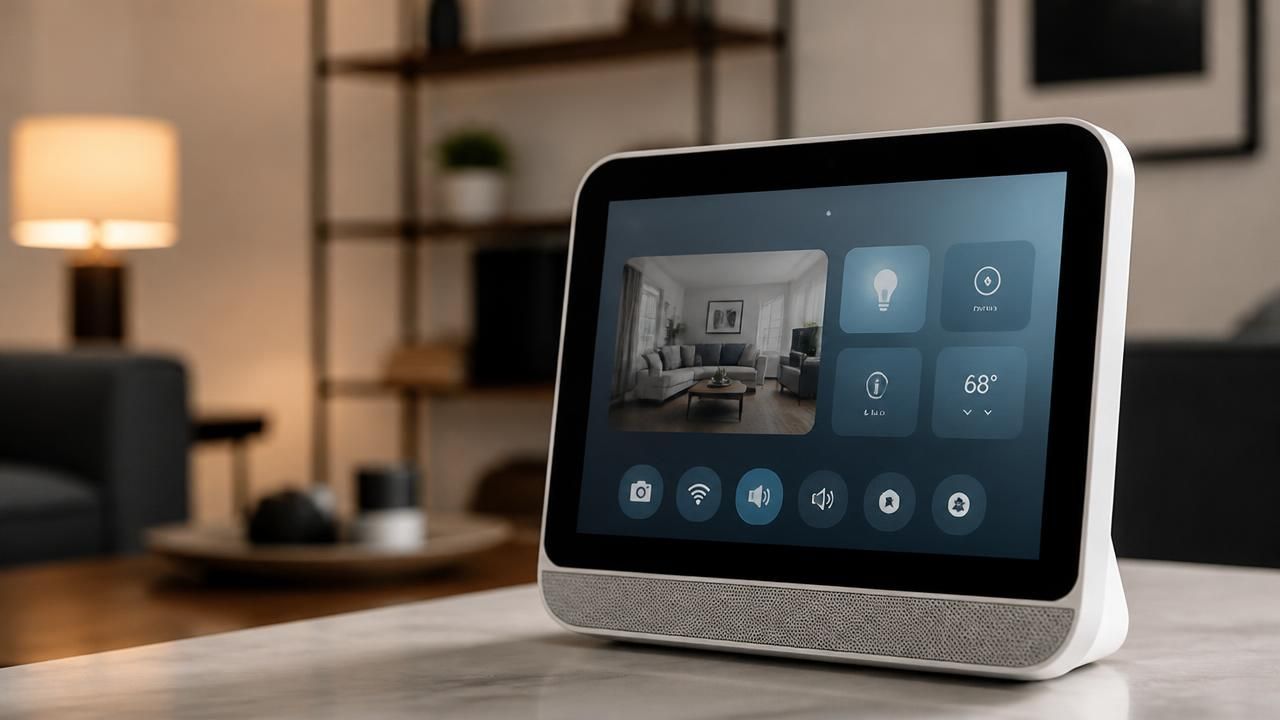
Apple's smart home ambitions may be about to get considerably more conversational. According to code discovered in the iOS 27.3 beta, the company appears to be laying groundwork that would allow third-party AI chatbots to run on HomeView, its $299 smart home hub — a move that would fundamentally reframe Siri's role in the living room and place Apple's hardware directly alongside products like ChatGPT and Claude.
The discovery surfaced this week when a developer posting on X under the handle pdfu flagged a new entry in the beta firmware: a category labeled "Conversational Apps." The finding was first reported by The Verge and quickly picked up by Apple-focused outlets including MacObserver and PowerPage, all of which noted the same limitation — the code names a category but offers no detail about which apps would fall under it, or how deeply they would integrate with HomeView's interface.
What the Beta Actually Reveals
Stripped of the hype, the evidence is a set of developer-facing hooks rather than a shipping feature. Alongside the "Conversational Apps" flag, the iOS 27.3 beta reportedly adds infrastructure for bidirectional audio routing and session management — plumbing that would be necessary if a user were to speak to a third-party assistant through HomeView's microphones and speakers and receive a spoken response in return.
That plumbing is described in the beta as "still not fully wired up," according to the developer's assessment, a phrase that matters a great deal. It suggests Apple is building scaffolding well ahead of any consumer announcement, consistent with the company's long-standing practice of shipping dormant frameworks months before they appear in marketing materials.
The beta also bundles a separate security hardening measure: anti-spoofing protection that requires a user to re-authenticate with a paired iPhone after three failed attempts, followed by a lockout period. While less headline-grabbing than the prospect of ChatGPT on a kitchen counter, the feature points to the same underlying concern — HomeView is being prepared to authenticate people, not just commands, which any conversational third-party assistant would require.
Why It Matters: Siri's Reputation Problem
The strategic logic is difficult to miss. Apple has spent the better part of a decade defending Siri against unflattering comparisons to more capable large language model assistants. As MSN framed the story, the subtext for consumers is simple: a HomeView that let you use an assistant that works more like ChatGPT would answer a wish many Apple customers have expressed for years.
Opening HomeView to third-party assistants would be a notable philosophical shift. Apple has historically kept Siri as the sole voice layer across its devices, permitting third-party apps to exist but not to occupy the assistant role. A "Conversational Apps" category implies a marketplace-style structure — a place where services could be installed and addressed by the user, potentially with Apple taking a cut of subscriptions in the manner of the App Store.
"There's a flag listed for a 'Conversational Apps' category. While there are no details about what apps would fall under that heading, it seems reasonable that AI chatbots like ChatGPT and Claude could be added to HomeView." — The Verge
That framing is deliberately hedged, and it is worth noting how differently the outlets covered the same code. The Verge treated it as a plausible rumor grounded in a specific string of code. MacObserver and PowerPage leaned into the headline-friendly version — "potential third-party AI chatbot support" — while MSN positioned it as a consumer-facing surprise for a device that costs $299. None of the four could point to an Apple statement, an announced partner, or a shipping date, because none exists publicly.
The Competitive and Regulatory Context
Apple has already demonstrated a willingness to partner rather than build alone. Its Apple Intelligence rollout leaned on an arrangement with OpenAI to handle certain requests that Siri could not, with reports of ongoing conversations with Google and Anthropic about additional integrations. Extending that model from the iPhone to the home hub is a short technical step and a longer political one internally, where the Siri team's ownership of the ambient assistant experience has long been defended.
Regulators may also shape the outcome. Scrutiny of Apple's App Store rules in the EU under the Digital Markets Act has already forced the company to open areas it once controlled tightly. An assistant marketplace on HomeView would arrive under that same shadow, and the company may prefer to design it voluntarily rather than have one designed for it.
What to Watch
- Whether the flag becomes user-visible. A dormant string in a beta is not a feature; a Settings toggle in a later seed is.
- Which assistants appear first. ChatGPT is the likeliest early partner given the existing Apple Intelligence relationship; Claude and Gemini are the plausible follow-ons.
- How Apple frames privacy. Conversational audio routed to a third party raises questions Apple will have to answer explicitly, particularly around on-device processing and transcript retention.
- Pricing and platform economics. Whether third-party assistants require a subscription, and whether Apple takes a commission, will determine if this is a genuine platform or a courtesy integration.
For now, the honest summary is that Apple is building the pipes. The beta code reviewed this week shows a company preparing HomeView to host conversations it does not fully control — audio routing, session handling, identity verification — while withholding any public commitment about who will fill them. Given Apple's release rhythms, a formal announcement would most plausibly arrive alongside a future iOS 27 point release or at a spring software event. Until then, the "Conversational Apps" flag remains exactly what it is: a promising string in a developer build, and a signal that Siri's monopoly on Apple's living room may not last forever.