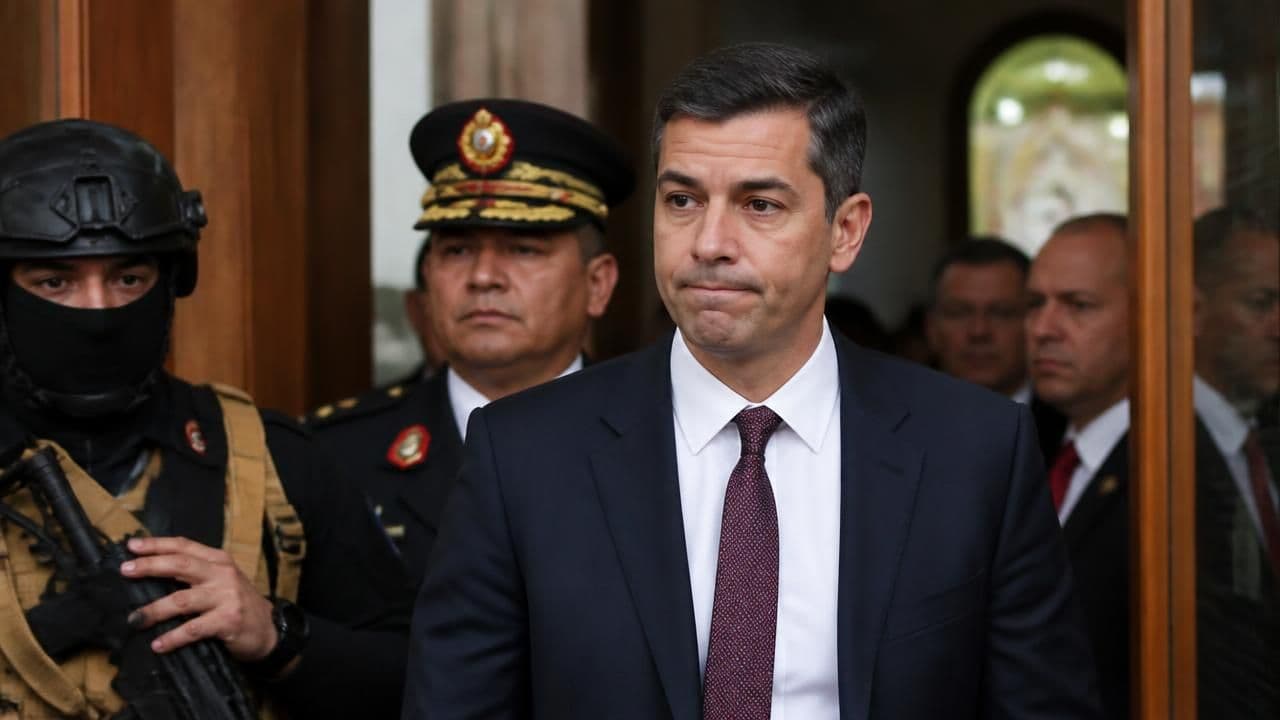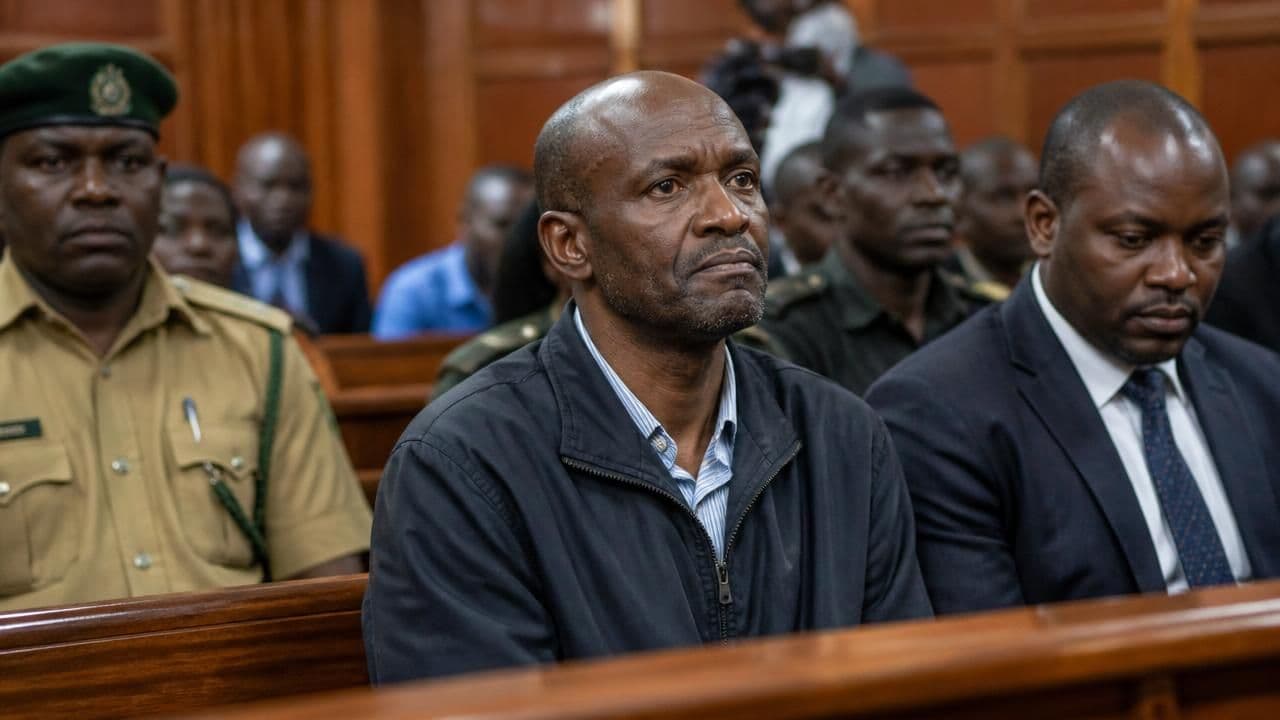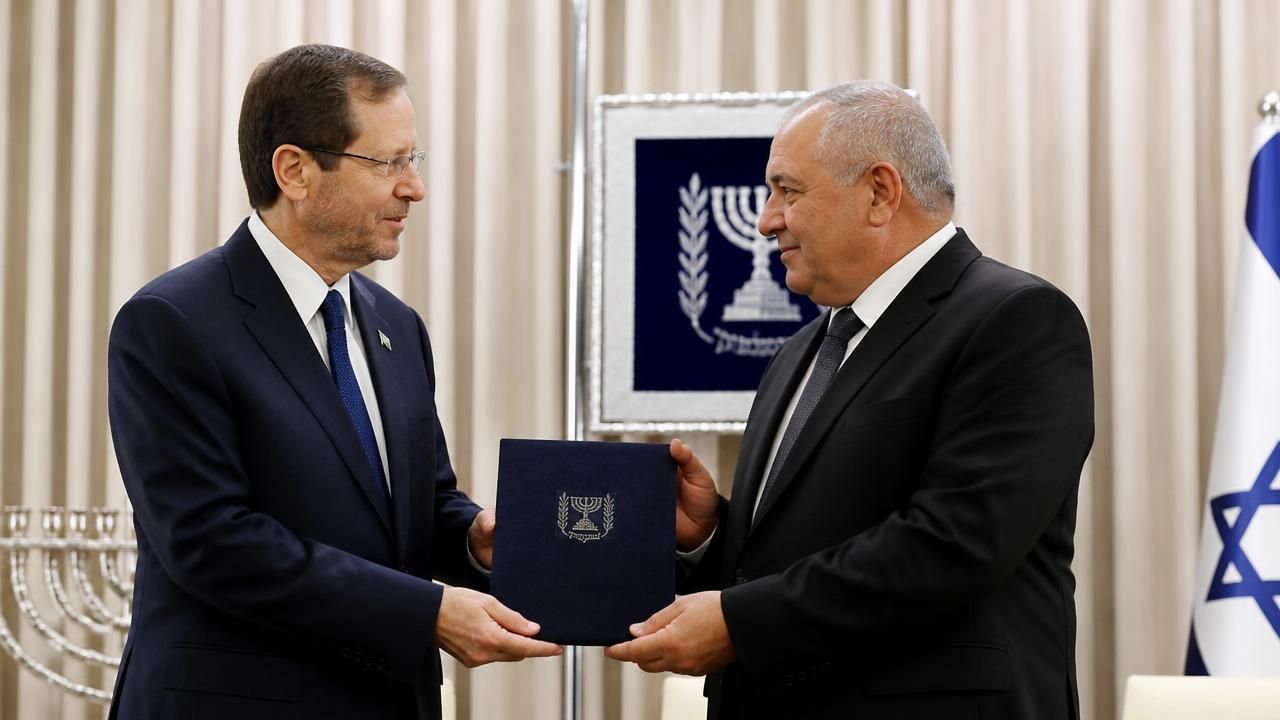
Israel's President Isaac Herzog has handed opposition candidate Gadi Eisenkot the mandate to form a new government, a decision that delivers a sharp setback to Prime Minister Benjamin Netanyahu and thrusts a former military chief into the center of the country's political arena.
The announcement, following the release of the first exit-poll results in the general election, came after consultations with representatives of the parties elected to the Knesset. Herzog's office said the main parties had recommended Eisenkot as the candidate best positioned to assemble a governing coalition — a formal step that gives the opposition the first attempt at forming a government rather than the incumbent.
A Deadlocked Result
The election produced no decisive winner. Eisenkot ran as the main rival to Netanyahu, but, according to the exit polls, neither won enough support to command a majority in the 120-seat parliament. That arithmetic — not a landslide — is what made Herzog's decision consequential. With both blocs short of the 61 seats needed, the president's choice of who gets the first shot amounts to a pivotal intervention in a hung parliament.
Multiple outlets framed the development in near-identical terms, a sign of how unambiguous the headline was even as the underlying politics remained murky. The Associated Press described it as a "setback for Netanyahu"; The New York Times reported simply that the "Israeli Opposition Leader [was] Tapped to Try to Form Government"; The Times of India cast it as "challenging Netanyahu"; and NPR emphasized that Herzog had chosen the opposition candidate "not Netanyahu." The convergence across outlets in the United States, India, Asia and Israel reflected a rare moment of clarity in an otherwise fluid post-election landscape.
Who Is Gadi Eisenkot?
Eisenkot's rise to the threshold of the premiership marks a striking transition from military command to civilian politics. As a former chief of staff of the Israel Defense Forces, he built a public profile around security credentials — historically Netanyahu's strongest political asset. His candidacy, in effect, challenged the prime minister on his own turf, offering voters a rival with comparable defense experience but without the legal and political baggage that has come to define Netanyahu's later years in office.
The parallel is not lost on analysts. Israeli politics has a long history of generals translating military stature into electoral success, from Yitzhak Rabin to Ehud Barak and Ariel Sharon. Eisenkot's emergence follows that pattern, but in a fragmented party system where no single figure commands an automatic majority.
The Coalition Arithmetic
The path from mandate to government is narrow. Under Israeli law, the candidate tapped by the president has a set period — conventionally around four weeks, extendable in some circumstances — to assemble a coalition commanding at least 61 Knesset seats. Failure does not end the process: the mandate can then pass to another candidate, and the president may open a further round of consultations.
- The first test: Eisenkot must convert recommendations from party leaders into binding coalition agreements.
- The arithmetic problem: With neither bloc at 61, small and mid-sized parties hold disproportionate leverage.
- The fallback: If Eisenkot fails, the mandate may transfer to Netanyahu or the Knesset could move toward dissolution and another election.
- The wildcard: Parties that campaigned against Netanyahu may still refuse to sit with him — or with each other.
The question dominating Israeli commentary, as the Indian Express put it, is simply: what happens next? The answer depends less on Eisenkot's popularity than on whether ideologically disparate parties can overcome their rivalries to prevent a fifth election in short order.
A Referendum on Netanyahu
For much of the campaign, the contest was interpreted less as a choice between programs than as a referendum on Netanyahu's continued rule. The New York Post reported that Netanyahu lost seats and trailed Eisenkot in the exit polls. His opponents have long argued that a change of government is necessary to restore public trust in institutions; his supporters counter that removing him mid-course would weaken Israel's security posture and reward his political adversaries.
Herzog's decision does not settle that argument — it formalizes it. By giving the opposition the first opportunity, the president signaled that the parties' recommendations pointed away from the incumbent, but the coalition battlefield that now looms will test whether that signal can be converted into a durable majority.
Neither candidate won enough support to command a majority — a deadlock that makes the president's choice of who tries first the single most consequential decision of the post-election period.
What to Watch
The coming weeks will be dominated by closed-door negotiations, public posturing from party leaders, and the slow emergence of a coalition blueprint. Three scenarios dominate: Eisenkot succeeds and forms a government that ends Netanyahu's tenure; Eisenkot fails and the mandate passes back to Netanyahu, who may yet find a narrow path to 61; or the process collapses entirely, sending Israelis back to the polls.
For now, the immediate facts are clear. Israel's president has chosen the opposition. The prime minister's rival has the mandate. And a country that entered the election deeply divided has emerged from it without a verdict — only a new round of bargaining over who will govern, and on what terms.