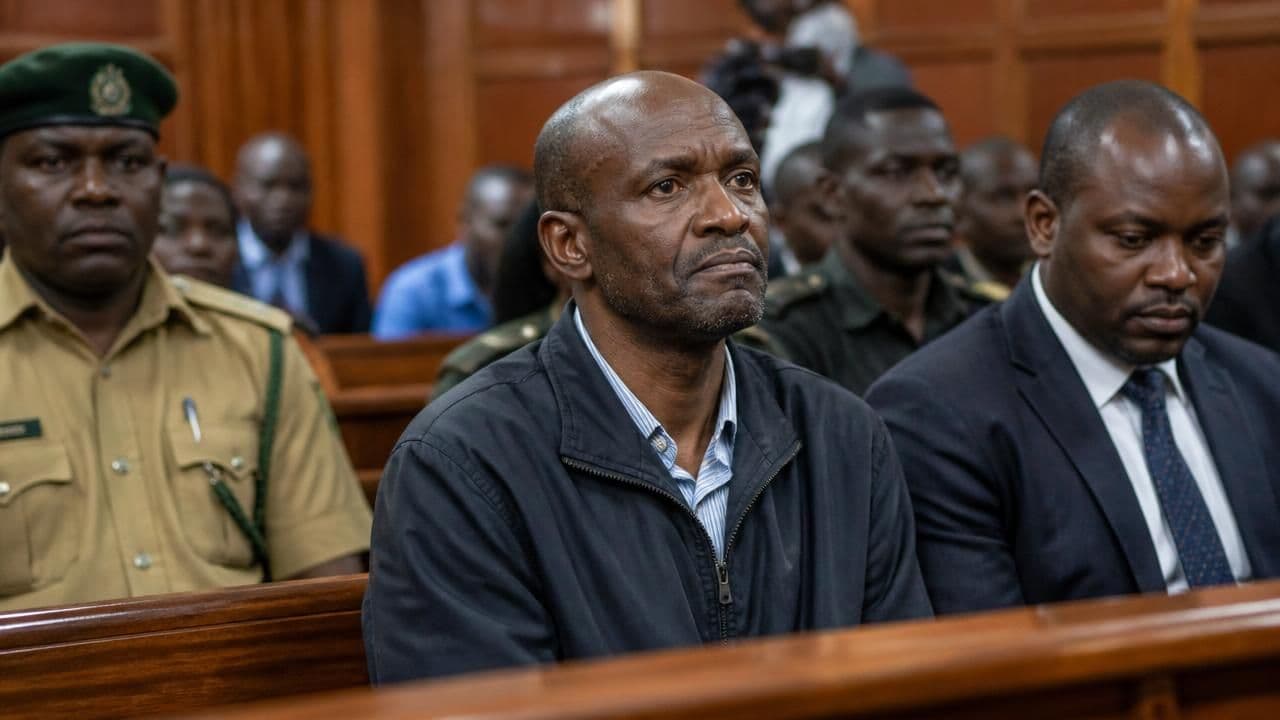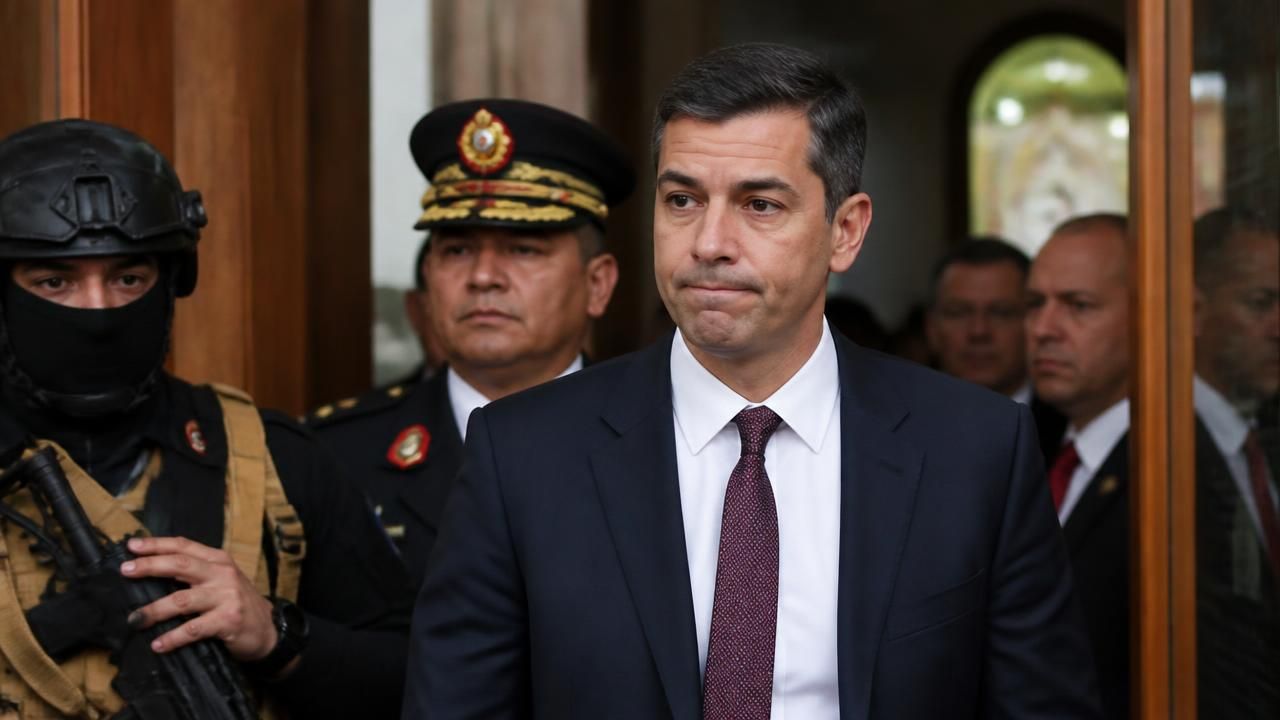
Paraguay's political establishment was thrown into turmoil on Friday as President Santiago Peña was removed from office by the Senate, placed under house arrest, and summoned before prosecutors over the collapse of a state-affiliated bank that has left millions of Paraguayans unable to access their accounts. Vice President Pedro Alliana was sworn in as his sudden successor, capping one of the fastest presidential removals in the region in recent memory.
The sequence of events unfolded with unusual speed. The Senate voted to impeach Peña after the bank failure became public, and by Friday evening the presidency had changed hands, prosecutors had ordered the detention of the outgoing head of state and a former central bank chief, and Peña was confined to his residence as he prepared to answer questions from the attorney general's office.
A bank failure, then a lightning impeachment
According to NPR, Reuters and The Associated Press, the trigger for the crisis was the collapse of a bank with ties to the state — a failure that quickly metastasized from a technical financial problem into a constitutional one. Lawmakers moved to impeach Peña almost immediately, and the Senate's vote was decisive enough to end his presidency outright rather than merely suspend him.
The Baltimore Sun reported that prosecutors ordered the arrest of both Peña and the former head of Paraguay's central bank in connection with the debacle. Other outlets, including CBS News and MSN, described the former president as being under house arrest rather than in custody — a distinction that reflects how the detention order was executed rather than a disagreement about the underlying charges, which have not been fully detailed publicly.
Before prosecutors, in the shadow of a bank run
The first substantive legal step came as Peña appeared before the attorney general's office, where he was questioned, according to AP. NPR characterized the same appearance as the ousted president presenting himself before prosecutors. Coverage of the hearing itself was limited, and it was not immediately clear what specific allegations Peña faces or whether he has responded to them publicly.
What is clear is the human dimension. CBS News reported that the bank collapse has left millions of customers locked out of their accounts — a figure that explains why the political response was so swift and so severe. In a country where a large share of the population operates outside the formal banking system, a failure of this magnitude touches savings, wages, remittances and small-business cash flow simultaneously.
- Who: President Santiago Peña, removed from office; former central bank chief, ordered detained; Vice President Pedro Alliana, sworn in as successor.
- What: Impeachment by the Senate, house arrest, and a prosecutorial investigation following a bank collapse.
- When: Friday, in a single day of legislative and judicial action.
- Where: Asunción, Paraguay.
- Why: Political accountability for the failure of a state-affiliated bank and the lockout of millions of depositors.
How outlets framed a one-day crisis
The differences in coverage were subtle but revealing. NPR and the Arkansas Democrat-Gazette, which ran the story under the headline "Ousted Paraguay president under house arrest," emphasized the legal and physical status of the former leader. CBS News led with the depositors, framing the story around the millions of Paraguayans cut off from their money. Inkl and GMA News Online foregrounded the succession, noting that Alliana had been sworn in as the sudden new president. NDTV's headline compressed all three threads — impeachment, house arrest, and the bank scandal — into a single line.
Some outlets, including msn.com and thehansindia.com, went further, describing Peña as having been "impeached and immediately arrested" or "removed from office after Senate impeachment vote," language that is firmer than the house-arrest formulation used elsewhere. The variation partly reflects the ambiguity of a legal process in motion: a detention order was issued, but the former president was not, as of Friday, reported to be in a prison cell.
Alliana takes office — and inherits a crisis
Pedro Alliana's swearing-in closes the immediate question of succession but opens a much larger one. He takes power in the middle of a banking emergency, with the credibility of the central bank under scrutiny, a former president under investigation, and a public that has just watched its legislature remove a sitting head of state in a matter of hours.
Paraguay has been here before. In 2012, the Senate impeached President Fernando Lugo over a land eviction that killed 17 people — a removal that led to Paraguay's suspension from Mercosur and Unasur and left a lasting mark on how the region views the country's impeachment mechanism. The speed of Friday's action will invite comparisons, and likely questions about whether the threshold for removal was met or whether the bank failure was seized upon as a pretext.
What happens next
The investigation now moves to prosecutors and the attorney general's office, where Peña's legal team will have to respond to whatever charges are formally filed. The former central bank chief's detention order signals that prosecutors are casting a wide net — a pattern that suggests the inquiry will examine regulatory failures as well as political decisions.
For the millions still locked out of their accounts, the politics are secondary. Whether Alliana's government can stabilize the banking system, guarantee deposits, and restore public confidence will determine whether Friday's extraordinary session of Congress is remembered as an act of accountability or the opening of a much longer crisis.