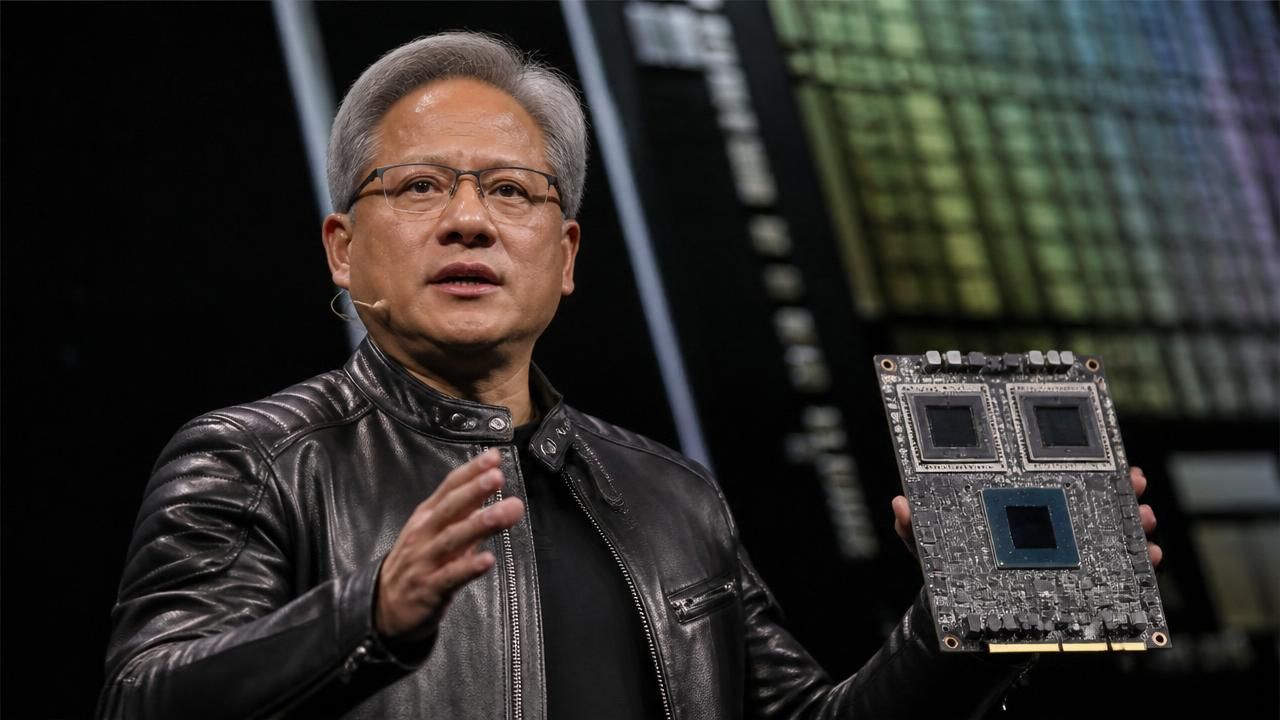
US officials believe that a Chinese-born technology executive who cultivated a close personal relationship with Nvidia chief executive Jensen Huang was an asset of Beijing's Ministry of State Security (MSS), according to a New York Times report that has ricocheted across the global technology and national-security press. The story, first published by the Times and rapidly aggregated by Bloomberg, The Guardian, The Verge, PCMag, NDTV, the Japan Times and others, thrusts the world's most valuable chipmaker into the center of an intensifying US–China intelligence contest.
According to the reporting, a memo that circulated among US policymakers cited intelligence assessing that Alice Huang — a Chinese executive who built a relationship with Huang, the founder and CEO of Nvidia — was working on behalf of China's principal civilian intelligence service. The document was described as part of a broader effort by US agencies to warn officials about Chinese influence operations targeting senior figures in the American semiconductor industry.
What the Reporting Says
At the core of the story is an intelligence assessment, not a criminal charge. The Times account, as summarized by other outlets, describes a memo that circulated among policymakers and that characterized Alice Huang as an MSS asset. Bloomberg's headline framed the story as a US intelligence belief; The Verge emphasized that China had reportedly recruited an AI executive to spy on Jensen Huang; PCMag described a "close" relationship between the Nvidia leader and the alleged operative.
The memo cited intelligence that Alice Huang, a Chinese executive who developed a relationship with Nvidia's leader, was an asset of Beijing's Ministry of State Security.
Some outlets pushed further than others. NDTV's headline characterized the relationship as romantic, a framing that appeared to sharpen the tabloid dimensions of the story while going beyond the more carefully hedged language used elsewhere. The disparity in headlines — ranging from "alleged Chinese spy" to "romantic relationship" — illustrates how quickly an intelligence assessment can be reframed as a personal scandal as it travels through the aggregation chain.
Timing and Political Context
Yahoo's coverage placed the disclosure in a distinctly political frame, reporting that the connection had been flagged before a summit between President Donald Trump and Chinese President Xi Jinping. That detail, if accurate, would suggest the intelligence was circulating in policy channels precisely as Washington and Beijing were maneuvering toward high-stakes negotiations over trade, export controls and advanced semiconductors.
The timing matters because Nvidia sits at the exact intersection of the two countries' conflicting priorities. The company's graphics processors are the backbone of the global artificial intelligence boom, and successive rounds of US export restrictions have sharply limited which of its chips can be sold into China. Nvidia has simultaneously argued that overly broad controls would hand the Chinese market to domestic competitors such as Huawei, while hawks in Congress have accused the company of being too eager to preserve its China business.
In that environment, any suggestion that a foreign intelligence service had established a channel to Nvidia's founder is likely to be seized upon by lawmakers who have spent two years pressing for tighter restrictions on chip exports and on contacts between American technology leaders and Chinese nationals.
Why the Story Resonates
Jensen Huang is not merely a corporate chief executive. He is among the most consequential figures in the global AI supply chain, regularly meeting heads of state, briefing policymakers and appearing alongside world leaders at technology summits. His travel, his business partners and his personal associations are therefore of legitimate counterintelligence interest to US agencies regardless of any individual's guilt.
The MSS is the civilian counterpart to China's military intelligence apparatus and has been repeatedly accused by Western governments of running long-term influence and recruitment operations targeting diaspora communities, scientists and business executives. Beijing consistently rejects such accusations as fabrications designed to justify US containment of Chinese technology.
Open Questions
Several key elements remain unclear from the initial wave of coverage. It is not established what information, if any, was allegedly passed, whether US officials believe any sensitive technology or strategy was compromised, or whether any investigation, indictment or sanctions action is contemplated. Nor has it been reported publicly whether Alice Huang faces any legal jeopardy, or whether Nvidia has undertaken an internal review.
Because the underlying claim rests on a classified-adjacent intelligence assessment summarized in a memo, the standard of proof is different from a court filing. Intelligence assessments can be fragmentary, can rely on single sources, and are occasionally revised. Policymakers routinely circulate such material precisely because it has not been independently confirmed.
The Broader Pattern
The episode fits a widening arc. Over the past three years Washington has restricted exports of advanced chips and chipmaking equipment, blacklisted dozens of Chinese technology firms, and warned American executives about espionage risks in China. Beijing has responded with its own export controls on critical minerals and with counter-accusations of American surveillance.
For Nvidia, the practical risk is reputational and political rather than operational: the company's sales into China have already been curtailed by regulation, and the new attention could complicate its lobbying efforts in Washington. For US–China relations, the story arrives as a fresh irritant at a moment when both capitals have been exploring a fragile stabilization.
As with many such disclosures, the most durable effect may be less about what actually happened than about what the story demonstrates: that in an era when AI leadership is treated as a national-security asset, the private lives and personal networks of the industry's most powerful executives are now considered legitimate terrain for intelligence services on both sides.