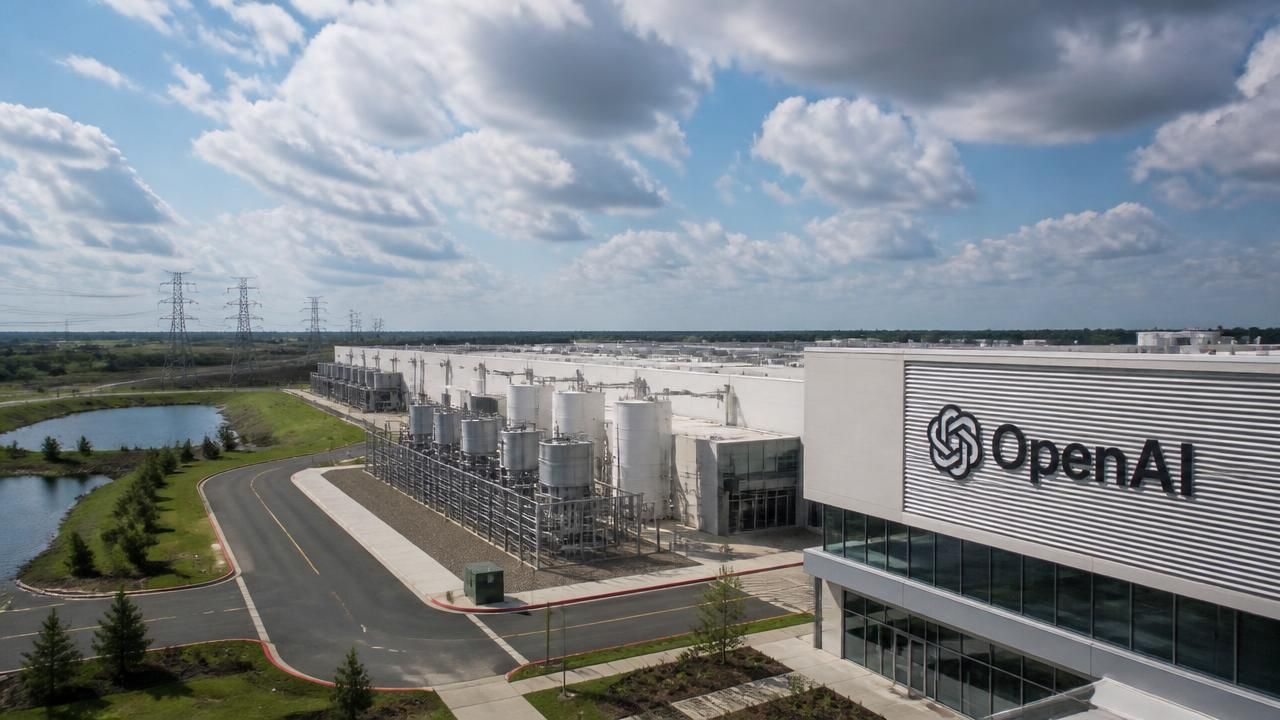
OpenAI moved this week to contain a widening political backlash over its rapidly expanding data center empire, announcing a package of community commitments that includes a promise to stop using non-disclosure agreements with public officials and a pledge that local residents will not shoulder the electricity costs of its facilities.
The announcement landed just days after midterm elections in which, according to The Verge, voters “resoundingly voiced their opposition to data center expansion” in races up and down the ballot — turning what had been a niche land-use dispute into a national political issue.
A promise to “pay our own way”
At the center of the new policy framework is an economic argument: that AI infrastructure should be self-financing rather than subsidized by the communities that host it. Coverage of the announcement, aggregated across Yahoo Finance and MSN, framed the message bluntly — the data centers will “pay our own way,” and residents will not be asked to absorb the power costs associated with the enormous electricity demand of AI computing.
The commitments, as described across the outlets reporting the shift, include:
- No non-disclosure agreements with elected or appointed public officials involved in data center approvals.
- Only “narrow protections covering legitimate security information, trade secrets, or proprietary or competitively sensitive information,” in OpenAI's own framing.
- A commitment that local ratepayers will not bear the electricity costs of the company's facilities.
- Greater community input into data center development decisions, a shift Yahoo characterized as OpenAI “backing” more local say.
Why NDAs became the flashpoint
Non-disclosure agreements were never really about security. In project after project, developers negotiating tax abatements, water rights and land deals with county commissions have required local officials to sign confidentiality agreements — a practice critics argue conceals the true costs of a project from the public until after the vote.
The issue has now escaped the county commission chamber. House Democrats have begun questioning Big Tech companies over secret AI data center NDAs, according to reporting from The Wall Street Journal summarized by Seeking Alpha, and a new bill would ban such agreements outright for data center projects. The legislative push gives the NDAs a Washington audience they did not have a year ago.
“Only narrow protections covering legitimate security information, trade secrets, or proprietary or competitively sensitive information.”
The litigation front
The politics are not the only pressure point. In Georgia, residents have filed suit over the approval process for an OpenAI-linked data center, according to the Savannah Morning News — a reminder that even as the company rewrites its public commitments, projects already approved under the old rules remain legally contested.
The sequencing matters. A lawsuit challenging an approval process, a congressional inquiry, and a bill to ban the underlying practice all arrived before OpenAI's pledge. The company's announcement, in other words, is best read as a response to an existing legal and legislative squeeze rather than a preemptive act of generosity.
An industry-wide retreat from secrecy
OpenAI is not moving alone. In October, Amazon announced it would no longer use NDAs in its data center dealings, a template that OpenAI's new policy closely follows. Microsoft, OpenAI's largest backer, has faced its own scrutiny over power purchases and community agreements.
The context is a genuine grid crunch. Data centers already consume roughly 1.5 percent of global electricity, and the International Energy Agency has projected that figure could more than double by 2030 as AI training and inference workloads scale. In several U.S. power markets, that demand growth has already pushed capacity auction prices sharply higher — costs that utilities typically pass through to ordinary households. That mechanism is precisely what OpenAI's “pay our own way” language is meant to address.
Rebrand or retreat?
Not everyone reads the announcement as a genuine turn. Inc. headlined its coverage pointedly: “OpenAI Tried to Rebrand Its Data Centers. Voters Rejected Them Anyway.” The framing captures the skepticism of critics who note that the midterms produced a political verdict before the policy existed — and that a voluntary pledge is not the same as an enforceable rule.
That gap is where the bill in Congress and the lawsuit in Georgia become relevant. Voluntary commitments can be revised; statutes and court orders cannot, at least not as easily. Community groups that have spent two years fighting approvals have argued that transparency should be the default rather than a concession granted after an electoral defeat.
What comes next
OpenAI's framework sets up an awkward test. The company has now bound itself rhetorically to community consultation and cost neutrality while continuing to expand at a pace that its own commitments implicitly acknowledge is disruptive. Whether the pledge survives contact with the next contested county commission — or the next round of subpoenas from Washington — will determine whether this week's announcement is remembered as a turning point in how AI infrastructure is built, or simply as a well-timed press release.
For voters who just made data centers an election issue, the answer will be measured in electricity bills, not statements.