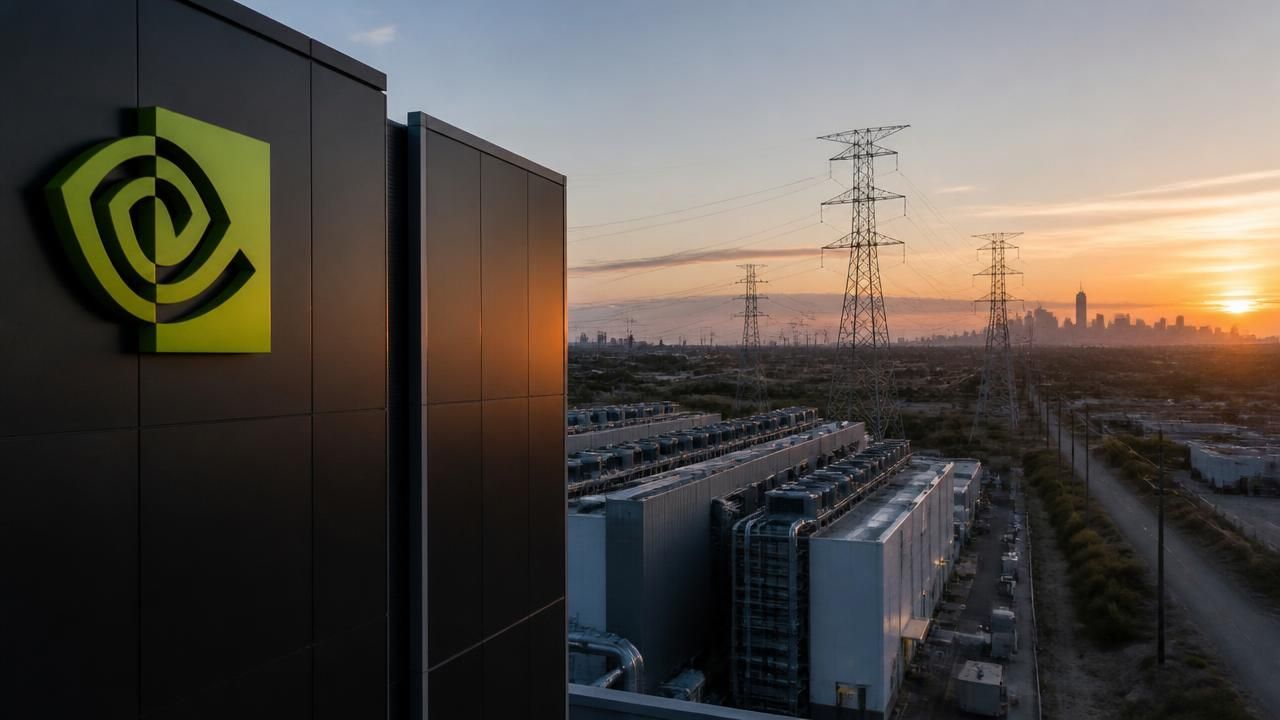
The artificial intelligence boom has been sold as a software story — models getting smarter, costs falling, productivity arriving. But a growing chorus of economists, analysts and industry researchers is reframing it as something far more physical: a massive, capital-hungry infrastructure buildout colliding with the limits of global supply chains, electricity grids and manufacturing capacity. The bill, they argue, is already coming due — and it is not being paid by the companies whose names appear in the headlines.
This week, the pieces of that argument came together from unusually disparate corners: a Harvard Business School economist on The Verge's Decoder podcast, a reported 15% price increase on Nvidia hardware, warnings from the IMF about the limits of AI-driven resilience, new benchmarking tools for supply chain performance, and fresh reporting that power grids in both the US and EU cannot keep pace with data center demand.
From chips to kilowatts: the buildout's real bottlenecks
The most-cited flashpoint is Nvidia. Reports of a roughly 15% price hike on the company's AI accelerators have been read by some as simple margin expansion and by others as evidence of something structural: demand so far ahead of supply that the world's most important chipmaker can raise prices at will. Either way, the increase ripples outward. Server makers, cloud providers and ultimately the enterprises renting compute all absorb a share of the markup, and each layer decides how much to pass along.
Upstream, the pressure is just as acute. Financial press coverage has described data center supply chains as "stretched to the breaking point," with US manufacturers reporting a fresh burst of cost inflation tied to components, logistics and specialized equipment. Transformers, switchgear, cooling systems and high-bandwidth memory are all subject to lead times measured in quarters or years rather than weeks.
That is precisely the terrain Harvard's Willy Shih has mapped for decades. Shih, whose forthcoming book Where Does My Stuff Come From? The Powerful Economics Behind Global Supply Chains examines the mechanics beneath global trade, has a track record of calling infrastructure promises that ignore supply chain reality. He was skeptical early of Foxconn's planned Wisconsin LCD fab — a project that never materialized — because the supporting industrial ecosystem simply did not exist.
You cannot will a factory into existence if the supply chain to support it isn't there. The economics of these systems are stubborn in ways politicians and regulators keep ignoring.
That logic cuts directly against the reshoring narrative animating current trade policy. Tariffs have shifted repeatedly, yet the factories meant to return to the US have largely failed to appear — in part because building a fab or a data center supply cluster requires years of coordinated investment in tooling, chemicals, talent and power, not a policy announcement.
The grid becomes the bottleneck
Nowhere is the physical constraint clearer than electricity. Reporting from Digitimes indicates that power grids in both the European Union and the United States are struggling to keep pace with AI data center demand, with utilities facing interconnection queues and permitting timelines that dwarf the construction schedules of the facilities themselves. A hyperscale campus can be built in 18 to 24 months; the transmission line and substation feeding it can take a decade.
That mismatch is turning energy into the defining constraint of the AI era. It also explains why Forbes has focused on the question of who actually pays for data centers — the ratepayers subsidizing grid upgrades, the communities absorbing water and land use, and the taxpayers funding incentives are rarely the shareholders capturing the returns.
The bubble question is the wrong question
Investors have spent much of the past year debating whether AI is a bubble. Seeking Alpha argues that framing misses the point: the more useful exercise is to follow the economics across the value chain — who books the revenue, who carries the capital expenditure, and where the margin actually settles once the buildout matures. On that reading, chip designers and energy suppliers look structurally advantaged; commodity server assemblers and capital-intensive colocation operators look exposed.
Measurement is catching up. The Hackett Group has introduced AI-oriented "world class" supply chain benchmarks, an attempt to give enterprises a yardstick for how their planning, procurement and logistics performance compares with peers now that AI both disrupts and instruments those functions.
A macro cushion, but thinning
The macro picture offers some comfort. The IMF has revised its outlook toward a milder global slowdown, crediting the AI investment boom with offsetting part of the economic damage from war and geopolitical disruption. But the Fund paired that upgrade with a warning: resilience is nearing its limits. Fiscal buffers are thinner, debt is higher, and the same AI capex that is propping up growth is also concentrating risk in a handful of firms, sectors and regions.
What to watch
- Pricing power: whether Nvidia's reported 15% increase holds, and how much cloud providers pass to customers.
- Grid interconnection: queue times and permitting reform in the US and EU as the binding constraint on deployment.
- Cost pass-through: whether manufacturers' input inflation shows up in consumer prices or is absorbed in margins.
- Reshoring reality: whether tariff policy translates into shovels, or remains a supply chain signal the market learns to ignore.
The through-line across these sources is a shift in how the AI story is being told. The Verge and Shih frame it as economics; Forbes frames it as distributional justice; Seeking Alpha frames it as capital allocation; the IMF frames it as macro stability; Digitimes frames it as infrastructure. They are describing the same thing from different altitudes. The buildout is real, but it is bounded by copper, transformers, permits and people — and the cost of pushing past those limits lands somewhere. The only open question is where.