The euphoria surrounding artificial intelligence hardware stocks has abruptly reversed course, with South Korean chipmaker SK Hynix Inc. suffering a brutal selloff that erased more than 20% of its value in two days. The rout, which began after the company's record-setting Nasdaq debut, has rippled across global markets, dragging down semiconductor peers and pushing South Korea's KOSPI index into bear market territory.
A Stellar Debut Turns Sour
SK Hynix made headlines on July 10, 2026, when its American depositary receipts (ADRs) began trading on the Nasdaq at $170 per share, signaling strong investor appetite for AI-related stocks. The listing was hailed as a milestone for the South Korean chipmaker, which is the world's second-largest memory chip producer and a key supplier of high-bandwidth memory (HBM) used in AI accelerators. However, the celebration was short-lived. Within days, profit-taking and growing concerns about overvaluation triggered a sharp reversal.
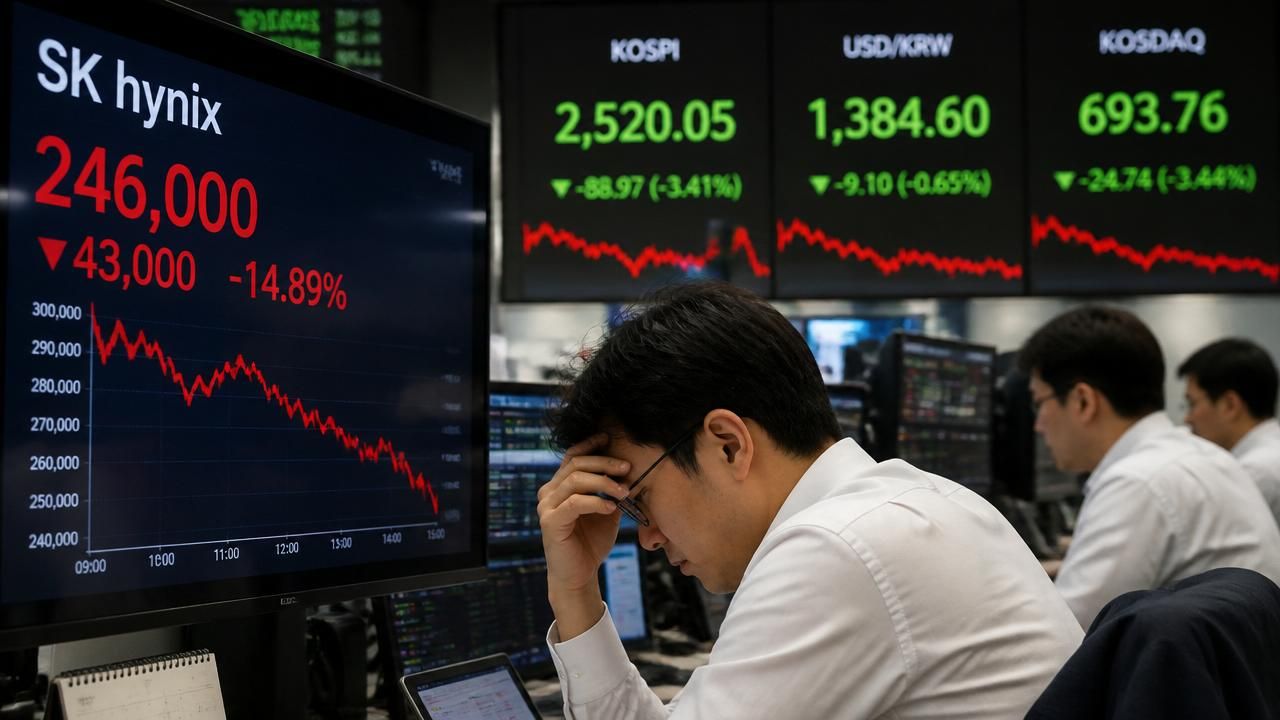
In Seoul, SK Hynix shares plunged 15% on Monday, their worst single-day drop on record, followed by another 5% decline on Tuesday, bringing the two-day loss to over 20%. The selloff extended to SK Hynix's ADRs, which tumbled for a second consecutive trading session. According to Bloomberg, the rout has wiped out billions of dollars in market capitalization and stoked fears that the AI trade, which had powered a blockbuster rally in chipmakers, may have run too far, too fast.
Global Ripple Effects
The shockwaves from SK Hynix's collapse were felt across global markets. In South Korea, the KOSPI index fell more than 20% from its peak, meeting the technical definition of a bear market. Samsung Electronics, the country's largest company and a rival chipmaker, saw its shares tumble over 9% amid the broader semiconductor rout. The selloff also spread to Wall Street, where AI and chip stocks led a broader tech decline. NBC News reported that the global tech sell-off intensified, with investors fleeing from high-flying AI names.
According to Investopedia, one market expert described the situation as a 'vicious circle' forming, where declining stock prices trigger margin calls and forced selling, exacerbating the downturn. The article noted that SK Hynix's slide was part of a broader correction in AI hardware stocks, as investors reassess valuations after a prolonged rally.
Context: The AI Boom and Its Discontents
The recent volatility underscores the fragile nature of the AI-driven market rally. Over the past year, SK Hynix had been a standout performer, benefiting from surging demand for HBM chips used in Nvidia's AI processors. The company's Nasdaq debut was seen as a validation of its strategic pivot toward AI memory, with Seeking Alpha noting that the stock might be 'absurdly cheap' at just 4-5 times forward earnings for 2028. However, the rapid ascent also attracted profit-takers and raised concerns about whether the AI trade had become overcrowded.
Outlook Business reported that the KOSPI's entry into bear market territory reflects deepening investor anxiety about the sustainability of AI-related growth. The index's decline of over 20% from its peak marks a stark reversal from the optimism that had propelled South Korean stocks to record highs earlier this year.
Expert Views: Bubble or Correction?
Market analysts are divided on whether the selloff represents a healthy correction or the beginning of a more prolonged downturn. Some argue that the fundamentals for AI memory remain strong, with SK Hynix poised to benefit from continued investment in data centers and AI infrastructure. A Seeking Alpha contributor maintained that the company's earnings power in 2028 justifies a much higher valuation, suggesting that the current selloff is overdone.
Others warn that the speed and severity of the decline indicate a loss of confidence that could be difficult to reverse. The MSN report on the global semiconductor slide highlighted that the rout was not limited to SK Hynix, with stocks across the sector falling in sympathy. The Invezz article questioned 'what went wrong,' pointing to a combination of profit-taking, easing earnings optimism, and broader macroeconomic headwinds.
Implications for Investors
The SK Hynix saga serves as a cautionary tale about the risks of chasing momentum in AI stocks. While the long-term prospects for AI and semiconductor companies remain intact, the recent volatility underscores the importance of valuation discipline and diversification. For South Korea, the KOSPI's bear market signals potential headwinds for the broader economy, given the outsized influence of tech giants like SK Hynix and Samsung on the index.
As the dust settles, investors will be watching closely for signs of stabilization. The coming days will reveal whether the selloff is a temporary setback or the start of a more profound shift in sentiment toward AI hardware stocks. For now, the AI trade, once considered invincible, has shown it is not immune to the gravitational pull of market reality.