Chinese authorities have blocked SoftBank’s proposed $5.4 billion acquisition of ABB’s robotics division, according to reports from The New York Times, Bloomberg and the Financial Times, dealing a setback to one of the largest cross-border industrial technology deals in recent years and underscoring Beijing’s tightening grip over transactions that touch its strategic ambitions.
The veto prevents the Japanese technology investor from taking control of a business owned by ABB, the Swiss industrial conglomerate. It also leaves the robotics unit in Swiss hands for now and raises new questions about how foreign buyers and sellers can navigate China’s regulatory review at a time of rising geopolitical tension over automation, artificial intelligence and advanced manufacturing.
What Beijing stopped
According to The New York Times, Chinese authorities stopped the sale of ABB Robotics, owned by a Swiss conglomerate, to SoftBank of Japan. Bloomberg and MSN, citing a Financial Times report, put the value of the transaction at $5.4 billion. The reports described the move as a block on the takeover rather than a revision or delay.
“Chinese authorities stopped the sale of ABB Robotics, owned by a Swiss conglomerate, to SoftBank of Japan amid wider scrutiny of global transactions that could affect Beijing’s technology ambitions.” — The New York Times
The reports did not lay out a detailed rationale from Beijing, nor did they indicate what conditions, if any, could have allowed the deal to proceed. But the outcome is clear: a transaction that would have moved a major industrial robotics business into SoftBank’s portfolio cannot close as proposed.
Why robotics is sensitive
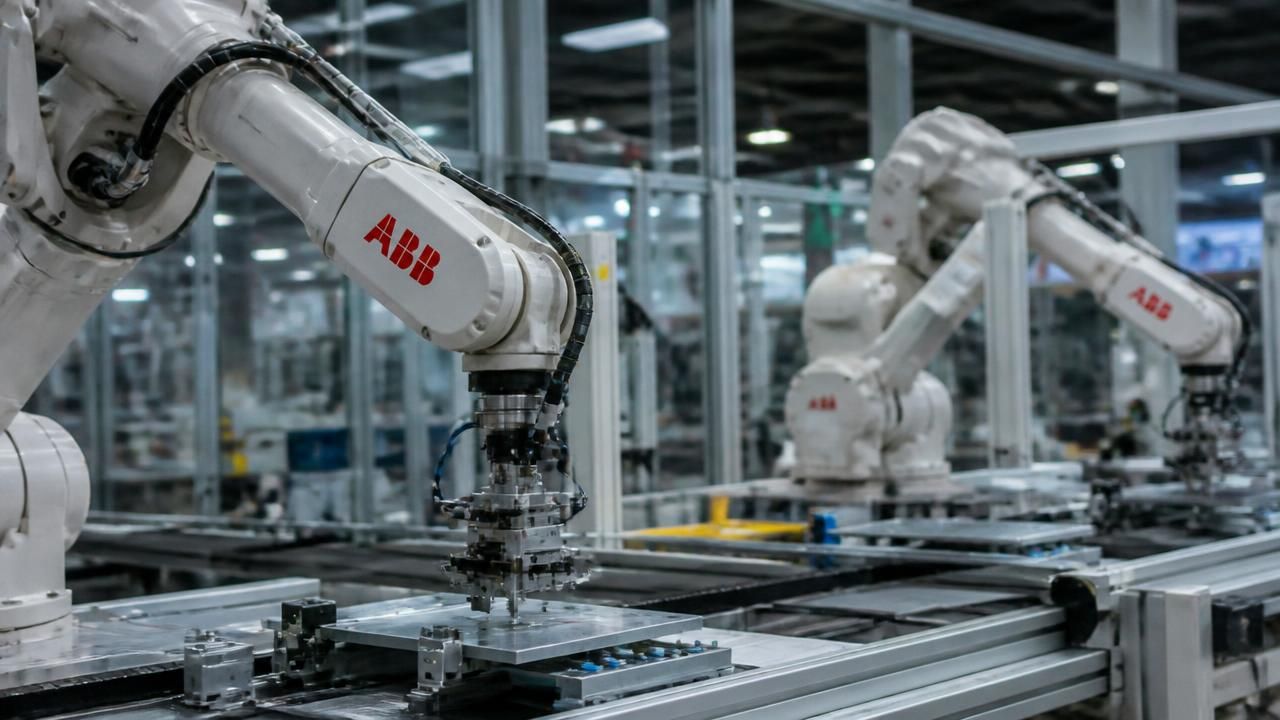
Robotics sits at the intersection of several technologies that Beijing has identified as priorities: advanced manufacturing, artificial intelligence, automation and supply-chain resilience. Industrial robots are no longer just factory equipment; they are part of the broader contest over who controls the software, sensors, data and production systems that underpin modern industry.
China is the world’s largest market for industrial robots, and its factories are among the most automated in the world. That gives Chinese regulators significant leverage over deals involving robotics companies with operations, customers or supply chains in the country. Even when a transaction is between a Japanese buyer and a Swiss seller, Beijing can have a say if the target’s business touches China.
The NYT framed the decision as part of “wider scrutiny of global transactions that could affect Beijing’s technology ambitions.” That language places the block in a broader policy trend: China is not merely reviewing deals for narrow antitrust concerns, but weighing whether they strengthen or weaken its own industrial and technological position.
How the sources framed it
The coverage differed in emphasis. The New York Times treated the veto as a significant regulatory and geopolitical story, highlighting the impact on foreign deals and China’s technology goals. Bloomberg led with the deal value and the corporate names, reflecting its markets-focused audience. MSN’s versions, citing the Financial Times, were terser, emphasizing the $5.4 billion price tag and the fact of the block.
Taken together, the reports converge on the same facts: SoftBank was set to buy ABB’s robotics division; the price was $5.4 billion; and Chinese authorities stopped it. The lack of a detailed public explanation from Beijing leaves analysts and investors to read the decision against the larger backdrop of China’s industrial policy and its increasingly assertive use of regulatory approval as a gatekeeping tool.
What it means for SoftBank and ABB
For SoftBank, the block is a blow to its long-running interest in robotics and automation. The Japanese group has invested heavily in technology companies and has previously held prominent robotics assets, including a stake in Boston Dynamics. Acquiring ABB’s robotics division would have given it a larger role in industrial automation, a sector with long-term growth prospects as factories adopt smarter and more flexible systems.
For ABB, the veto complicates the sale of a business that the Swiss conglomerate had agreed to hand to SoftBank. The company now faces the question of whether to hold the unit, seek another buyer or wait for a more favorable regulatory environment. A $5.4 billion deal is large enough to matter to ABB’s portfolio strategy and to the broader robotics M&A market.
Broader implications
The decision is likely to chill cross-border dealmaking in technologies that China regards as strategic. Companies contemplating transactions involving robotics, semiconductors, AI or advanced manufacturing will need to factor in Chinese approval earlier and more seriously.
- Regulatory risk: China’s review process can become a de facto veto, even for deals between non-Chinese parties.
- Strategic sectors: Robotics and automation are increasingly treated as national-security-adjacent industries.
- Deal planning: Buyers and sellers may need to restructure transactions, carve out Chinese assets or abandon deals altogether.
- Geopolitical backdrop: The block adds to a wider trend of governments screening foreign investment in critical technologies.
The reports did not include a full response from SoftBank, ABB or Chinese authorities, leaving open whether the companies will attempt to salvage the transaction or walk away. What is already clear is that Beijing’s approval is no longer a technical step for global technology deals. It is a strategic decision — and, in this case, one that has stopped a $5.4 billion robotics takeover in its tracks.