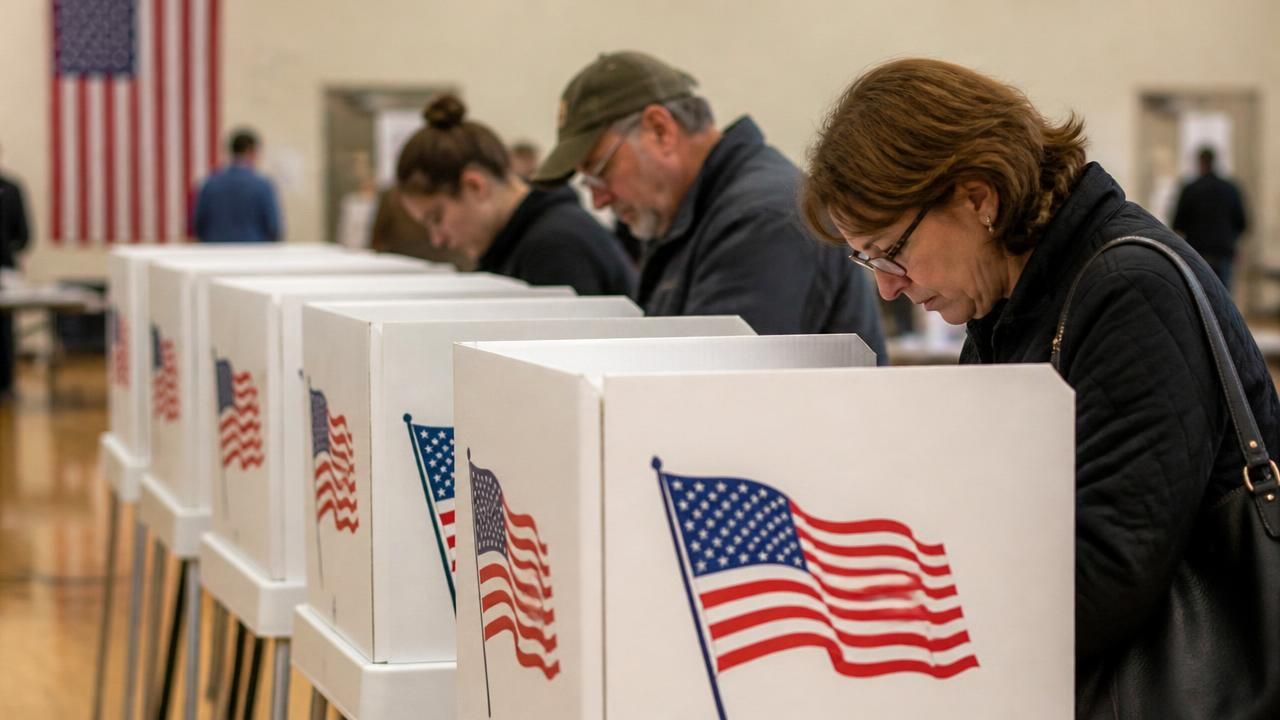
Voters across dozens of states weighed in on 146 statewide ballot measures in this midterm cycle, turning the Nov. 3 election into a sprawling referendum on abortion, LGBTQ rights, guns, taxes, school spending, redistricting and the rules of democracy itself. The results were not a single national verdict but a patchwork of local decisions, each shaped by distinct campaigns, voter guides and regional politics.
As NPR summarized the landscape, voters in dozens of states considered 146 statewide ballot measures this midterm cycle, on topics spanning LGBTQ rights, wealth taxes, abortion, redistricting, guns and more.
National outlets framed the ballot questions in different ways. MSN roundups highlighted the biggest state votes under headlines about billionaire taxes, trans rights, abortion and voting rights, while a separate takeaways piece described a dual result: voters backed abortion rights in several contests even as they endorsed photo ID and citizenship requirements at the polls. Local newsrooms, meanwhile, focused on the practical work of voting—what was on each ballot, how to cast a ballot and why voters said they were turning out.
Abortion remains the fault line
The most closely watched measure was in Missouri, where voters rejected a ballot proposal that would have banned abortion in the state, according to MSN. The outcome fit a pattern in the post-Dobbs era, in which abortion rights supporters have used direct democracy to push back against restrictive state laws. But the broader picture was more complicated: MSN’s takeaways noted that voters in some places backed abortion rights while also approving election-law measures such as photo ID and citizenship requirements, suggesting that voters were not simply following a single ideological line.
The Missouri result also drew attention to the state’s other ballot business. KCUR published a guide to Missouri judge retention elections, explaining who was on the ballot and what to know about their records. The Post-Dispatch offered a comprehensive voters’ guide for the Nov. 3 election, while KMBC produced a voter guide for Kansas and Missouri. Those service-journalism efforts reflected how much of the election was fought not in national ads but in local explainers about judicial retention, county questions and down-ballot offices.
Rights, representation and the courts
LGBTQ rights appeared both on ballots and in the courts. MSN’s list of big state votes included trans rights, and the Washington Blade reported that gay and lesbian Maryland state lawmakers won re-election—a reminder that representation battles extended beyond high-profile referendums. In Colorado, the Supreme Court weighed whether preschools must admit children of same-sex couples, according to KFOR, a case that could shape how religious exemptions and civil-rights laws interact even where no ballot measure is directly at stake.
These fights over rights were not isolated from the ballot-measure landscape. Measures touching LGBTQ rights, abortion and education all asked voters to define whose rights are protected and which institutions must comply. The campaigns often framed their proposals as local decisions, but the language and legal arguments echoed national debates.
Guns, taxes and school spending
In Massachusetts, voters were asked to decide on recent updates to state gun laws under Question 9, according to WCVB and CBS Boston’s ballot question guide. The measure put a state-level gun policy directly before voters, testing whether recent legislative changes would survive a popular referendum.
Arizona voters faced a different set of economic questions. Proposition 141 would ban vehicle miles traveled taxes, according to KTAR, while Proposition 320 would force certain schools to spend more in classrooms. The two measures illustrated how ballot initiatives can constrain or direct policy: one sought to preempt a tax option, the other to mandate spending priorities. MSN also grouped billionaire taxes among the year’s biggest state votes, showing that tax policy remained a powerful draw for activists on both sides.
Democracy rules and local governance
Voting rules themselves were on the ballot. MSN’s takeaways noted support for photo ID and citizenship requirements at the polls, measures that supporters describe as election security and critics warn could burden eligible voters. Redistricting also appeared among the topics in NPR’s overview, a sign that the mechanics of representation remained contested.
Local governance questions rounded out the ballot. In Allegheny County, voters decided on council benefits in a ballot question, according to WTAE. In Ohio, the governor race between Acton and Ramaswamy put key issues before voters even as state ballot measures drew national attention, Cincinnati.com reported. And in Spokane, Yahoo’s coverage focused on what motivated area voters as they cast ballots—a reminder that national trends are filtered through local concerns about schools, taxes and community services.
Ground game and media framing
Universities and civic groups also pushed turnout. CU Boulder Today urged voters to make a plan to vote for the November 2026 midterm election, part of a wider get-out-the-vote effort that treated ballot literacy as essential. The emphasis on planning—checking registration, reading the guide and knowing deadlines—matched the local-news approach seen in Kansas, Missouri and Massachusetts.
The media framing varied sharply. NPR emphasized the breadth of the 146 measures; MSN emphasized the biggest and most controversial votes; local outlets emphasized practical information. One MSN commentary declared that Sen. John Fetterman no longer matters, a sign that personality-driven political debate continued to swirl around the policy votes. But the ballot results themselves pointed to something more structural: voters were making decisions on rights, taxes and institutions one state at a time.
What it means
The midterm ballot measures showed that direct democracy remains a major arena for national conflict. Abortion rights advocates can win in some states while election-law restrictions also pass; tax limits can advance alongside school-spending mandates; gun laws can be put to a popular test. The outcomes will shape state policy immediately, but they will also inform how campaigns and advocacy groups approach the next election cycle.
For voters, the lesson was more granular. The Nov. 3 election was not one story but hundreds of local stories, each with its own ballot language, legal stakes and community arguments. The results may be read nationally, but they were decided precinct by precinct—and in many cases, guide by guide.