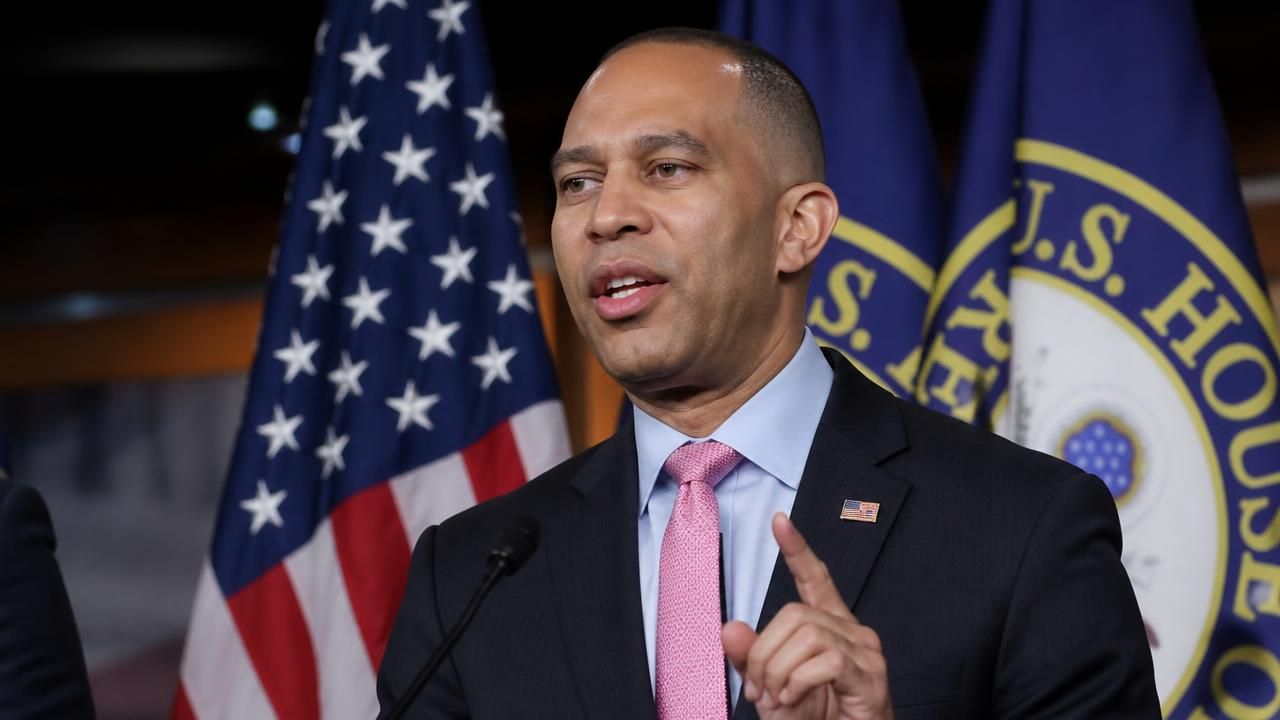
House Democratic Leader Hakeem Jeffries is poised to become the first Black speaker of the U.S. House of Representatives, after Democrats swept the midterm elections and reclaimed the chamber's majority — a result that would place the Brooklyn Democrat second in the presidential line of succession and hand him the gavel of a body that has never before been led by an African American.
The outcome, projected across a wave of outlets including NPR, NBC News, Al Jazeera, The Times of India and Pakistan's The News, marks both a partisan turning point and a symbolic milestone in the 250-year history of Congress. Democrats are projected to hold roughly 256 House seats, according to reporting cited by AroundPrague, a margin that would give Jeffries room to legislate while still leaving room for the internal fractures that have defined his party's recent caucus meetings.
A victory speech framed for the country, not the caucus
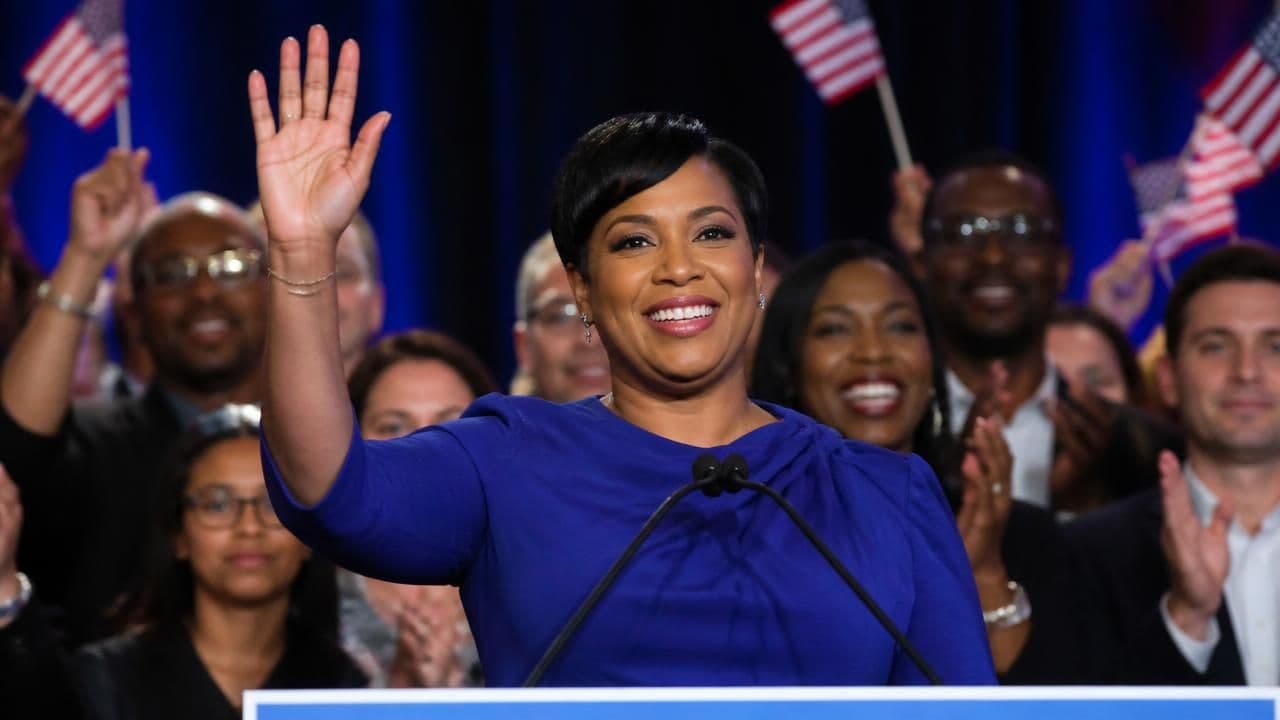
In remarks following the projections, Jeffries struck a tone that advisers described as deliberately national in scope rather than narrowly partisan. "America is back," he declared, according to WWNO's coverage of the Democratic leader's address. Other outlets, including DevDiscourse, reported his framing of the result as a "Victory for America!" — language that allies say is intended to reassure swing voters and independent voters who broke for Democrats on economic grounds.
"America is back." — House Democratic Leader Hakeem Jeffries, on his party's midterm victory
Jeffries has said his first priority as speaker would be affordability — a word he has repeated in nearly every public appearance since the campaign's closing weeks — alongside a pledge to hold the administration accountable through aggressive committee oversight. The dual message reflects the coalition that delivered the majority: working-class voters squeezed by housing and grocery costs, suburban moderates wary of executive overreach, and a Black electorate that turnout data suggests showed up in force.
Who is Hakeem Jeffries?
A lawyer by training and a Brooklyn native, Jeffries has represented New York's 8th Congressional District since 2013, rising through the Democratic caucus as a pragmatic progressive with a reputation for message discipline. He made history once before, in 2023, when he became the first Black lawmaker to lead a party caucus in Congress after Nancy Pelosi stepped down from the Democratic leadership. The speakership would be a different order of magnitude: the presiding officer of the House, the constitutional counterweight to the Senate majority leader, and the official who stands two heartbeats from the presidency.
As Yahoo's coverage framed the question — "Who is Hakeem Jeffries?" — the answer for many voters is a lawmaker whose national profile has lagged his institutional power. That gap is likely to close quickly. Speakers are, by definition, the face of their party in Washington, and Jeffries will inherit a media environment in which every floor speech is a national address.
The challenges ahead
Not all coverage was celebratory. Several outlets, including MSN's aggregation of a broader analysis, noted that Jeffries is "on track to make House speaker history. But major challenges lay ahead." Those challenges are structural and immediate:
- A narrow and restive caucus. A 256-seat majority would be comfortable by recent standards but still leaves Jeffries vulnerable to defections from the party's progressive and moderate wings on budget votes.
- An adversarial executive. Jeffries' pledge to hold the administration accountable signals a speakership defined as much by investigation and subpoena as by legislation.
- Economic pressure. The affordability message that won Democrats the majority is now a governing promise, and inflation data, housing costs and wage growth will be judged against it.
- Symbolic weight. As the first Black speaker, Jeffries will face intense scrutiny over whether representation translates into material gains for Black communities — a question he has so far answered with policy specifics rather than symbolism.
How the world is reading it
International coverage leaned heavily on the historic first. India's Hindustan Times led with "first black Speaker" language; the Times of India ran the result as a live-updating national story; Rediff and Khaama framed it as the U.S. House "getting its first African-American Speaker." Domestically, NPR emphasized the constitutional stakes of the succession line, while USA Herald's framing — "the power of a Black speakership" — pointed to a broader conversation about what the milestone means beyond the Capitol.
The moment invites comparison to January 2007, when Pelosi became the first woman to wield the gavel, and to the 2023 elevation of Jeffries himself to the Democratic leadership. Each was described at the time as a ceiling shattering; each was followed by the prosaic grind of whipping votes and managing a caucus. Jeffries' own allies expect the same arc.
What happens next
Formal election of the speaker comes when the new Congress convenes, with the full House voting by name — a process that requires Jeffries to hold his caucus together on the floor before he can claim the office. Assuming he does, the transition will include a new Democratic leadership team, committee assignments dominated by the affordability agenda, and an early legislative package designed to force the administration's hand.
For a lawmaker who spent a decade as a backbencher with a sideline in rap lyrics and a reputation for careful preparation, the ascent is sudden only in retrospect. As speaker, Jeffries would be the most powerful Democrat in Washington — and the most closely watched Black elected official in the country's history. The speeches are over; the counting begins.