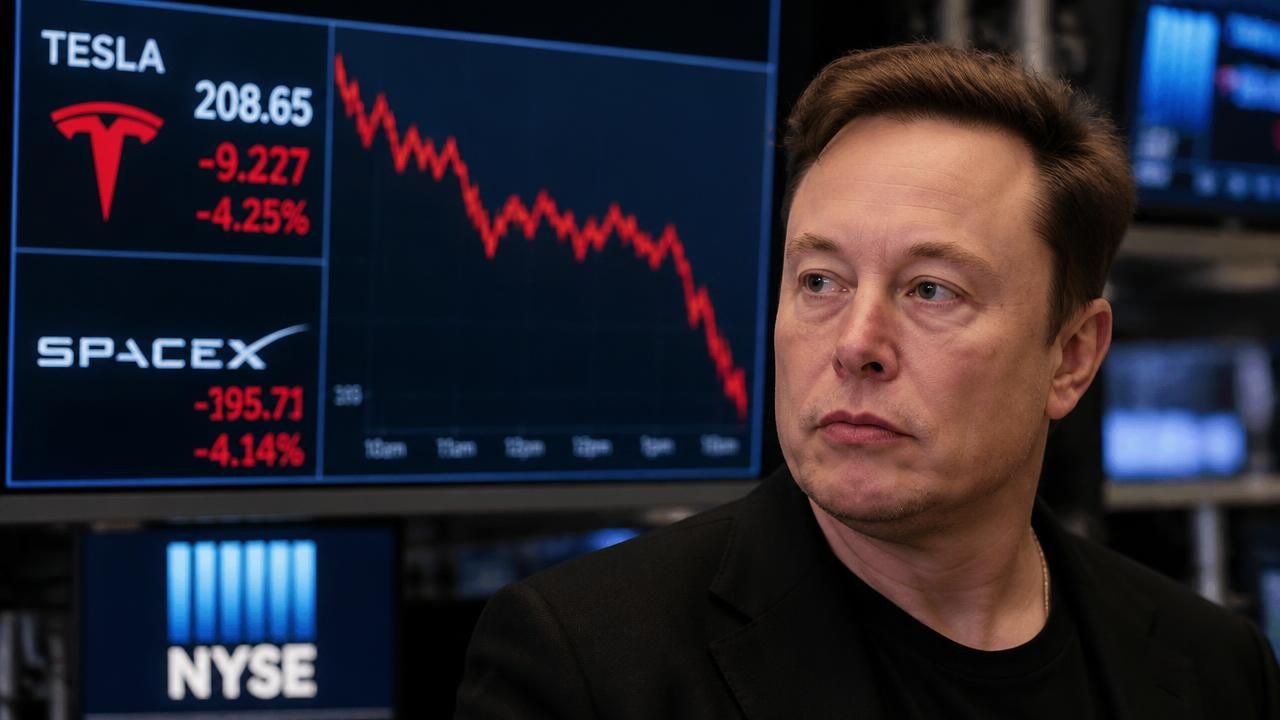
Shares of Elon Musk’s Tesla Inc. and Space Exploration Technologies Corp. fell ahead of Wednesday’s U.S. stock-market opening after Democrats swept to control of Congress, sharpening investor concern about the political exposure of the Republican megadonor’s business empire.
Bloomberg Markets reported the premarket declines as Democrats’ midterm victories became clear. MSN later put the drop at around 4% for both companies, adding that AI data-center stocks also slid. The reaction marked a split-screen session on Wall Street: separate reports said broader stocks rallied and the dollar dipped after the Democratic sweep, even as Musk-linked names came under pressure.
A $366 million bet meets the market
The selloff is tied to Musk’s unusually large role in the election. SpaceX and Tesla had high election stakes as Musk poured $366 million into campaigns, according to MSN. Bloomberg described Musk as a Republican megadonor whose holdings were now being repriced by investors weighing how a Democratic-controlled Congress might affect Tesla’s regulatory environment, SpaceX’s government contracts and the billionaire’s broader political influence.
Musk had cast an early ballot in Texas and warned that a Democratic “clean sweep” could make the United States a “permanent” one-party state, Yahoo reported. MSN also reported that Musk warned a 2028 Democratic sweep could mean the “end of democracy,” and that he issued a dire warning over three moves Democrats could make if they swept Washington.
“End of democracy,” Musk warned, according to reports that captured his alarm over a Democratic clean sweep.
The remarks added a political dimension to what was already a market story. CNBC framed the episode as Musk’s record election bet backfiring, and reported that the backlash may reach beyond one billionaire. That framing suggests investors and critics are not merely watching Tesla and SpaceX share moves but also asking whether Musk’s political activism has become a liability for the companies he leads.
Political baggage and deal prospects
Reuters reported that Musk’s political baggage clouds prospects for a SpaceX-Tesla deal. The report did not describe the transaction in detail, but the headline underscored a central investor concern: any potential combination or strategic deal involving the two companies would now have to navigate Musk’s polarized public profile and the changed political landscape in Washington.
The controversy extended beyond the ballot. MSN reported that Musk was blasted over his lawyer running for Congress in a SpaceX district, a development that opponents seized on as evidence of overlapping business, legal and political interests. The criticism adds to the reputational risk facing Musk’s companies as Democrats prepare to take control of Congress.
Why investors are watching
Tesla is publicly traded, while SpaceX is privately held, but both are closely tied to Musk’s personal brand and to government policy. Tesla depends on electric-vehicle incentives, regulatory credits and global manufacturing decisions that can be affected by political shifts. SpaceX, meanwhile, is a major government contractor, and its valuation is sensitive to perceptions of its relationship with federal agencies.
The broader market reaction complicates the picture. Reports that stocks rallied and the dollar dipped after the Democratic sweep suggest investors did not treat the election result as a systemic shock. Instead, the pressure appeared concentrated in Musk-linked assets and AI data-center stocks, which MSN said also slid. That distinction matters: the market may be pricing company-specific political risk rather than a broad flight from equities.
Still, the episode shows how quickly Musk’s political bets can become financial news. A billionaire’s campaign spending is usually treated as a sidebar to elections; here it moved premarket trading in two of his most prominent companies. For investors, the question is whether the Democratic sweep marks a one-day reaction or the start of a longer period in which Musk’s political baggage weighs on Tesla, SpaceX and any deal between them.
Musk’s allies might argue that his warnings reflect genuine concern about democratic institutions, while critics say his rhetoric and spending have made his companies more exposed to political backlash. Either way, the market delivered an early verdict: after Democrats swept Congress, shares in Musk’s companies fell, and the political risk premium around his empire became harder to ignore.