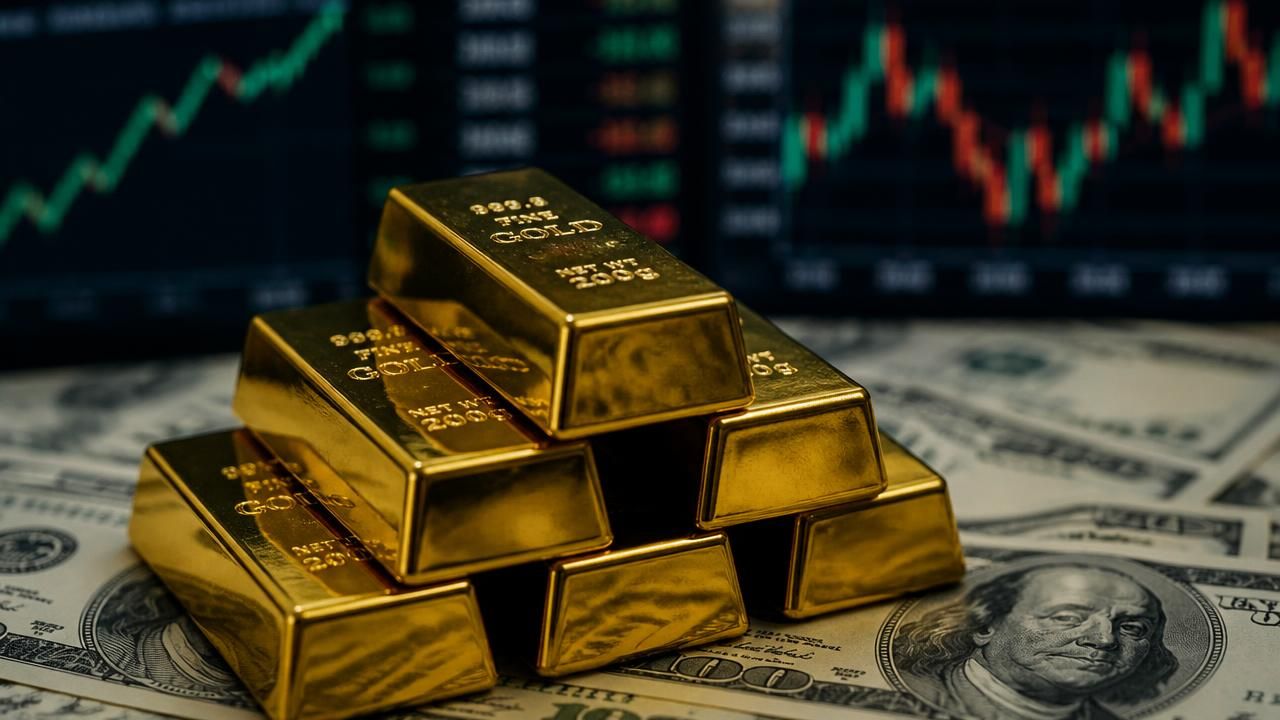
Gold futures settled higher as the U.S. dollar and Treasury yields retreated, with traders pointing to early U.S. midterm election results that suggested Democrats were gaining ground in both chambers of Congress. The move marks a sharp reversal from the previous session, when the metal had come under pressure as the dollar firmed and bond yields climbed.
The competing narratives — a weaker dollar lifting bullion versus election uncertainty driving safe-haven demand — illustrate how tightly gold is now bound to a handful of macro variables: the greenback, real yields, and the political complexion of Washington at a moment of acute voter frustration over inflationary cost pressures.
What Happened
According to Bloomberg Markets, gold rose as the dollar and Treasury yields fell after early returns from the U.S. midterm elections pointed to Democratic gains in both houses. Wells Street coverage from The Wall Street Journal and MSN converged on the same settlement story: gold futures closed higher as U.S. yields and the dollar declined.
The session capped a volatile run. CNBC had earlier reported that gold was edging lower again as the dollar and yields strengthened, with the U.S. midterms in focus — a reminder that positioning into a binary political event can cut both ways. Forbes, meanwhile, framed the day as a rebound, noting gold was recovering from steep losses as Treasury yields and the U.S. dollar fell.
Previews from outlets including Invezz and Admiral Markets had set the table for exactly this kind of two-way risk, flagging the midterm night and Friday's nonfarm payrolls report as twin catalysts for gold, the dollar, the S&P 500 (US500) and the Nasdaq 100 (US100).
Why the Dollar and Yields Matter More Than the Ballot Box
Gold pays no coupon, so its relative appeal is determined largely by the yield investors forgo by holding it and by the currency in which it is priced. When the dollar weakens, bullion becomes cheaper for buyers using other currencies; when nominal yields fall, the opportunity cost of owning a non-yielding asset drops.
Both conditions aligned on the day of the vote. That mechanical relationship, rather than any direct reading of the electoral map, is the primary driver most desks cite.
"Gold rose as the dollar and Treasury yields fell after early US midterm results pointed to the Democrats gaining ground in both houses in an election dominated by voter frustration over inflationary cost pressures." — Bloomberg Markets
The inflation framing is not incidental. An electorate animated by the cost of living is an electorate that votes on monetary policy outcomes, and a Congress that changes hands can shift the fiscal trajectory — spending, deficits, tax treatment — that ultimately feeds back into real yields and the dollar.
Two Framings of the Same Session
The coverage splits along a familiar line. Market-wire outlets — Bloomberg, the Journal, MSN — treated the move as a straightforward settlement story about yields and the dollar. Consumer-facing outlets emphasized the political trigger and the volatility it implies. Forecast-oriented desks treated the vote as one input among several, with Friday's payrolls data arguably the more consequential event for rate expectations.
- Wire framing: Gold settles higher; dollar and yields fall. Cause and effect stated plainly.
- Pre-election framing: Gold edges lower as yields strengthen, with the midterms as the looming catalyst.
- Preview framing: Midterm night and nonfarm payrolls as a paired event risk across gold, the dollar and equity index futures.
- Portfolio framing: How investors should position before the midterms — which, per Seeking Alpha's headline, is treated as a planning question rather than a trading one.
The Bigger Picture
Gold enters this political cycle with substantial momentum behind it. Central banks have bought bullion at historically elevated levels for several consecutive years, diversifying reserves away from dollar-denominated assets, while persistent deficits and geopolitical fragmentation have reinforced the case for an asset outside the traditional sovereign-credit complex. Retail and ETF demand have fluctuated, but the structural bid from official-sector buyers has provided a floor that has repeatedly absorbed sharp short-term drawdowns.
That structural support helps explain why a down session — like the one CNBC described — was followed quickly by a rebound rather than a sustained slide. It also explains why sell-side forecasts heading into the vote tended to lean constructive even as tactical positioning grew crowded.
What to Watch Next
The immediate catalyst is the payrolls report. A hot print would revive expectations of tighter policy, lift yields, and plausibly pressure gold; a soft one would do the reverse. Beyond that, the market will parse the final seat tally for what divided government — or unified control — implies for fiscal expansion and the debt path.
Currency traders will watch the dollar index for confirmation of the election-night move, while equity investors rotate around sector exposure to regulation, energy and taxes. Precious-metals holders, for their part, have a simpler question to answer: whether the drop in yields is durable, or merely a one-night reaction to a political headline.
As one trading-room preview put it, the midterm session was never really about gold alone — it was about how the dollar, rates and equity futures would reprice a country voting on the price of its own groceries.