For a few fleeting days, Kherson looked like a city at peace. Friends gathered at cafes, families walked together in the open, and shoppers stocked up without scanning the sky. The transformation was jarring precisely because it was so ordinary — and because it was so temporary.
"The city seems alive," one resident told NPR, "just like it used to be."
That interlude is now over. A localized ceasefire covering the Kherson region — including the area around the Russian-held town of Oleshky, across the Dnipro River from Kherson city — has expired, and fighting has resumed. According to reporting from The Associated Press, it was the longest ceasefire of Russia's full-scale war in Ukraine. Its collapse has raised fears that Moscow may now intensify attacks on a region that has endured months of shelling, drone strikes and the destruction of the Kakhovka dam.
A City That Learned to Read the Sky
Kherson's normalcy is measured in unusual units. NPR's correspondent, reporting from the city with photography by Svet Jacqueline, described streets that had been "usually seething with Russian drones" suddenly filling with people. The ceasefire did not just pause the fighting; it restored, momentarily, the rhythms of civic life — commerce, conversation, coffee.
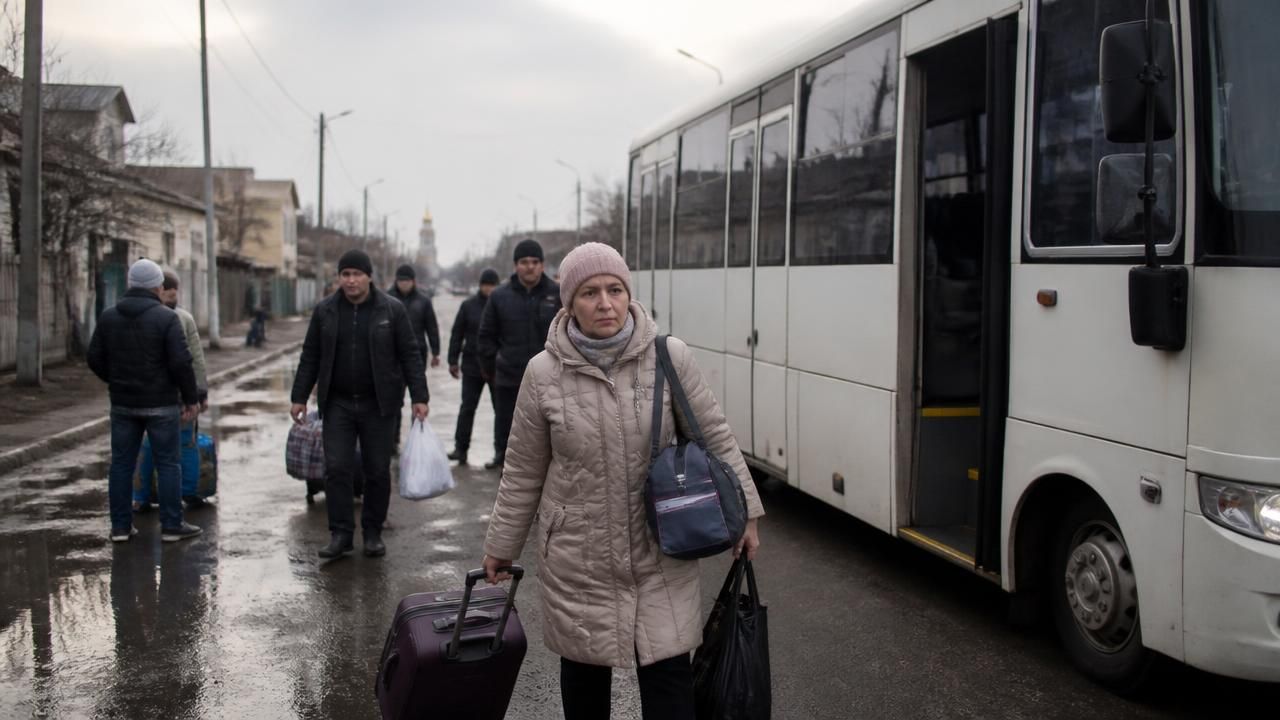
The relief was felt unevenly, however. Even as Kherson residents enjoyed the quiet, Ukrainian authorities were moving in the opposite direction: evacuating civilians from parts of the Kherson region as the truce's expiry approached, according to reports aggregated by MSN. That detail captures the paradox at the heart of the story. For those in the city, the ceasefire was a chance to exhale. For officials and families in exposed front-line settlements, it was a window to flee before the shooting started again.
How the Truce Unraveled
Ceasefires in this war have rarely been humanitarian by design. Localized pauses have typically emerged from tacit, tactical understandings — often around prisoner exchanges, the recovery of the dead, or the restoration of utilities — rather than from formal negotiation. They are fragile, unannounced, and frequently denied by one side or the other.
The Oleshky arrangement fit that pattern. Coverage across outlets followed a clear arc:
- The quiet: NPR and Boise State Public Radio reported on Kherson's brief return to normal life, with residents describing cafes, shopping and family outings.
- The warning: MSN's aggregation tracked Ukrainian evacuations from parts of the Kherson region as the ceasefire's expiry neared.
- The breaking: Headlines confirmed that fighting had returned to the region after the longest ceasefire of the war.
- The fear: The Associated Press framed the end of the truce around concerns that Russia could now mount heavier attacks.
Why Kherson Matters
Kherson occupies a strategic and symbolic place in the war. It was the only regional capital Russia captured after the February 2022 invasion, and its recapture by Ukrainian forces in November 2022 was one of Kyiv's most significant victories. Since then, the city has been subjected to relentless cross-river bombardment from Russian positions on the left bank, where Oleshky sits.
That geography explains the ceasefire's unusual shape. Any local truce around Oleshky is inherently a truce between adversaries separated by a river and a front line — an arrangement that benefits civilians on both banks but that neither army has a strong incentive to sustain once tactical conditions shift.
Two Frames, One Reality
The way outlets told this story reveals as much as the events themselves. U.S. public radio focused on the human texture of the pause: what it feels like when the drones stop, and what it means to shop for groceries in a city under fire. Wire services like the AP emphasized the strategic dimension — the length of the truce, its unprecedented duration, and the security vacuum its end creates. Aggregators such as MSN tracked the bureaucratic and humanitarian response: evacuation orders, civilian departures, and the bureaucratic machinery of war.
Both frames are accurate. A ceasefire that lasts days is, for a resident of Kherson, a psychological lifeline. For a military analyst, it is a temporary anomaly in an attritional conflict with no political off-ramp in sight.
"The city seems alive, just like it used to be." — Kherson resident
What Comes Next
The immediate outlook is grim. Ukrainian officials have warned for months that Russia is massing resources and could escalate strikes on urban centers along the Dnipro. The end of the Oleshky truce removes one of the few restraints — however informal — on that activity. Residents who chose to stay in Kherson now face the familiar calculus of war: whether to sleep in hallways, whether to send children away, whether to keep businesses open.
For those who evacuated during the truce window, the decision was made under duress, with hours rather than days to act. Their displacement adds to a humanitarian burden that Ukraine's regional authorities are already straining to manage.
And for the international observers who have watched ceasefires come and go, the lesson is familiar. In a war without a negotiated framework, pauses in the fighting are not steps toward peace. They are intervals — brief, improvised, and revocable — in which people try, for a moment, to live as though the war were elsewhere.
Kherson's brief return to normal life was real. So, within days, was its end.