The fight over data centers has moved from zoning board hearings and county commission meetings into the middle of a statewide campaign, and strategists in both parties are watching Florida as an early test of how far the backlash can travel.
At the center of the story is Byron Donalds, the Republican nominee in Florida's gubernatorial race, who enters the fall with President Donald Trump's endorsement, the backing of the state party apparatus and roughly $148 million in campaign funds, according to reporting by The Verge. Yet that pile of money and institutional support is running into something less conventional: voters who say the rapid buildout of AI-driven server farms has changed how they think about local politics — and about the candidates who cheer it on.
A Republican voter who says she's done with the party line
The Verge's reporting centers on Patti Zirhut, a lifelong Republican who voted for Trump in 2016, 2020 and 2024 but describes a ballot that is now thoroughly scrambled.
"My ballot is all mixed up," she says. "I will not vote for Byron Donalds. No way will I ever vote for him."
Zirhut told The Verge she is splitting her vote across Republicans, independents and even a few Democrats, and remains undecided in several down-ballot races. Her certainty about the top of the ticket is the detail that matters: the alienation is not ideological drift so much as a single-issue revolt, and it is landing on a candidate whose alliance with the technology and energy demands of the AI boom has become one of his most visible liabilities.
Polling shows the mood hardening
Florida is not an isolated case. Politico reported that polling shows data center backlash building nationally as the midterms approach, with voters increasingly receptive to candidates who promise tighter local control over siting, water use, electricity rates and tax abatements. USA Today reported that Florida opposition has "exploded" even as investment keeps flowing into the state, a mismatch that gives critics an easy narrative: the projects arrive faster than the political system can respond to them.
The Columbus Dispatch framed the same dynamic as a direct stress test for the Donalds campaign, while Yahoo News reported that the issue is positioned to sway midterm elections more broadly. Together, the coverage points to a rare convergence: an infrastructure story with the texture of a kitchen-table economic story, since the costs voters associate with data centers — higher power bills, strained grids, road and water infrastructure, diminished farmland and quiet neighborhoods — are the kind of costs people notice monthly.
Why the timing is so dangerous for incumbents
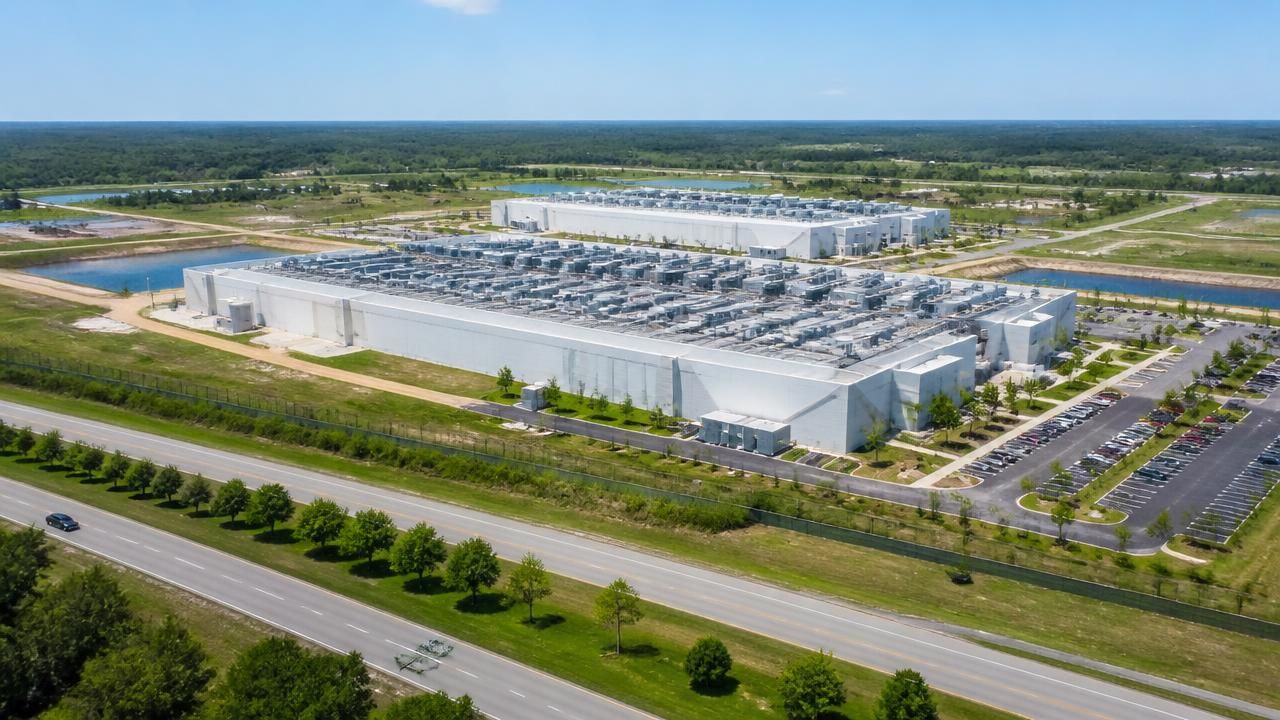
The buildout is being driven by demand for AI compute, which has compressed years of construction into a short window. That speed is precisely what makes it politically volatile. Local governments that once competed to attract hyperscale projects now face organized residents demanding moratoriums, transparency about water and power contracts, and revenue-sharing agreements. When officials approve projects anyway, the anger does not dissipate — it migrates up the ballot.
- Voters are linking data centers to utility bills and grid reliability, not just to land use.
- Candidates who accepted industry support are being asked to defend specific projects, not abstract growth.
- Opposition is cutting across party lines, weakening the usual partisan sorting.
Industry responds: Amazon's $1 billion pledge
The industry is not standing still. News4JAX reported that Amazon plans to invest $1 billion into data center communities amid the backlash against data center rollouts — an apparent attempt to convert resentment into visible local benefit through community investment. The approach reflects a broader industry realization that permits and goodwill are now scarce resources, and that public relations campaigns built around job totals alone no longer satisfy residents who doubt the fiscal math.
The messaging split is visible in the media as well. Yahoo News reported that Fox has stayed positive on data centers even as public backlash grows, a sign that the issue does not map cleanly onto existing partisan media alignments. Conservative-leaning outlets that might be expected to champion unrestricted development are instead navigating audiences that include both pro-growth business interests and homeowners furious about what is being built next door.
A preview for the rest of the world
CNBC reported that America's data center fight is a preview of what is to come for Europe, Asia and Africa, where the same combination of AI demand, land constraints and energy politics is beginning to surface. That framing matters because it suggests the Florida dynamic is not a local anomaly but the first mature version of a conflict that will be replayed wherever compute capacity is built near people who did not ask for it.
The implications for 2026 are twofold. First, data centers appear to be joining energy costs and housing as a "cost of living" issue that candidates must answer for directly. Second, the issue rewards local credibility over national branding: Donalds may have Trump's endorsement and $148 million, but Zirhut's objection is not about Washington — it is about what is being built near her, and who said yes.
Whether that sentiment scales from a single voter's mixed ballot to a statewide result is the question both parties will be testing in Florida. But the broader lesson is already clear: in an AI boom measured in gigawatts and acres, the politics of infrastructure arrives faster than the infrastructure itself.