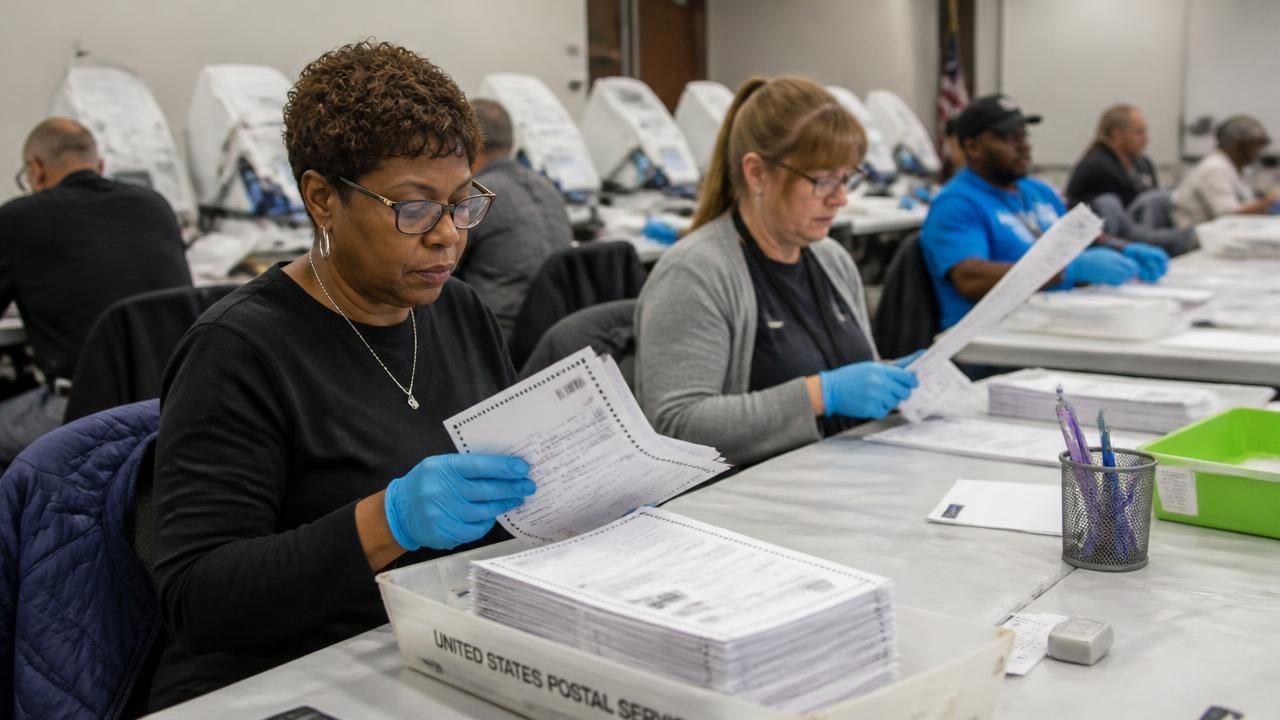
The 2026 midterm elections are still months away, but the fight over them has already begun — and it is no longer confined to a handful of familiar battlegrounds. Across the country, the officials who administer elections are bracing for a level of scrutiny and pressure that, in many places, they have never experienced before. At the same time, allies of President Donald Trump are laying groundwork to contest procedures and outcomes, and the cryptocurrency industry is pouring unprecedented sums into congressional races in pursuit of friendlier regulation.
The convergence of these forces is turning what is normally a referendum on the party in power into something broader: a contest over the machinery of American democracy itself.
The map is everywhere
NPR News frames the story through geography. The districts that will decide control of the House and Senate next year, it reports, "are spread across the country," meaning voting officials in places that have never been in the national spotlight "may face scrutiny and pressure they've never experienced." The headline captures the shift neatly: "this year's Georgia or Michigan could be anywhere."
That is a departure from 2020 and 2022, when attention focused heavily on a handful of states — Georgia's Fulton County, Michigan's Wayne County, Arizona's Maricopa County — where local canvassing boards, secretaries of state and county clerks became household names and, in some cases, targets of harassment and threats. In 2026, the pressure is decentralized, spread across dozens of competitive districts where margins could be thin and where local officials may lack the resources, legal counsel or media experience that their counterparts in major metropolitan areas have built up over four years.
Trump, allies and the post-election window
The Guardian and MSN approach the story from a different angle, examining "how Trump and his allies seek to interfere in the US midterm elections" and "how Trump could interfere with the midterms on election day, and the days after." The emphasis on the period after polls close reflects a lesson of recent cycles: the most consequential disputes often arise not on election night but in the canvassing, certification and recount processes that follow.
Those reports describe an ecosystem of litigation, state-level rule changes, pressure campaigns aimed at local boards and efforts to seed doubt about results before ballots are even cast. Politico's framing is blunter still, headlining its analysis "The 2026 Election That Matters Most of All" — a signal that the stakes are being measured not only in seats but in the durability of the system that awards them.
Fox News, by contrast, approaches the cycle through the lens of results and accountability, maintaining a dedicated Michigan midterm results hub — a reminder that for much of the electorate, the story remains a straightforward question of who wins and who loses.
"The 2026 Election That Matters Most of All" — Politico
Voters ask: who should run elections?
NBC News reports that voters in battleground states are weighing "who should oversee their elections" — a question that has migrated from county commission meetings to the campaign trail. Candidates for secretary of state and local clerkships, once low-profile down-ballot posts, are now raising money and attracting endorsements at levels usually reserved for congressional races.
The debate splits along a now-familiar fault line. One camp argues that partisan officials should have greater authority over procedures, citing concerns about voter rolls and mail-ballot handling. The other warns that installing officials who have publicly questioned prior results risks turning administration into advocacy. Election administrators themselves — a beleaguered, often underpaid workforce that has seen turnover spike since 2020 — are caught in between.
Michigan: a case study in the fight for the states
Michigan illustrates how national dynamics play out locally. The Detroit News has identified 15 races for the Michigan House and Senate to watch, a reminder that control of state legislatures determines how congressional maps are drawn, how election laws are written and how certification disputes are adjudicated. Michigan voters will also elect statewide officials and decide on a Secretary of State who will oversee the 2028 presidential contest in one of the country's most closely divided states.
The state has already been a laboratory. Its 2020 certification fight in Wayne County, a 2022 ballot initiative expanding early voting and mail-ballot access, and repeated attempts to challenge voter rolls have made it a template that other states copy or resist.
The crypto money factor
If the Trump-aligned effort represents one kind of pressure on the system, the crypto industry represents another — financial rather than procedural. According to reporting aggregated by MSN, cryptocurrency interests have poured more than $200 million into the 2026 midterms to pressure Congress into adopting favorable rules.
The sum is striking. Industry-aligned super PACs spent heavily in 2024 and scored several notable wins, and the sector is now attempting to convert campaign spending into legislative text on market-structure rules, stablecoin oversight and the dividing line between securities and commodities. Critics argue the spending amounts to buying favorable regulation; supporters counter that the industry is simply participating in the political process after years of what they describe as regulatory ambiguity.
The practical effect is to raise the cost of entry in otherwise low-profile races, particularly primaries and open-seat contests where a few million dollars can be decisive.
What to watch
- Certification fights: watch county canvassing boards in competitive districts, especially where margins are under a percentage point.
- Secretary of State races: NBC News' reporting suggests voters are paying attention to these contests in ways they have not before.
- State legislative chambers: as The Detroit News' list shows, the chambers that draw maps and write election law are on the ballot too.
- Money: track the crypto PACs and other single-issue groups flooding primaries and open seats.
The through-line is trust. Every disputed ballot, every contested certification and every oversized check becomes part of the same story: whether the public believes the rules were written fairly and applied honestly. In 2026, that question will be answered not in one state but in dozens — the new Georgia, the new Michigan, wherever they turn out to be.