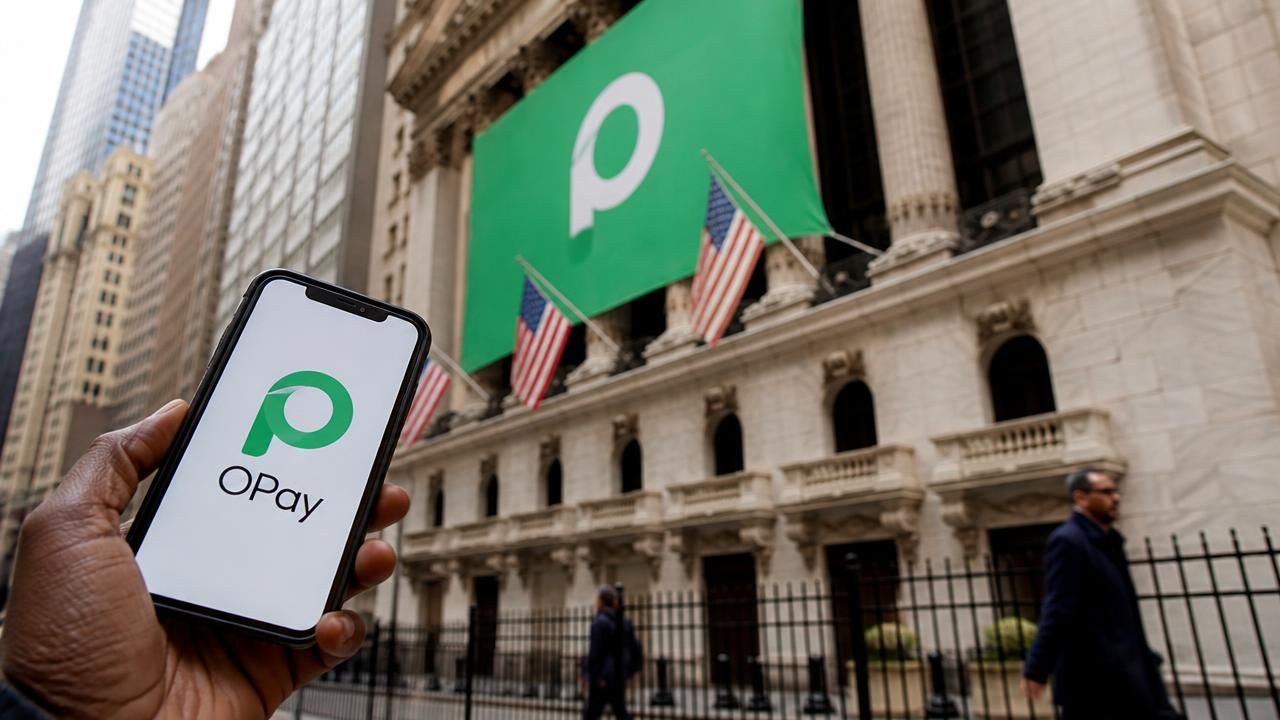
OPay, the Nigeria-focused digital payments platform backed by SoftBank, has pulled the plug on its initial public offering on the New York Stock Exchange, after a regulatory inquiry derailed a listing that had already been priced and funded. According to Bloomberg, the company raised $304 million in the U.S. flotation, but its shares never began trading as expected on Friday — an extraordinary sequence in which investors committed capital to a deal that then failed to open.
The development, first reported by Bloomberg Markets and quickly picked up by MSN, Seeking Alpha, TechMoran and Nigeria's Brand Spur, marks one of the most prominent setbacks for an African fintech attempting to list in New York, and raises fresh questions about the regulatory scrutiny facing high-growth emerging-market payments companies as they approach public markets.
What Happened
The sequence of events, as described across the outlets covering the story, is unusual. OPay — founded in 2018 and spun out of the Opera ecosystem — had marketed shares to U.S. investors and raised roughly $304 million. Trading was scheduled to begin on the NYSE on Friday. It did not.
Instead, the company withdrew from the process to respond to a regulatory inquiry. Brand Spur characterized the intervention as a "foreign regulatory inquiry," and reported that shares "fail to trade" — language that underscores the oddity of a deal that was funded but never opened. Bloomberg's Jennifer Zabasajja reported that shares "didn't begin trading as expected on Friday" after the raise was completed.
None of the reports specified which regulator made the inquiry, what the inquiry concerns, or which jurisdiction it originated from. That ambiguity is itself significant: for a company whose operations are concentrated in Nigeria but whose listing venue is New York, potential oversight could come from U.S. securities regulators, Nigerian authorities, or both.
"OPay has halted its initial public offering on the New York Stock Exchange amid a regulatory inquiry. Shares of the SoftBank-backed fintech didn't begin trading as expected on Friday after the company raised $304 million in a US IPO." — Bloomberg
How the Outlets Framed It
Coverage varied mainly in emphasis. Bloomberg, which broke the story, led with the mechanics of the halted listing and the SoftBank connection, framing it as a market event. Seeking Alpha, read largely by institutional and retail investors, headlined the story as OPay "shelving" IPO plans after a regulatory probe — language that suggests a longer pause rather than a definitive withdrawal.
Brand Spur, a Nigerian business outlet, stressed the "foreign regulatory inquiry" angle and the failure of shares to trade, reflecting local interest in how external regulators may be shaping the fortunes of one of the country's flagship tech champions. TechMoran framed the news bluntly as a scrapped $304 million IPO — the most definitive reading of the three.
The distinction matters. A withdrawal means the raise is unwound and investors made whole. A postponement implies the company intends to return to market once the inquiry is resolved. As of Friday, neither OPay nor its underwriters had publicly clarified which path the company is taking.
The Rise of OPay
OPay grew rapidly by targeting Nigeria's vast unbanked and underbanked population, offering mobile wallets, transfers, bill payments and agent banking through a network of neighborhood agents. Its growth drew marquee backers, most notably SoftBank's Vision Fund 2, which led a funding round in 2021 that reportedly valued the company at around $2 billion. That valuation made OPay one of the most valuable startups in Africa and a standard-bearer for the continent's fintech sector, alongside peers such as Flutterwave and Paystack, the latter acquired by Stripe in 2020.
A successful NYSE listing would have been a landmark: African fintechs have generally favored local exchanges, London, or private capital, and few have tested the depth of U.S. public markets directly. OPay's move was widely read as a bet that American investors would pay a premium for exposure to Nigeria's payments growth story.
Nigeria's Regulatory Squeeze
OPay's operating environment has grown more complicated. Nigeria's central bank has repeatedly tightened rules around mobile money, agent banking and know-your-customer requirements, and the country has taken an aggressive stance on crypto-linked transactions since 2021. Fintechs have also faced scrutiny over fraud, customer verification and the handling of customer funds — issues that become far more consequential when a company is subject to U.S. disclosure obligations.
Analysts have long flagged regulatory risk as the single largest discount factor applied to Nigerian financial technology valuations. A last-minute inquiry that freezes a listing, whatever its origin, will reinforce that view among institutional investors weighing similar deals.
Implications
- For OPay: The company must resolve the inquiry before any return to market, and may face tougher pricing when it does. The reputational cost of a funded-but-untraded deal is real.
- For SoftBank: The Vision Fund's African fintech exposure stays private for longer, delaying a much-anticipated liquidity event.
- For the sector: Prospective issuers from emerging markets may face heightened due diligence from U.S. underwriters and exchanges.
- For investors: The $304 million raise is expected to be returned or held pending resolution — a reminder that IPO allocations carry execution risk until the first trade prints.
What remains unclear is timing. Neither OPay nor the NYSE has indicated when, or whether, the listing will be revived. Until the scope and source of the inquiry are disclosed, the story of Africa's most ambitious fintech listing attempt will stay unfinished — and the market will be watching for the first sign that trading will finally begin.