India's investment pipeline has rarely looked so crowded. Over a compressed stretch of weeks, state governments from Bhubaneswar to Chandigarh and companies from Reliance's telecom arm to a Bengaluru fan maker have announced commitments running into lakhs of crores of rupees — a torrent of capital intentions that arrives, awkwardly, precisely as the macroeconomic weather turns hostile.
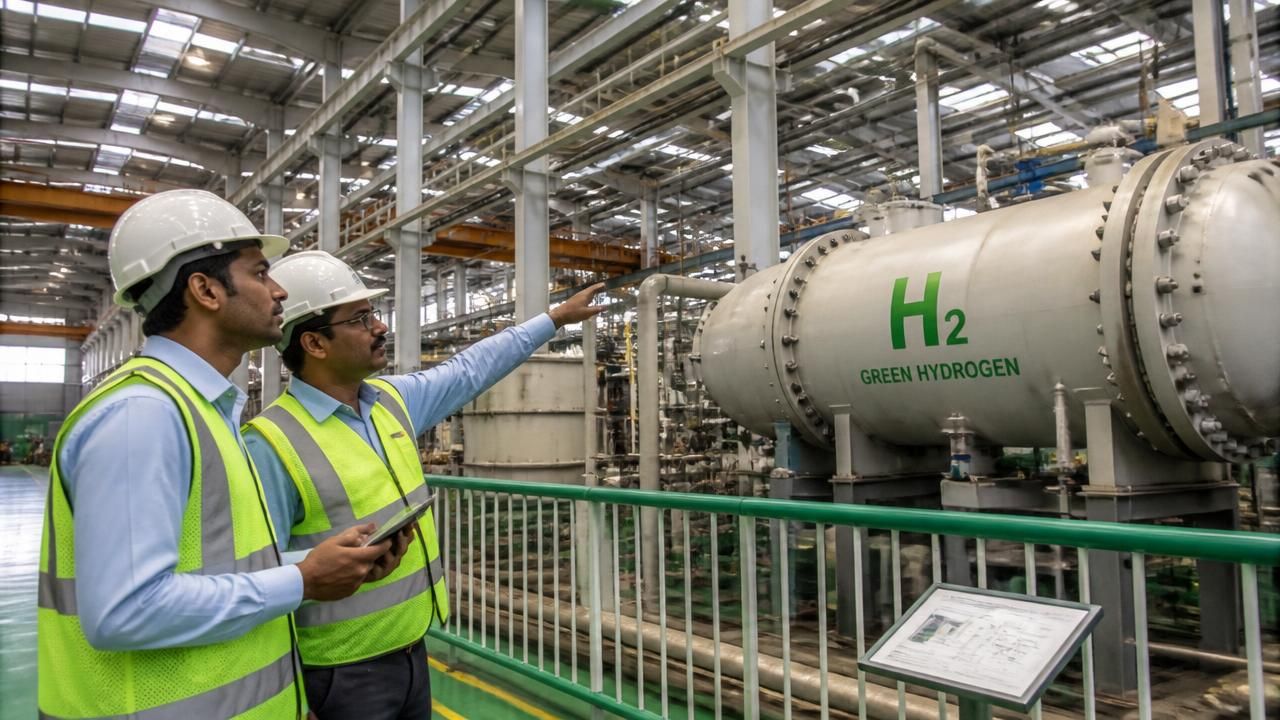
The headline number is Odisha's. The eastern state says it has received investment intents worth roughly Rs 22.5 lakh crore, with green hydrogen projects at the centre of the pipeline, according to Odisha TV. On the operational side, the state's single-window authority cleared 22 projects with a combined investment potential of Rs 3,855 crore, as reported by The Statesman and The New Indian Express. Separately, Chief Minister Mohan Charan Majhi's office said the state bagged Rs 53,894 crore in proposals at India Chem 2026.
Odisha has secured Rs 53,894 crore in investment proposals at India Chem 2026, with green hydrogen and downstream chemicals emerging as the anchors of the new pipeline.
The competition is fierce. Tamil Nadu has announced Rs 1.50 lakh crore of urban infrastructure spending over the next five years, a commitment that dwarfs most single-project announcements in the country. Andhra Pradesh pulled in Rs 11,732 crore of proposals at a regional conference in Tirupati. Haryana Chief Minister Nayab Singh Saini says he has secured proposals worth Rs 50,000 crore. Jammu and Kashmir has approved two industrial estates backed by Rs 162.72 crore. Punjab turned a Rs 500 crore memorandum of understanding with a Japanese investor into a Rs 1,116 crore facility in Ludhiana, according to India TV. And three South Korean firms are committing more than Rs 1,600 crore between them.
Private capital picks its spots
The corporate side of the ledger is just as busy, but far more selective. The single largest signal came from Jio Platforms, whose Rs 8,110-crore anchor book drew more than Rs 2.5 lakh crore in institutional demand, attracting marquee global investors — a book-building outcome that suggests appetite for large, profitable Indian platform assets remains intact even when broader markets wobble.
Elsewhere the themes are consumption, infrastructure and electrification:
- Hospitality: Ambuja Neotia and Indian Hotels Company (IHCL) will invest up to Rs 3,000 crore across nine hospitality projects in West Bengal.
- Real estate: Lodha Developers is putting Rs 1,200 crore into its first Delhi-NCR project, on Gurugram's Golf Course Road.
- Electric vehicles: EKA Mobility plans Rs 1,000-crore R&D investment and expects to support 2.5 lakh jobs over five years; BikeWo is committing Rs 150 crore to Green Drive Mobility.
- Consumer and industrial: Kent Group is targeting Rs 1,750 crore in revenue by FY27 with a Rs 500-crore new facility; Transformers and Rectifiers saw its shares jump 7% on a Rs 1,250-crore investment plan; Atomberg has won SEBI approval for an IPO and earmarked Rs 150 crore for branding and marketing.
- Financial services and services infrastructure: Meesho will invest Rs 400 crore in its payments arm and set up a lending unit, while Innovatiview plans Rs 1,000 crore in exam centres.
The macro counterweight
All of this is unfolding against a difficult backdrop. Bloomberg Markets framed the investor's dilemma bluntly: oil is above $100 a barrel, Indian stocks have struggled, and the rupee is under pressure. Its panel of four experts weighed where a investor should deploy Rs 1 crore right now — a question that implicitly acknowledges how much harder allocation has become.
There is a countervailing data point. Foreign portfolio investors bought Rs 23,544 crore of Indian equities in August, according to Millennium Post, driven by an earnings revival and a steadier rupee. That inflow is the hinge on which much of the domestic optimism rests: if FPIs keep returning, the IPO window stays open and state-level pipelines get financed; if oil stays above $100 and the currency slides again, the same announcements risk becoming press releases rather than factories.
Why the announcements matter — and why they don't yet
India's states have learned that investment promotion is a competitive sport, and the volume of announcements reflects genuine institutional change: single-window clearances, sector-specific industrial policies, and aggressive courting of green hydrogen, electronics and EV manufacturing. The Odisha figure of Rs 22.5 lakh crore, for instance, is best read as a pipeline of intent rather than committed capital — historically, conversion rates from such summits run in the low double digits.
The governance question lingers. The arrest and detention of former Satyam Computer Services chief executive B. Ramalinga Raju, his brother and the company's chief financial officer in the profit-fraud scandal remains Indian corporate history's defining cautionary tale. The lesson travels directly into this cycle: headline investment numbers are only as credible as the disclosure and audit regimes that accompany them, and retail investors piling into newly listed names should weigh governance as heavily as growth.
What to watch
Three variables will determine whether this wave becomes capex or commentary. First, crude: sustained triple-digit oil widens the current-account deficit and squeezes the rupee, raising the cost of imported machinery for exactly the manufacturers now announcing plants. Second, the IPO calendar: Jio Platforms' demand and Atomberg's approval suggest a functioning primary market, but a single failed listing could shut the window. Third, execution: Tamil Nadu's Rs 1.50 lakh crore urban plan and Odisha's green hydrogen ambitions both require land, power and clearances at a pace Indian states have historically struggled to sustain.
For now, the message from markets is bifurcated. Companies and states are betting on India's medium-term growth story with unusual conviction. The macro tape — oil, the rupee, patchy earnings — is betting on caution. Both can be right for a while; the resolution will show up in whether the second half of this investment cycle is measured in groundbreakings or in memoranda.