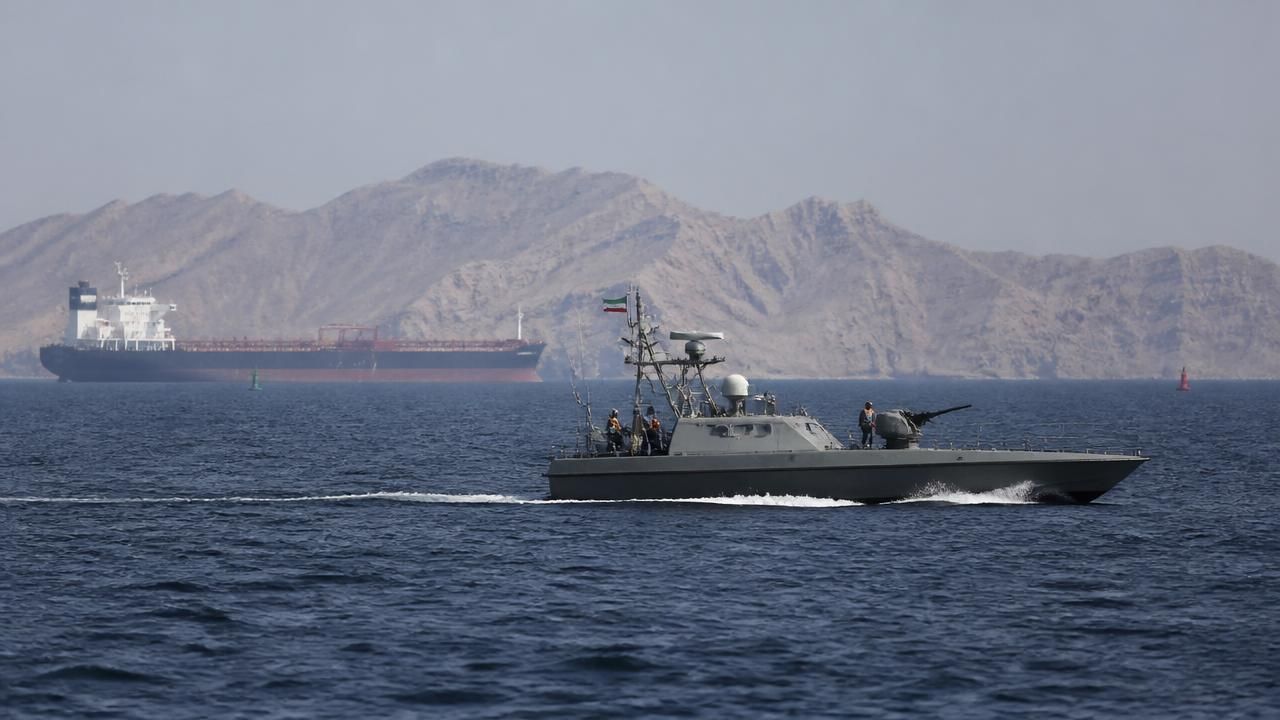
The Strait of Hormuz remained shut to normal commercial traffic this week as Iranian and American negotiators traded proposals through intermediaries in Doha over the terms of its reopening — a diplomatic track now shadowed by drone strikes, a damaged ship in the waterway itself, and sharply conflicting signals about how close a deal really is.
According to multiple reports, Tehran has told mediators it could restore shipping through the chokepoint within seven days if Washington eases military pressure on Iran, and has signalled a willingness to restart stalled nuclear negotiations as part of the same package. But Iranian officials have simultaneously made clear that reopening is conditional, not unconditional — a nuance that produced strikingly different headlines across the world's newsrooms within the same 48-hour window.
An Offer With Conditions Attached
The seven-day proposal, first reported by CNBC and subsequently confirmed in outline by CBS News and other outlets, is the most concrete element of the emerging bargain. Under it, Iran would begin clearing and securing the shipping lane in exchange for a reduction in the U.S. military posture in the Gulf, alongside a return to talks over its nuclear programme.
Yet Reuters and MSN reported Tehran's position in blunter terms: the strait will not reopen until Washington meets its demands under what Iranian officials call the Islamabad pact — a framework Tehran says the United States has failed to honour in full. Those two framings are not necessarily contradictory, but they point to the central obstacle: sequencing. Washington wants the waterway open first; Tehran wants relief first.
"The era of dictating one-sided demands is over," Iranian parliament speaker Mohammad Bagher Ghalibaf said, according to accounts of his remarks circulated by Iranian media — a line aimed as much at a domestic audience as at Washington.
The American Reply: 'Insufficient'
Diplomatic traffic has been intense but inconclusive. Iran is formally reviewing an American response to its proposal, according to The Yeshiva World, while IJR reported Iranian assessments that the U.S. reply was insufficient to move forward. MarineLink characterised the process as stalled; Gulf News, by contrast, described talks as advancing after President Trump paused planned strikes on Iran.
The pause in strikes is the single most consequential development for markets. It bought negotiators time, but it has not halted the wider regional conflict. Gulf News also reported Iranian drones targeting Bahrain and a ship struck inside the Strait of Hormuz — incidents that, if sustained, would undermine any reopening agreement before it is signed. Times Now reported Houthi claims of strikes on Saudi military positions along the Yemen border, and MSN carried Iranian warnings of a "doomsday" war after Trump rejected a broader peace roadmap.
A Parallel Track, Briefly Derailed
Not every channel runs through Washington. Oman, which has long served as the Gulf's quiet mediator, had convened Iran-Gulf talks on reopening the waterway that did not include U.S. participation. A CNN report citing an Omani official said those talks were postponed — a reminder that regional states, not just the two principal adversaries, carry real exposure to a prolonged closure.
Why Markets Are Watching So Closely
Bloomberg's Middle East and Africa markets coverage, anchored in Dubai, has framed the Hormuz standoff as the region's dominant financial variable. The strait normally carries roughly a fifth of global oil consumption and a comparable share of liquefied natural gas, making it the world's most important energy chokepoint. A sustained closure raises freight and war-risk insurance costs, forces tankers onto longer and costlier routes, and feeds directly into inflation expectations for import-dependent economies in Asia and Europe.
That transmission mechanism explains why the language of the negotiations matters so much to traders. "Reopen within seven days" and "will not reopen until conditions are met" describe the same negotiation from opposite ends — but they push oil and shipping markets in opposite directions.
How the Story Is Being Framed
The divergence is instructive. Anglophone financial outlets led with the conditional seven-day offer and the pause in strikes, emphasising de-escalation. Regional and South Asian outlets led with Tehran's warnings of a wider war and its insistence on the Islamabad pact. Iranian-adjacent coverage foregrounded Ghalibaf's defiance; Israeli and Gulf-aligned coverage foregrounded the drone attacks and the fragility of the ceasefire. Each is accurate on its own terms; none is complete alone.
What the composite picture shows is a negotiation proceeding on two clocks. The diplomatic clock is slow, incremental and reversible. The military clock is fast — a single drone strike on a tanker or a base can collapse months of quiet mediation in an afternoon.
What to Watch
- Whether Tehran formally accepts or rejects the latest U.S. reply, and whether it publishes its own text of the terms.
- Any formal announcement on the seven-day reopening mechanism, ideally verified by Omani or Qatari mediators.
- Insurance and freight rates for Gulf transits — the clearest real-time gauge of whether shippers believe the deal.
- Whether the pause in U.S. strikes holds, and whether attacks on shipping or Gulf states continue.
- Any resumption date for nuclear talks, which Tehran has linked to the maritime package.
For now, the Strait of Hormuz is neither closed by treaty nor open by agreement — it is held hostage to a sequencing dispute between two governments that each believe time is on their side. Until one of them blinks, the world's most important waterway will continue to be priced as a risk rather than a route.