Hong Kong's push to become a global hub for tokenised finance reached a milestone this week as ChinaAMC (HK), the Hong Kong arm of China's second-largest fund house, unveiled what the company and its partners describe as the world's first tokenised renminbi money-market fund — and, in a parallel first, a retail-facing version of a tokenised money-market product aimed at ordinary investors rather than institutions alone.
The launch, timed to coincide with Hong Kong FinTech Week, was accompanied by a second significant development: regulators in the city have cleared secondary trading of tokenised money-market funds, a step that dramatically expands the liquidity and utility of blockchain-based fund units. Separately, ChinaAMC confirmed it had completed a digital fund transaction settled using an HKD-denominated stablecoin, with Standard Chartered supporting the firm's tokenisation initiative.
What Was Announced
- A world first in renminbi: ChinaAMC launched a tokenised renminbi money-market fund, the first of its kind globally, according to Reuters.
- Retail access: The firm launched Hong Kong's first retail tokenised money-market fund, extending a product class previously confined to professional and institutional investors to a broader investor base.
- Secondary trading: Hong Kong authorities have cleared secondary trading of tokenised money-market funds, a move that allows investors to buy and sell tokenised fund units on secondary markets rather than being locked into a subscribe-and-hold model.
- Stablecoin settlement: ChinaAMC completed a digital fund transaction using an HKD stablecoin, demonstrating end-to-end on-chain settlement for a fund product.
- Bank backing: Standard Chartered is supporting ChinaAMC (HK)'s tokenisation efforts, underlining the involvement of a global systemically important bank in the infrastructure layer.
The Vision: 'Transparent and Liquid'
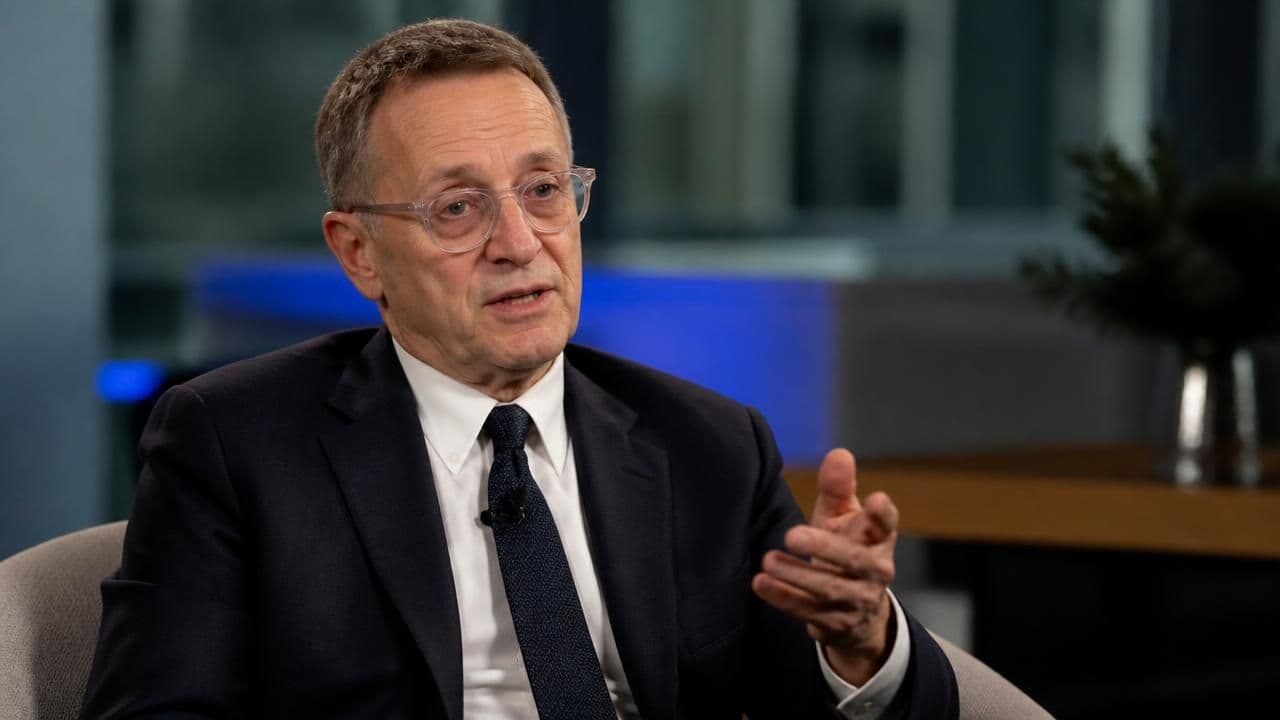
Speaking exclusively to Bloomberg Markets on the sidelines of Hong Kong FinTech Week, Tian Gan, chief executive of ChinaAMC (HK), framed the initiative around two qualities that have long been cited as the weak points of blockchain-based financial products: transparency and liquidity.
"We aim to provide a transparent and liquid tokenisation platform backed by a robust regulatory framework."
— Tian Gan, CEO, ChinaAMC (HK), speaking to Bloomberg Markets
The emphasis on regulation is telling. Tokenised money-market funds sit at the intersection of two worlds — the $7 trillion-plus global money-market fund industry, prized for its stability and daily liquidity, and the crypto ecosystem, which regulators in Asia have approached with caution. By anchoring the product in a regulated fund structure and pairing it with a bank partner, ChinaAMC is signalling that this is an exercise in traditional finance modernisation rather than a crypto-native speculation.
Why Secondary Trading Matters
Of all the announcements, the clearing of secondary trading may prove the most consequential. Tokenised funds have existed for several years — mostly in the form of tokenised Treasury bills and money-market instruments issued in jurisdictions such as Singapore, Switzerland and the United States — but their tokenised units have typically been transferable only among whitelisted, professional investors.
Secondary trading changes the economics. It allows market makers to provide two-way pricing, gives investors an exit route beyond redemption with the issuer, and brings tokenised fund units closer to functioning like the exchange-traded and transferable securities that most investors already understand. For Hong Kong, which has spent the past three years building out a licensing regime for virtual asset trading platforms and stablecoin issuers, it is a chance to differentiate itself from rival centres that have focused on issuance rather than market structure.
Different Outlets, Different Frames
The story has been framed differently depending on the audience. Reuters led with the renminbi angle, casting the launch as a landmark for offshore RMB internationalisation — a fund house effectively building a new on-chain rail for RMB-denominated assets. Yahoo Finance emphasised the retail dimension, positioning the product as part of a broader "Web3 push" by an established asset manager. MSN's coverage split between the regulatory dimension — secondary trading clearance — and the settlement innovation of an HKD stablecoin transaction. Asset Servicing Times, meanwhile, highlighted Standard Chartered's supporting role, reflecting how custody, settlement and banking infrastructure are becoming the connective tissue of the tokenisation story.
Each frame captures part of the picture. The renminbi element speaks to Beijing's long-running ambition to widen use of its currency in offshore markets; the retail element speaks to democratisation of access; the stablecoin settlement speaks to plumbing; and the bank involvement speaks to institutional legitimacy. Together they suggest tokenisation has moved from proof-of-concept to product launch.
Context and Caution
Tokenised money-market funds have become one of the fastest-growing corners of digital asset finance, with issuers including major global asset managers and blockchain-native platforms competing for institutional cash. Proponents argue the technology delivers near-instant settlement, 24/7 subscription and redemption, and lower operational overhead through programmable compliance and automated transfer agency.
Sceptics raise familiar concerns: whether on-chain liquidity will be deep enough to support secondary trading without discount, how redemption obligations interact with blockchain settlement finality, and whether the regulatory perimeter in Hong Kong — which has moved faster than most jurisdictions but still restricts retail access to certain virtual asset products — will remain as permissive once the novelty fades.
What is clear is that ChinaAMC is betting that the answer is yes. With a regulated structure, a global bank behind it, a stablecoin settlement channel in HKD and now secondary-market access, the firm has assembled the component parts of an on-chain fund ecosystem. The next test will be adoption: whether retail investors and market makers show up in sufficient numbers to make transparency and liquidity more than a promise.