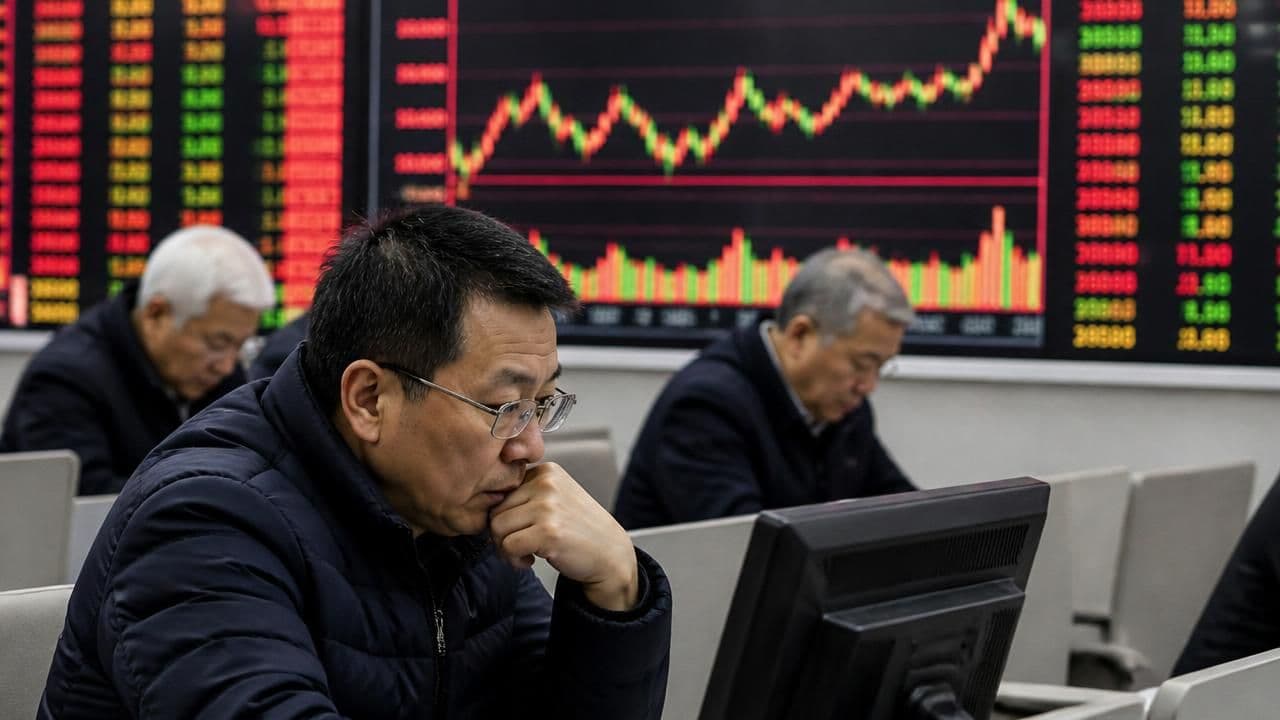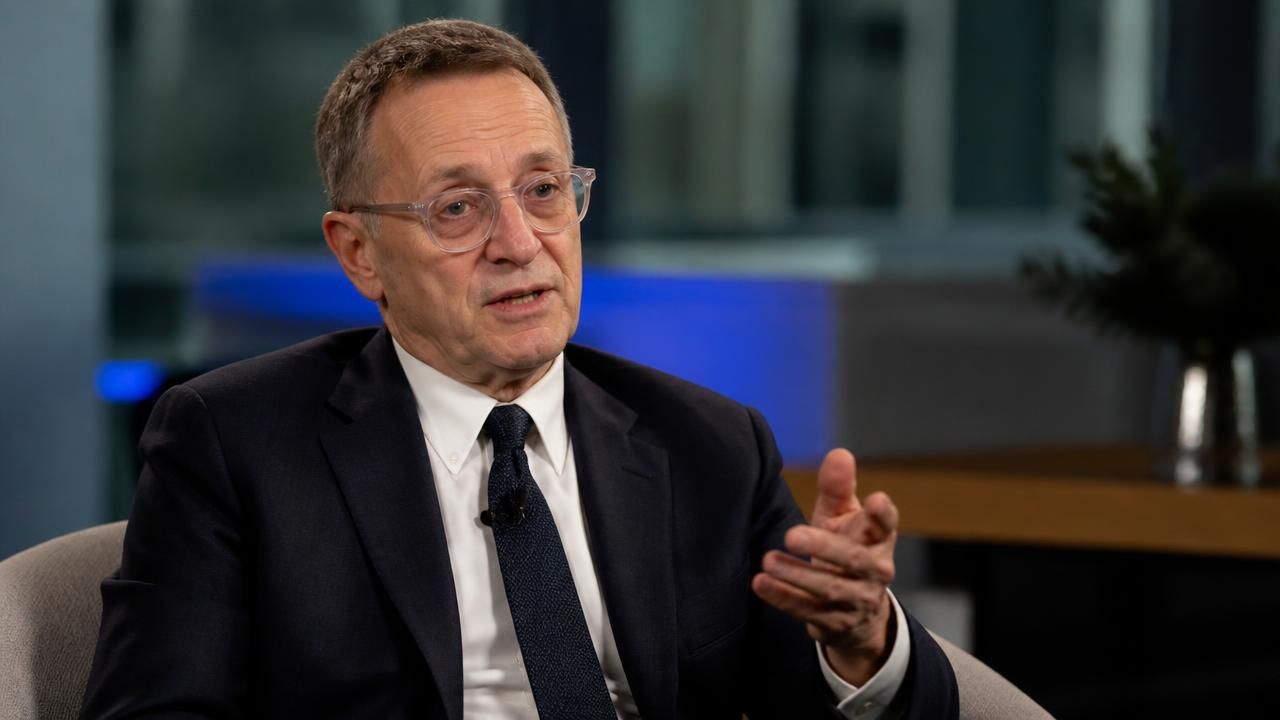
Howard Marks, the billionaire co-chairman of Oaktree Capital Management, has a blunt message for investors piling into the artificial intelligence trade: nobody actually knows how this ends. In an exclusive interview on Bloomberg's "The China Show," Marks argued that AI is "the least knowable, least predictable thing" on the investment horizon, and cautioned against treating market price action as a reliable signal about the technology's real-world payoff.
His remarks land at a moment of extraordinary concentration in global equity markets, where a handful of AI-linked mega-cap companies have come to dominate index returns and, in the view of many value-oriented investors, the collective imagination of retail and institutional money alike. Marks' response is characteristically unglamorous: build a portfolio designed to perform over the long term, rather than to win a single, unknowable cycle.
The Case for Long-Term Construction
Speaking to Bloomberg, Marks framed the core task of investing not as forecasting the next technological winner, but as assembling a set of assets capable of delivering through a range of environments. It is a philosophy honed over decades in distressed debt and credit, where Oaktree built its reputation by buying what others were forced to sell — and by refusing to confuse momentum with value.
The practical implication is a portfolio that does not depend on a single scenario unfolding. That approach cuts against the prevailing mood in markets, where capital has flowed heavily toward AI infrastructure, semiconductors and the handful of platform companies building large-scale models. Marks' warning is less a prediction that AI will disappoint than an admission that the dispersion of outcomes is unusually wide — and that investors currently pay prices that assume a favorable one.
"AI is the least knowable, least predictable thing; don't take signals from the market." — Howard Marks, Oaktree Capital Management
Why Market Signals Mislead
The second half of Marks' argument is subtler, and it is where coverage across outlets converged. Market prices aggregate the views of participants who are often reacting to each other rather than to fundamentals. In a theme as novel as generative AI, that feedback loop can produce violent swings that say more about sentiment than about durable cash flows.
This is a familiar refrain from Marks, who has spent years warning that the cost of capital, not the business cycle, is the variable investors most often misprice. His widely read investor memos have repeatedly stressed that being right about a technology and being right about its valuation are two entirely different propositions — a distinction that tends to disappear when a narrative is ascendant.
The Non-AI Corner of the Portfolio
Coverage of Marks' recent commentary has also focused on his identification of opportunities outside the AI complex, with outlets highlighting his favored non-AI stock picks — companies whose returns do not hinge on model scaling or data-center capex. The framing is telling: for Marks, the interesting question is rarely where the crowd is, but where the crowd has left something underpriced. Value-oriented managers have spent the past two years arguing that sectors such as financials, health care, industrials and energy offer better risk-adjusted entry points than crowded technology trades, though such calls have often lagged a market powered by AI enthusiasm.
The Fiscal Warning on Borrowing Costs
Marks' long-term lens extends to sovereign credit. He has argued that U.S. borrowing costs need a fiscal fix — that the trajectory of federal deficits and debt issuance, rather than central bank policy alone, now sits at the center of the rate outlook. Higher-for-longer term premiums change the discount rate applied to every asset, from equities to real estate, which is precisely why the issue matters well beyond the bond market.
The point connects directly to his portfolio advice. If fiscal dynamics keep upward pressure on long-end yields, the assets that performed spectacularly in a decade of near-zero rates — long-duration growth equities in particular — face a structurally different arithmetic. Investors who built portfolios on the assumption that rates would never normalize have already been reminded, since 2022, how quickly that regime can end.
How the Story Is Being Framed
- Bloomberg Markets placed the emphasis on Marks' long-term portfolio construction, positioning the interview as a masterclass in discipline rather than a market call.
- MSN and regional aggregators led with the AI warning, distilling the message into a quotable caution against following the tape.
- Seeking Alpha foregrounded the fiscal angle, treating Marks' comments on U.S. borrowing costs as the actionable macro signal.
- Yahoo Finance paired the AI skepticism with a list of non-AI stock ideas, reflecting retail readers' appetite for names to buy rather than philosophy to absorb.
Some syndication feeds also surfaced unrelated regional political content under Oaktree's name — a reminder that automated aggregation can scramble context, and that the substance of Marks' views is best judged from the primary interview.
What It Means for Investors
Marks is not forecasting an AI collapse, and reading him that way would misstate the argument. The claim is epistemic: the technology's ultimate shape — which business models survive, where margins settle, how regulation lands — is genuinely unknown, and position sizing should reflect that uncertainty rather than deny it. For allocators, the takeaway is a familiar one dressed in new clothing: diversify across drivers of return, stress-test assumptions about rates, and treat market enthusiasm as information about sentiment, not about the future.
Whether that counsel proves prescient depends on a variable no memo can settle. But in a market that has staked trillions on a single narrative, the case for owning assets that do not require the narrative to be right has rarely sounded more reasonable — or been harder to sell.