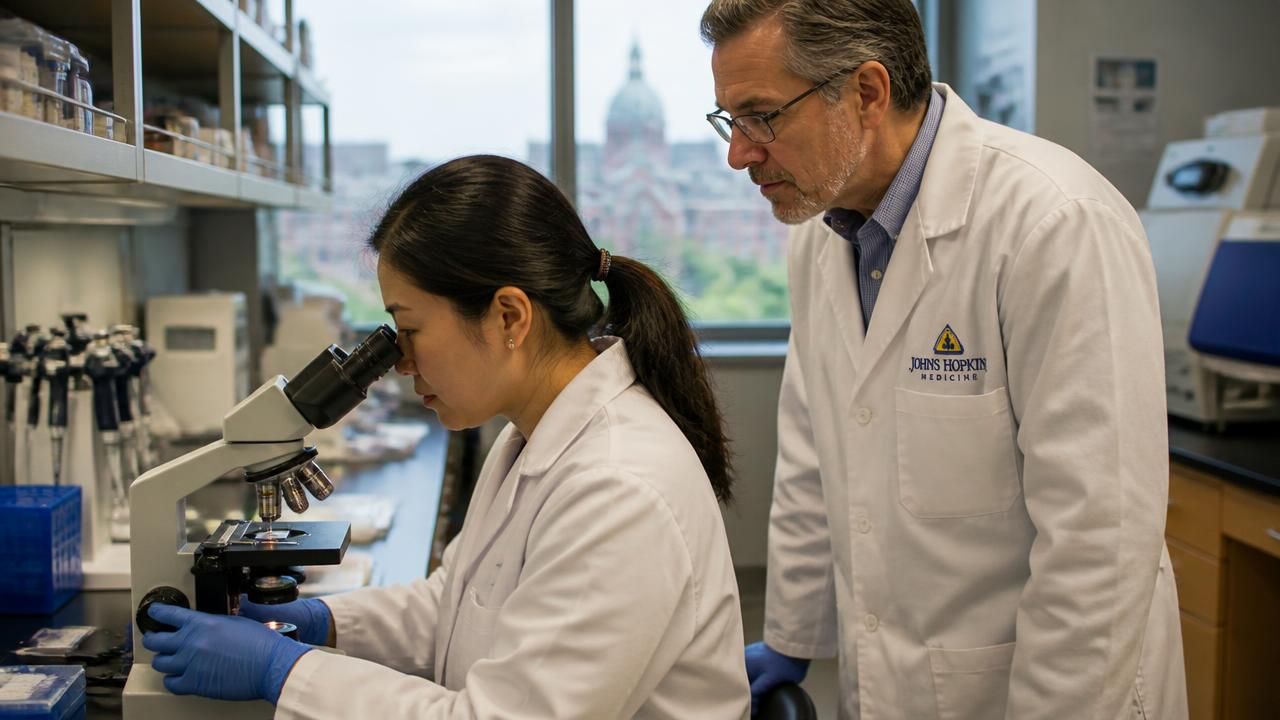
For nearly two decades, scientists have suspected that a common gut bacterium could play a role in colorectal cancer. Now, researchers at Johns Hopkins say they have found the missing mechanistic link: a toxin produced by Bacteroides fragilis can damage the colon’s protective lining, drive chronic inflammation, and create conditions that promote tumor formation.
The finding, reported by ScienceDaily, helps explain how an organism that is often a normal part of the gut microbiome can become dangerous. Not all B. fragilis strains are harmful; the cancer-linked forms are known as enterotoxigenic B. fragilis, or ETBF, and produce a toxin called B. fragilis toxin. The Hopkins work focuses on how that toxin breaches the colon’s defenses and sets off a cascade of immune and inflammatory signals that can, over time, favor cancer.
A missing link, not a lone cause
Colorectal cancer is rarely the product of a single microbe. It emerges from a complex mix of genetics, age, diet, inflammation, and environmental exposures. The new research does not suggest that carrying B. fragilis inevitably leads to cancer. Instead, it offers a plausible biological pathway that may help explain why some people with chronic gut inflammation are at higher risk and why certain microbial profiles appear more often in cancer patients.
“Scientists at Johns Hopkins have uncovered a crucial missing link between a common gut bacterium and colorectal cancer,” the ScienceDaily report stated, describing a toxin that damages the colon’s protective lining and triggers chronic inflammation.
The distinction matters. A mechanism is not the same as a clinical test or a treatment. It gives researchers targets: the toxin, the bacteria that produce it, the inflammatory signals it activates, and the barrier breakdown that follows. It also raises questions about whether blocking that pathway could reduce cancer risk in high-risk groups.
Diet, inflammation, and a larger pattern
The Hopkins finding arrived alongside a wave of coverage pointing to the gut as a central interface between diet and cancer risk. MSN framed the issue around Western diets, noting that changes in gut bacteria could increase colon cancer risk. SciTechDaily highlighted a separate line of research suggesting that a common protein source can make gut inflammation much worse, while Yahoo reported on a study of 1,300 cancer patients that found a pattern in the gut.
Those headlines are not all describing the same experiment, and each carries its own caveats. Diet studies often struggle to separate cause from consequence: people with inflammation or cancer may change what they eat, and gut microbiomes vary widely across populations. Still, the convergence is notable. Western-style diets—typically high in processed foods, saturated fat, and red or processed meat and low in fiber—are already associated with higher colorectal cancer risk. Researchers are now trying to determine how much of that risk runs through the microbiome.
The broader hypothesis is that certain diets reshape the gut community, favoring bacteria that produce toxins or provoke inflammation. Chronic inflammation, in turn, can damage DNA, weaken the intestinal barrier, and create an environment conducive to tumors. The Hopkins work adds a specific molecular culprit to that story, but it does not prove that diet alone flips a switch.
From mechanism to medicine
If harmful bacteria are part of the problem, one obvious question is whether they can be removed without disrupting the beneficial microbes that keep the gut healthy. ScienceDaily reported that scientists have discovered a way to kill dangerous gut bacteria without killing the good—a longstanding goal in microbiome research. Such selective targeting is difficult because broad-spectrum antibiotics can wipe out both helpful and harmful organisms, sometimes making patients more vulnerable to infection and long-term microbiome disruption.
A precision strategy could be especially relevant if ETBF is confirmed as a driver in some colon cancers. Rather than treating everyone, researchers might one day identify people with high-risk microbial signatures and intervene specifically. That vision remains speculative. The safety, durability, and clinical benefit of selective bacterial killing would need to be tested in trials.
Screening by microbiome?
Another avenue is early detection. Labroots asked whether colon cancer screening could be done via gut bacteria, reflecting growing interest in stool-based microbial tests. Colonoscopy remains the gold standard, and stool tests such as FIT are already used in screening programs. A microbiome-based test would need to prove it can reliably distinguish cancer or precancerous lesions from benign variation across ages, diets, and populations. The 1,300-patient study noted by Yahoo may help identify patterns, but it is a step toward validation, not a finished product.
What it means for patients
For now, the practical advice has not changed: follow age-appropriate screening guidelines, discuss family history with a clinician, and treat sensational headlines with caution. The new research is important because it connects a common gut bacterium to a plausible cancer mechanism and opens several research directions—diet, inflammation, selective antimicrobials, and microbiome-based screening.
The hardest questions remain unanswered. Which strains are most dangerous, and in whom? How early in life does the risk begin? Can the pathway be interrupted safely? And will microbiome tests add value beyond existing screening tools? The Hopkins finding does not answer all of those, but it gives scientists a clearer map of where to look. In a field crowded with associations, a mechanism is valuable currency.