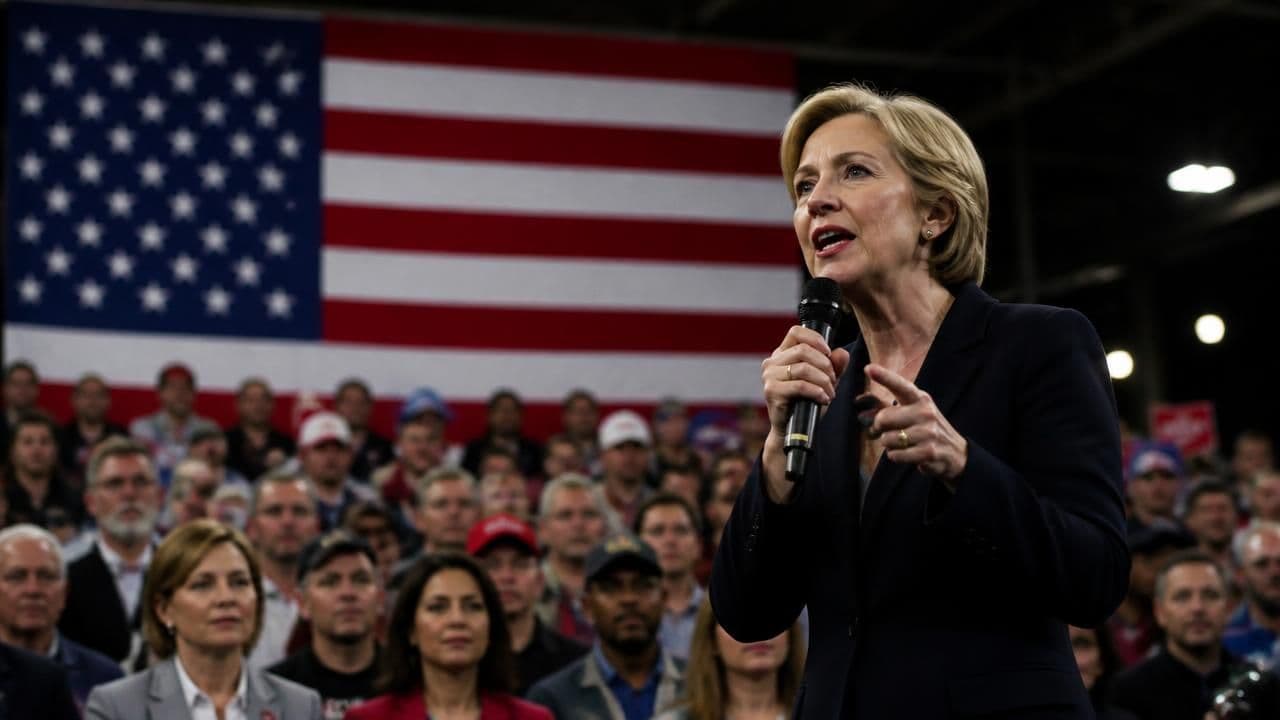
As early ballots begin to be cast in states such as North Carolina, the 2026 midterm elections are being framed less by any single policy fight than by a quieter, more corrosive question: can anyone actually believe what the polls are saying? The question has traveled from listener inboxes at NPR to the pages of The New York Times, and it now carries an official-sounding warning from one of the country's most respected research institutions.
Pew Research Center's message heading into the cycle, amplified across multiple outlets this week, is blunt: the 2026 midterms will be uniquely difficult for pollsters. That framing has become the organizing idea of the pre-election conversation, cutting across coverage from NPR, The Hill, MSN and Yahoo News.
What listeners are actually asking
NPR Politics turned its coverage over to its audience ahead of Election Day, soliciting questions about the mechanics and meaning of modern campaigns. The submissions clustered around three anxieties: whether political debates are effectively dead as a persuasive format, whether polls can still be trusted as a guide to coverage, and how President Trump would govern alongside Democrats if they win control of one or both chambers of Congress.
Can I trust the polls?
That question, lifted directly from NPR's listener mailbag, is the thread running through nearly every other piece of coverage in this cycle. It is also a question with an unusually complicated answer in 2026.
Pew's warning: a uniquely difficult cycle
Pew's assessment, circulated widely and picked up by The Hill and MSN, does not argue that polling is broken. It argues that the conditions surrounding polling have become hostile in ways that are specific to this election. Midterm electorates are notoriously hard to model — turnout skews older, whiter and more engaged than in presidential years, and the gap between who answers a survey and who actually votes widens. Add to that the fragmentation of survey response, rising costs of live interviewing, and a political environment in which partisans on both sides have incentives to dispute any result they dislike, and the error bars on a midterm forecast are wider than the headlines usually suggest.
The practical implication is nuance: a poll showing a twelve-point lead and a poll showing a two-point lead can both be "correct" within their margins, and a national popular-vote margin tells you very little about a handful of congressional districts.
Confidence in the count: the 46 percent problem
If the polling question is unsettled, the confidence question is worse. A NewsNation-DDHQ poll reported by The Hill found that just 46 percent of respondents believe the midterm vote will be counted accurately. That means a majority of Americans either doubt the integrity of the count or are unsure — a striking finding in a country that has spent two decades layering audits, paper trails and certification procedures onto its elections.
Those doubts do not exist in a vacuum. They are the residue of contested results in 2020, conspiracy theories that spread through local election boards, and a media environment in which a single viral clip of a long voting line can outweigh a certified recount. The risk for 2026 is not primarily that the count will fail; it is that a large share of the public has pre-committed to disbelieving it.
Three Times journalists talk it out
The New York Times convened three of its journalists to debate the trust question directly — a format that itself signals how central the issue has become. Their conversation, per the outlet's framing, wrestled with how newsrooms should use polls: as snapshots to be contextualized, as trend lines to be tracked over weeks, or as horse-race content that drives traffic but distorts understanding. The consensus, such as it was, pointed toward the middle: report polls, but report their limitations with equal prominence.
A predicted blue wave — and its limits
Yahoo News put the stakes plainly in its headline, noting that 2026 polls are predicting a blue wave and asking whether that prediction can be trusted. The question is not academic. Wave narratives shape fundraising, candidate recruitment and donor enthusiasm, and they can become self-fulfilling in either direction — demoralizing one side's voters or lulling the other's into staying home.
History offers a caution. Polling in the final weeks of 2016, 2020 and 2022 all missed the mark in different ways, sometimes in the same direction. The recurring lesson is that systematic error — a consistent skew, not random noise — is the hardest kind to catch before Election Day.
Early voting opens in North Carolina
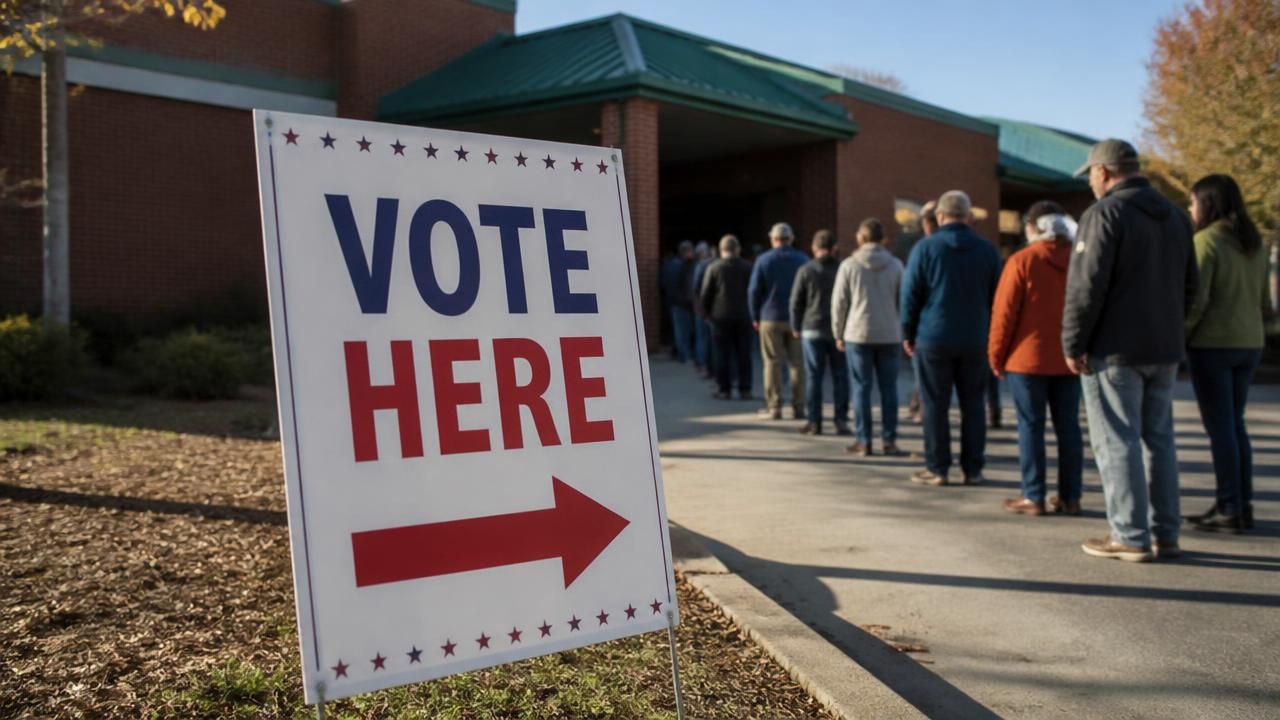
Meanwhile, the machinery of the election is already moving. Early voting has opened in North Carolina, a state that will host competitive races and that has become a laboratory for both expanded early access and intensified election administration scrutiny. Voters there are being urged to check registration status, confirm polling locations and identification requirements, and to treat mail-ballot deadlines as hard limits rather than suggestions.
What to watch
- Polling averages, not individual polls. Aggregators that weight by sample quality and historical accuracy remain the most defensible guide.
- Turnout models. Watch whether surveys screen for likely voters or registered voters — the difference can swing a midterm result by several points.
- Confidence metrics. The 46 percent accuracy figure is a benchmark; movement in either direction before Election Day will be as telling as any horse-race number.
- Local reporting. County-level election administration stories are where disputes actually begin.
The through-line across all seven sources is a shift in what election coverage is for. In a cycle Pew calls uniquely difficult, the job is less about predicting the outcome than about preparing the public to accept a result it may not like — and to understand why a poll that turned out wrong was not necessarily a lie.