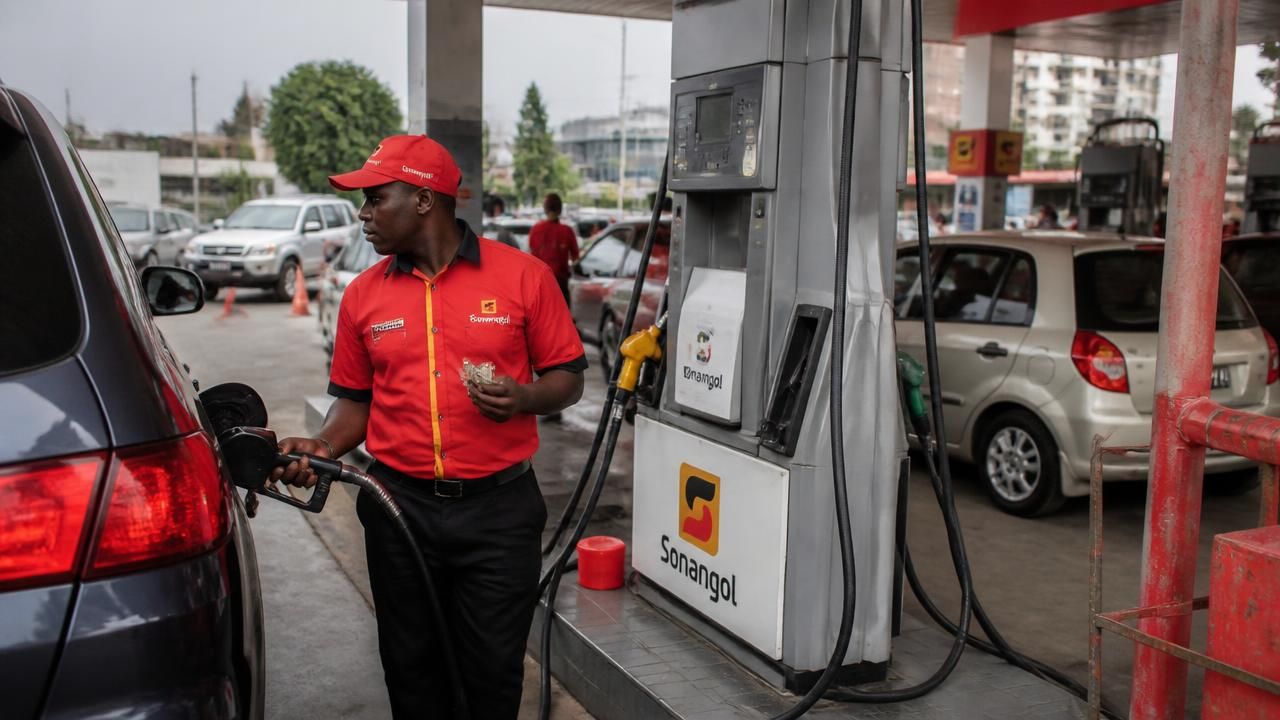
Angola is staring down a fuel subsidy bill that could reach roughly $4.16 billion in 2026 — more than twice the amount written into its budget — as rising international oil prices push the cost of keeping pump prices artificially low beyond what Luanda had planned to spend, according to officials and reporting from Bloomberg, MSN and Ecofin Agency.
The scale of the overrun underscores a familiar paradox for sub-Saharan Africa's second-largest oil producer: a nation that exports crude by the barrel is simultaneously one of the region's most exposed to the cost of importing refined fuel, and it absorbs the difference on behalf of motorists, transporters and households.
What the Numbers Show
The figures emerging from Luanda point in one direction. A government official cited by MSN said spending on fuel subsidies is projected to hit around $4 billion in 2026. Ecofin Agency, reporting on the same projection, framed the number as more than double Angola's original 2026 budget estimate — a gap of well over $2 billion that would have to be financed through borrowing, reallocated spending or a combination of both.
A separate report pegged the potential 2026 bill at as much as $4.16 billion, a figure that would represent one of the largest single line items in a national budget already stretched by debt service and social spending commitments.
Angola plans to cut spending on fuel subsidies in 2027 without significant increases in pump prices, relying instead on other measures to reduce costs.
That commitment, reported by Bloomberg Markets, is the central policy puzzle now facing President João Lourenço's government: how to shrink a subsidy bill that has ballooned on higher oil prices without triggering the kind of pump-price shock that has previously sent protesters into the streets of Luanda.
Why Oil Prices Cut Both Ways
For a petro-state, higher crude prices are usually good news. Angola's fiscal revenues, foreign exchange earnings and sovereign creditworthiness are all tied to the price of Brent and to the output of state oil company Sonangol.
But Angola imports most of the refined gasoline and diesel it consumes, meaning the same price rally that boosts export receipts also inflates the cost of the fuel the government subsidises at the pump. When global prices climb, the gap between the import cost and the fixed domestic sale price widens — and the treasury foots the difference.
The result is a structural asymmetry that economists have long flagged: Angola's subsidy regime is procyclical in the worst possible way, expanding precisely when fiscal buffers are already under pressure from a heavy debt load and a kwanza that has depreciated sharply over the past several years. Cost overruns of the magnitude now projected can crowd out capital spending, erode reserves and complicate the country's relationships with multilateral lenders.
The Reform Record and Its Risks
Angola has been down this road before. In 2023 the government began phasing out petrol subsidies, a move that pushed pump prices sharply higher and sparked demonstrations in Luanda. Authorities subsequently recalibrated the pace, broadening the use of targeted transfers and price-smoothing mechanisms instead of a rapid march to market rates.
That history explains the careful framing coming out of Luanda this time. Officials are signalling that the 2027 reduction in subsidy expenditure will be achieved through efficiency measures, better targeting and alternative cost-reduction tools rather than a single, politically dangerous price adjustment.
Competing Frames
- Bloomberg Markets emphasises the policy path — a planned 2027 cut in subsidy spending achieved without significant pump-price increases, casting the story as a fiscal consolidation strategy.
- Ecofin Agency leads with the shock of the number, framing the story as a budget-busting overrun driven by oil prices and a warning about fiscal sustainability.
- MSN's reports focus on the raw projection — a roughly $4 billion figure versus a budgeted amount less than half that size — treating the gap as the headline fact.
Read together, the accounts describe a government trying to walk a narrow line: buying time in 2026 while promising restraint in 2027, all while hoping that global prices cool and that its own fuel-import and refining capacity improves.
What to Watch
Three variables will determine whether the 2027 plan is credible. First, the trajectory of global crude and refined-product prices — every sustained rally widens the subsidy gap and makes a no-price-increase pledge harder to honour. Second, the pace of Angola's refinery build-out; Luanda has staked significant political capital on reducing import dependence, and each month of import parity pricing adds to the bill. Third, the composition of the 2027 budget itself, which will reveal whether the government is genuinely restructuring subsidy spending or simply shifting it into other line items.
For Angola, the stakes extend beyond the treasury. A subsidy bill running at more than double its budgeted level consumes resources that could go to health, education and infrastructure — and, in a country still recovering from years of recession and debt distress, it tests the political contract between Luanda and a population long accustomed to cheap fuel as a form of state support.
The coming budget cycle will show whether the government can square that circle. For now, the arithmetic is unforgiving: $4 billion and rising, against a budget built on less than half of it.