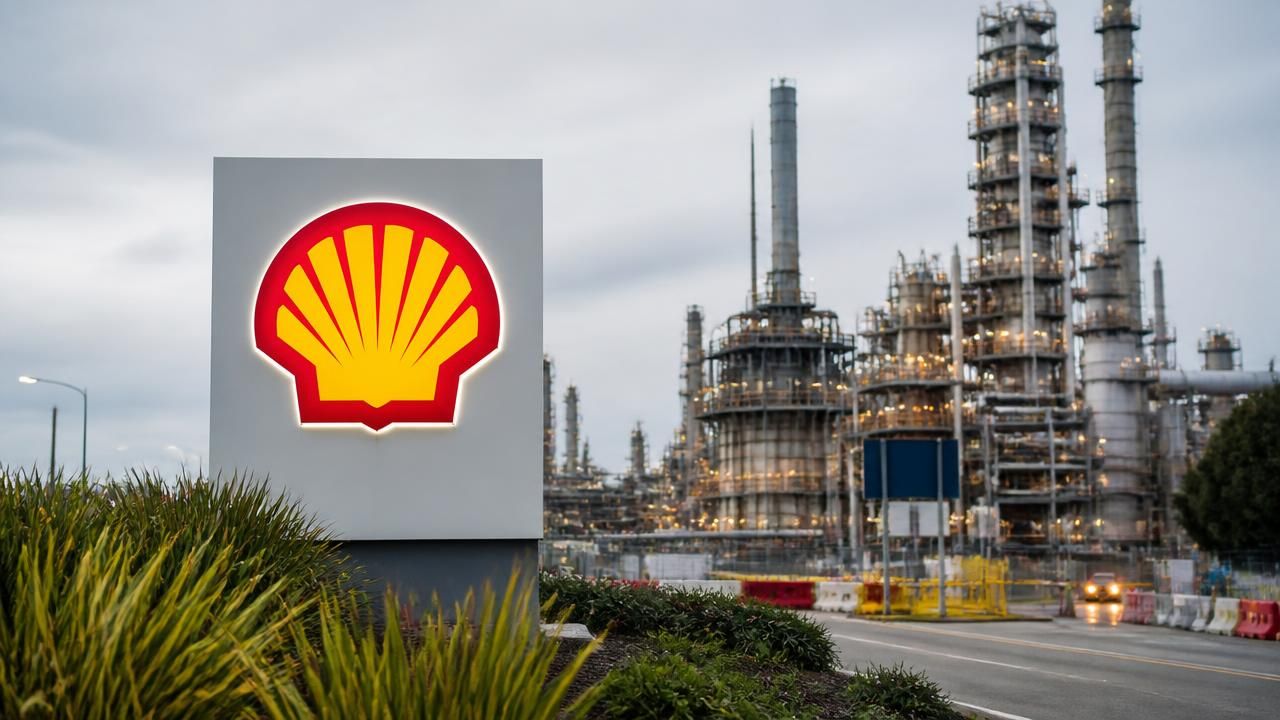
Shell Plc raised its share buyback to $5 billion, one of the largest in the company's history, after third-quarter earnings surged to $10.8 billion on the back of record refining margins — a payout that crystallizes how war, weather and a tight global fuel market have turned oil majors' downstream businesses into cash machines.
The announcement, reported across financial outlets on Thursday, marks a sharp turn from the softer pricing environment that had pressured the sector earlier in the year. Bloomberg Markets framed the move as Shell "returning more of a wartime refining windfall to investors as disruptions across the Middle East and Russia squeeze global fuel supplies," while Yahoo Finance emphasized the headline numbers: a $5 billion buyback alongside third-quarter earnings of $10.8 billion, driven by what it described as record refining margins.
The Numbers Behind the Quarter
At the center of the results is the refining margin — the spread between what a refinery pays for crude and what it earns selling refined products such as diesel, gasoline and jet fuel. Ad-hoc-news.de characterized the quarter as a "refining windfall," citing margins in the region of $42 a barrel, a level that would rank among the strongest the industry has seen in recent years.
Those margins matter because they flow almost directly to the bottom line. When crude prices are volatile but product prices — particularly diesel — remain elevated, integrated majors with large refining footprints capture the difference. Shell has spent the past several years concentrating its portfolio on these downstream and trading operations, divesting higher-cost upstream assets, which leaves it unusually exposed to exactly this kind of margin spike.
"Shell Plc boosted its share buyback to one of the highest levels in its history, returning more of a wartime refining windfall to investors." — Bloomberg Markets
Why Fuel Supplies Are So Tight
Two forces are doing most of the work. The first is geopolitics. Disruptions linked to the Middle East and to sanctions and infrastructure attacks affecting Russian refining capacity have removed significant volumes of refined product from global markets — particularly diesel, where inventories in Europe and on the U.S. East Coast have run well below five-year averages. When supply of a specific product falls short, its crack spread widens even if crude itself is not rallying hard.
The second is weather. Hurricane-driven shutdowns along the U.S. Gulf Coast — the refining heartland of North America — have periodically knocked out capacity at exactly the moments when stocks were already thin. Each outage forces buyers into the spot market and pushes margins higher for the plants still running.
The combination is a classic squeeze: resilient demand for transport and industrial fuels, constrained supply, and a market with little spare capacity to absorb surprises. Shell's trading arm, one of the largest in the world, is typically able to profit from the resulting volatility on top of the physical refining gains.
A Shareholder Story
The $5 billion buyback is as much a message as a financial maneuver. Under Chief Executive Wael Sawan, Shell has prioritized shareholder distributions and capital discipline — keeping spending tight, holding debt down and using surplus cash to shrink the share count rather than fund large new mega-projects. Investors have rewarded that approach, and the buyback reinforces the company's positioning as a cash-return story rather than a growth story.
The framing across outlets reflects this emphasis. MSN's headline led with the buyback itself — "Shell to launch $5 billion share buyback after earnings soar" — treating the distribution as the news. Bloomberg led with the refining windfall and the geopolitical context. Yahoo Finance combined both, tying the payout explicitly to the record margins. Each angle is accurate; together they show a company whose quarterly result is simultaneously an operational achievement, a geopolitical readout and a capital-allocation decision.
The Question Investors Are Asking
The obvious risk is durability. Refining margins of the sort described are historically unusual and tend to mean-revert as maintenance seasons end, outages are repaired and new capacity — much of it in Asia and the Middle East — comes online. Analysts have repeatedly warned that windfall conditions in downstream can flatter earnings for a handful of quarters before normalizing sharply.
- The bull case: structural underinvestment in refining, plus continued sanctions and geopolitical risk, keeps product markets tight well into next year, supporting both earnings and further distributions.
- The bear case: margins are peaking, hurricane effects are temporary, and a global economic slowdown would hit diesel and jet demand simultaneously — just as Shell's buyback commits cash to shareholders at an elevated share price.
- The middle ground: Shell's integrated model, combining upstream, downstream and one of the world's largest trading operations, smooths volatility better than pure refiners, but does not eliminate it.
What to Watch
Three things will determine whether this quarter marks a peak or a plateau. First, European and U.S. diesel inventories: any sustained rebuild would compress crack spreads quickly. Second, the trajectory of Russian refining capacity and Middle East shipping risk, both of which sit outside Shell's control but inside its earnings. Third, the company's fourth-quarter guidance on buyback pace — a repeat of the $5 billion figure would signal confidence that margins are holding; a reduction would suggest management sees the windfall as temporary.
For now, Shell has done what majors do in a tight market: converted an external shock into shareholder returns. Whether that proves prudent or profligate depends on a fuel market that is currently being shaped less by boardrooms than by refineries under sanctions and coastlines under storm warnings.