JERUSALEM — Israel’s parliamentary election has ended without a clear winner, leaving the country’s political system in a familiar state of suspended animation: one bloc appears to have the edge, but no faction commands the 61 seats needed to govern in the 120-member Knesset.
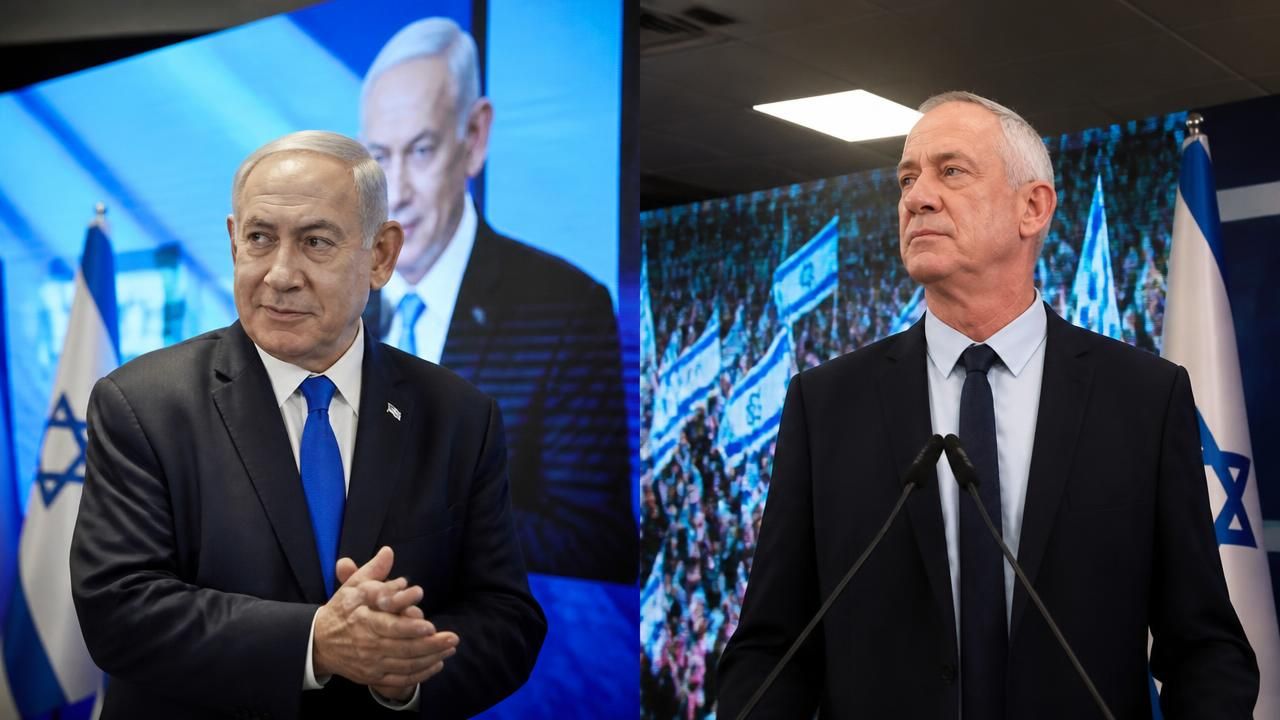
With nearly 90% of votes counted, the Netanyahu-led bloc holds a lead, according to MSN and Reuters, but neither Benjamin Netanyahu nor the opposition grouping associated with Gadi Eisenkot has secured a majority. The New York Times framed the result as a coalition puzzle rather than a verdict, noting that both men still have a chance to form a government. Its Jerusalem bureau chief, David M. Halbfinger, explained the possible coalitions and the obstacles facing an opposition alliance that could include Arab parties.
A lead, not a victory
The distinction matters in Israel, where elections are fought by parties but governments are built by blocs. The Media Line’s explainer, “How Can You Win an Election and Still Lose Power?” captures the paradox at the heart of the current impasse: the largest party does not automatically govern. Potential partners extract policy concessions, cabinet posts and budgetary commitments, and ideological gaps—especially over religion, the Palestinians and the role of Arab parties—can prove as important as raw seat counts.
The New York Times reported that "neither Benjamin Netanyahu nor Gadi Eisenkot won a majority in Israel’s Parliament, leaving both with a chance to form a government."
That arithmetic has produced competing narratives. MSN headlines emphasized the count and the contest: “Netanyahu-led bloc holds lead with nearly 90% of votes counted,” while another asked, “Who won Israel’s election? What’s next for Benjamin Netanyahu.” The Hill reported that there was “no clear winner,” with exit polls suggesting a close race and Netanyahu’s fate uncertain. Al-Monitor put it more bluntly: Netanyahu was set to remain caretaker after an inconclusive election.
Markets and the caretaker
The uncertainty quickly reached financial markets. Reuters reported that Israeli stocks fell and the shekel weakened as the Netanyahu bloc beat election forecasts—a reaction that suggested investors were pricing in prolonged coalition bargaining, policy uncertainty and the possibility of another costly campaign. The caretaker government led by Netanyahu will remain in place during the negotiations, but a caretaker administration is constrained in advancing major legislation and budgets.
The post-election mood was captured in MSN’s “Dispatch From Post-Election Israel,” which described a public bracing for another round of political maneuvering. For many Israelis, the result echoed recent election cycles in which the vote produced no decisive mandate and the country drifted toward another ballot. The difference this time, according to projections, is that the Netanyahu bloc outperformed forecasts, giving the former prime minister and his allies a stronger hand even as they fell short of a guaranteed majority.
Fraud claims and public trust
As counting continued, MSN’s live coverage reported that police rejected Netanyahu’s fraud claims while Likud led with 91% of votes counted. The allegation—and the official rejection—highlighted how contested the post-election environment has become. The Hill’s coverage stressed that exit polls had suggested a close race, leaving Netanyahu’s fate uncertain. The competing headlines reflected different frames: some outlets focused on the mechanics of vote counting, others on the political future of Netanyahu, and still others on the broader question of whether the election would change anything for Palestinians.
That last question was central to MSN’s “Israel’s election won’t change a thing for the Palestinians,” which argued that regardless of coalition composition, core policies on security, settlements and Palestinian statehood are likely to remain broadly continuous. The New York Times’s analysis, by contrast, emphasized the possible coalition configurations and the obstacles to an opposition alliance that could include Arab parties—a reminder that Arab-led parties can influence the balance of power even when they are not part of the government.
How outlets frame it
- The New York Times focused on coalition options and the Arab-party obstacle to an opposition alliance.
- MSN emphasized vote counts, fraud claims, post-election dispatches and the question of what comes next for Netanyahu.
- Reuters concentrated on market reaction: falling stocks and a weaker shekel.
- Al-Monitor highlighted Netanyahu’s role as caretaker after an inconclusive result.
- The Media Line explained Israel’s coalition politics and why an election winner can still lose power.
- Bret Stephens, in an opinion column for the Arkansas Democrat-Gazette, offered “four points about Israel’s election,” reflecting the broader debate over Netanyahu’s durability and the meaning of the result.
What happens next
Under Israel’s system, the president consults party leaders and assigns a candidate to form a government, usually giving that candidate 28 days with a possible extension. Coalition talks will test whether Netanyahu can convert his bloc’s lead into a stable majority or whether opposition parties can assemble an alternative. A Wikinews report on opposition parties announcing a coalition and forming a new government in another Israeli political episode underscores the same rule: governments are built through agreements, not solely through vote totals.
The road ahead is narrow. The Netanyahu bloc must hold together parties with divergent demands, while the opposition must bridge differences among centrist, left-wing and Arab-led parties. The result could be a new government, a caretaker stalemate or another election. For now, Israel’s election has produced a lead without a verdict—and a political system once again waiting for the math to become a coalition.
Editor’s note: Several syndicated items in the source feed concerned unrelated events—U.S. strikes on Iranian nuclear sites, the arrest of a Belarusian Wikipedia administrator, the U.S. campaign trail and the U.K. cost-of-living response—and were not part of this article.